




Iran wants a Gaza condemnation. UAE won’t allow it. China sent its Ambassador. Russia’s Lavrov will arrive with his own agenda. And India, the host and chair, is caught between its Israel alliance, its Iran energy needs, and its claim to Global South leadership. Welcome to BRICS 2026
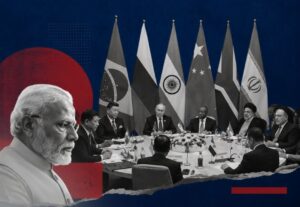
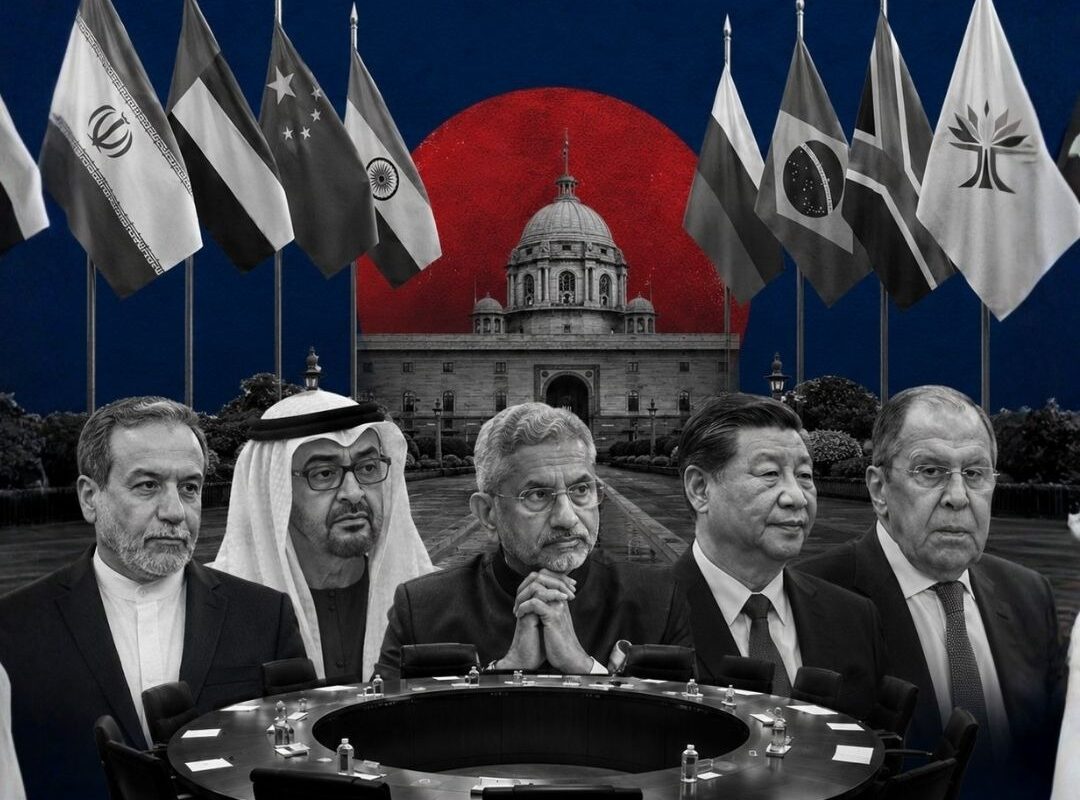
On May 14 and 15, 2026, New Delhi hosts the BRICS Foreign Ministers’ Meeting, the most consequential gathering of the bloc since its expansion to ten members. The timing could not be more difficult for India. The US-Israel war on Iran, now in its third month, has split the BRICS grouping along fault lines that India’s chairmanship theme of “Resilience, Innovation, Cooperation, Sustainability” cannot paper over with carefully drafted communiqué language. Iran is at war. The UAE is on the opposing side of that war. Both are BRICS members. India is hosting them both and hoping, with decreasing confidence, that it can produce a joint statement.
It may not succeed. The April 2026 BRICS deputy ministers’ meeting in Delhi ended without a joint statement after Iran and UAE sparred directly and disagreement over Palestine language proved irreconcilable. The foreign ministers’ meeting begins with that failure as its immediate institutional context.
The Iran-UAE Fault Line That India Cannot Bridge
The core problem is structural and has no diplomatic solution that satisfies both parties. Iran’s Foreign Minister Abbas Araghchi is expected in Delhi after arriving late on Wednesday evening. He comes to a meeting where Iran has explicitly urged India, as BRICS chair, to use the platform to build consensus condemning U.S. and Israeli actions in the Gulf conflict. Iran wants a BRICS statement. Iran wants language on Palestine. Iran wants the world’s largest grouping of emerging economies to say publicly that what is happening in the Gulf is Western aggression against a sovereign nation.
The UAE, also a BRICS member since the 2024 expansion, is effectively on the opposing side of this conflict. The UAE has maintained functional relationships with both the U.S. and Israel throughout the war. It will not sign a statement condemning its strategic partners. It will not sign language that legitimizes Iran’s framing of the conflict. According to Reuters, it was not even immediately clear who would represent the UAE at the meeting. a diplomatic ambiguity that itself signals the depth of the institutional difficulty.
India tried to soften the language at the deputy ministers’ level. China, Russia, Brazil, South Africa, and Iran rejected the softening. The UAE resisted stronger language. India found itself unable to satisfy either camp, which is the precise definition of a chairmanship failing to lead.
Indian Foreign Ministry spokesperson Randhir Jaiswal acknowledged in March that some BRICS members were involved directly in the conflict, “due to which it had been difficult for us to forge a consensus.” That was diplomatic understatement. What Jaiswal was describing is a BRICS meeting where two member states are on opposite sides of an active war and India, the host, has close strategic ties to the aggressor that both warring parties have identified.
India’s Israel Problem at the Centre of the Room
India cannot lead a BRICS consensus on the West Asia war because India is not neutral in the West Asia war, and every member at the table knows it.
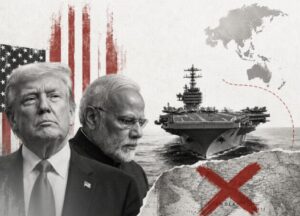
Prime Minister Modi’s visit to Tel Aviv, his public embrace of Benjamin Netanyahu, and India’s subsequent loss of diplomatic credibility with Tehran are not background noise at this meeting. They are the central context in which India’s claim to Global South leadership is being evaluated. Iran, which chairs its own axis of sympathy at this table alongside Russia, South Africa, and Brazil, has watched India align with Israel, lose its tankers in the Strait of Hormuz, beg Tehran for access to LNG shipments, and then present itself as the honest broker for a BRICS consensus on the same conflict.
That positioning has a credibility problem that no amount of diplomatic language can resolve. India’s WPI inflation hit a 41-month high of 3.88 percent in March 2026, driven directly by crude petroleum costs surging from the Gulf conflict. India’s own economy is bleeding from the consequences of the war it has declined to criticize. Yet at BRICS, it is trying to hold the chair of a grouping that includes the country being bombed and the country adjacent to the country doing the bombing.
Soaring energy prices caused by the war have prompted many BRICS nations, including India, to introduce emergency measures to protect their economies and consumers. Every finance minister and central banker of every BRICS nation has spent the past three months dealing with the economic fallout of a conflict that India’s closest strategic partners launched. Producing a joint statement that does not name that reality will require a level of collective institutional dishonesty that even BRICS, which has considerable tolerance for ambiguity, may find difficult to achieve.
China Sent Its Ambassador. That Tells You Everything.
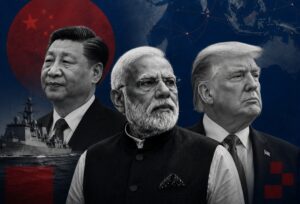
China will be represented by its Ambassador to India Xu Feihong, filling in for Foreign Minister Wang Yi, who is not travelling with US President Donald Trump visiting Beijing this week.
Read that sentence carefully. China’s Foreign Minister chose to remain in Beijing for Trump’s visit rather than attend BRICS in Delhi. This is a scheduling decision that is simultaneously a strategic signal. Beijing values the direct engagement with Washington that Trump’s visit represents more than it values the optics of full ministerial presence at India’s BRICS chairmanship moment. China is telling India, politely and through the language of calendar management, that Delhi’s BRICS presidency is not Beijing’s priority this week.
This matters beyond protocol. China’s diminished direct presence weakens its ability to shape the meeting’s outcomes in real time. Russian Foreign Minister Sergey Lavrov, who will be present, can take more vocal anti-Western positions without Chinese moderation. Iran’s Araghchi can push harder on the Palestine language with one less mediating voice in the room. The bilateral side conversations that happen around the formal sessions, the Iran- Russia coordination, the South Africa-Brazil alignment on Global South framing, the conversations about BRICS expansion and de-dollarization, will occur with less Chinese oversight than Beijing would normally prefer.
For India, this creates a specific problem. China’s absence at the ministerial level reduces the prospect of a coordinated moderate position emerging that India could claim credit for facilitating. Without Wang Yi in the room, the hawks have more space and the moderates have less institutional weight.
The Pakistan Question India Cannot Answer
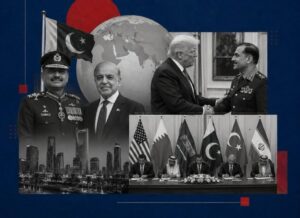
Pakistan is actively interested in BRICS membership, with economic benefits, de- dollarization access, and support from China, Russia, and Iran already secured diplomatically. India, as chair, holds significant procedural influence over expansion discussions. India also has obvious and documented reasons to oppose Pakistani membership, rooted in security concerns and the terrorism designation that has defined Indian policy toward Pakistan for decades.
This tension will not be formally on the agenda at the foreign ministers’ meeting. It will be in every bilateral conversation on the sidelines. Pakistan’s strategic location, its CPEC connectivity to China, its role in the Islamabad Accord that brokered the Iran ceasefire, and its emerging reputation as a regional diplomatic actor all strengthen its case for BRICS membership in the eyes of the members most sympathetic to its application.
India blocking Pakistan’s BRICS membership while chairing a grouping that proclaims Global South solidarity and multipolarity will be noted by every member that has watched Pakistan outmaneuver India diplomatically in the Gulf crisis. The argument will be made, in side rooms if not in plenary sessions, that India’s BRICS chairmanship is being used to protect bilateral interests rather than advance the grouping’s collective agenda.
What Success Looks Like for India, and Why It Is Hard to Achieve
India wants three things from this meeting. A joint statement, however mildly worded. Forward movement on BRICS financial architecture, specifically the New Development Bank, de-dollarization mechanisms, and alternative payment systems. And preservation of India’s image as a responsible, effective chair of the world’s most consequential emerging market grouping.
All three are difficult. The joint statement requires language that Iran and UAE can both accept, a diplomatic square circle. The financial architecture agenda is the most achievable because it is the least politically contested, but it requires the joint statement to survive long enough to reach the closing session. And India’s image as an effective chair has already been damaged by the April deputy ministers’ meeting failure.
Former Indian diplomat Manjeev Singh Puri offered the most honest assessment of what success means here when he told Reuters: “Of course, political solutions are difficult, but the fact that they are meeting is positive and hopefully it will lead to a way forward.” When a former diplomat cites the fact of attendance as an achievement, the bar for success has been set very low.
The Larger Indictment
BRICS was created as an alternative to Western-dominated multilateral institutions, a forum where the Global South could coordinate positions, build economic architecture independent of dollar hegemony, and speak with a collective voice on international issues that the G7 and UN Security Council permanent members have historically managed for their own interests.
The 2026 Delhi meeting reveals the limits of that ambition when the grouping’s own members are on opposite sides of an active war, when the host country’s strategic alignments compromise its claim to neutral chairmanship, when the most powerful member sends an ambassador instead of its foreign minister, and when the previous ministerial-level preparatory meeting ended without agreement.
India has spent significant diplomatic capital presenting its BRICS chairmanship as evidence of its global leadership credentials. A meeting that produces no joint statement, or a joint statement so hedged as to be meaningless, in the middle of the worst regional war since 2003, on a conflict where India’s own economy is bleeding, and its own diplomatic positioning is part of the problem, will not strengthen those credentials.
It will add one more data point to the argument that India, under the current government, has consistently confused the performance of influence with its actual exercise. This week in Delhi, the BRICS table will test that argument with ten foreign ministers, a missing Chinese FM, a warring Iran, a conflicted UAE, and a joint statement that nobody is confident will materialize. The world is watching. India is hosting. The two things are not the same






Leave a comment