


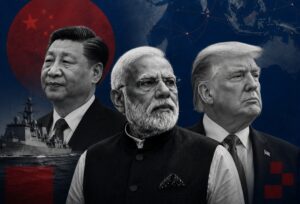
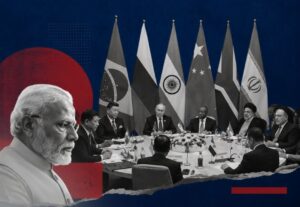

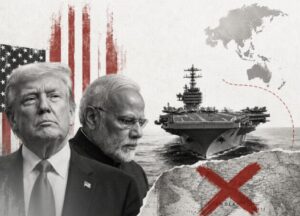

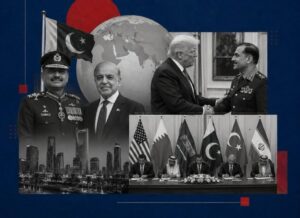
The United States has struck three merchant vessels in the Gulf of Oman this week, killing Indian seafarers. India summoned an American diplomat. Then went quiet. This is what a strategic partnership with Washington costs in 2026.
In four days, three ships. In those same four days, three Indian sailors were confirmed dead, and twenty more were evacuated from a burning tanker off the coast of Oman. The aggressor is not a rogue state or a pirate militia. It is the United States of America, enforcing a maritime blockade on Iran-linked shipping as part of its ongoing war in West Asia.
India’s government has summoned the US chargé d’affaires once. It has issued an embassy monitoring statement. It has coordinated with Omani authorities for crew evacuation. And then, on the matter of its strategic partner killing Indian citizens on international waters, it has gone very quiet.
What Happened, Ship by Ship
The first vessel, Marivex, was struck earlier this week in the Gulf of Oman. Indian crew members were on board. They were evacuated unharmed. The incident was reported. India issued no formal protest.
The second vessel, Settebello, a Palau-flagged oil and products tanker, was struck around June 10. Three Indian sailors were confirmed killed, having initially been reported missing. India summoned the US chargé d’affaires to the Ministry of External Affairs to register a protest. The summoning of a chargé d’affaires rather than the Ambassador is itself a calibrated signal in diplomatic language. It communicates concern while deliberately not escalating to the level of an Ambassador-level confrontation.
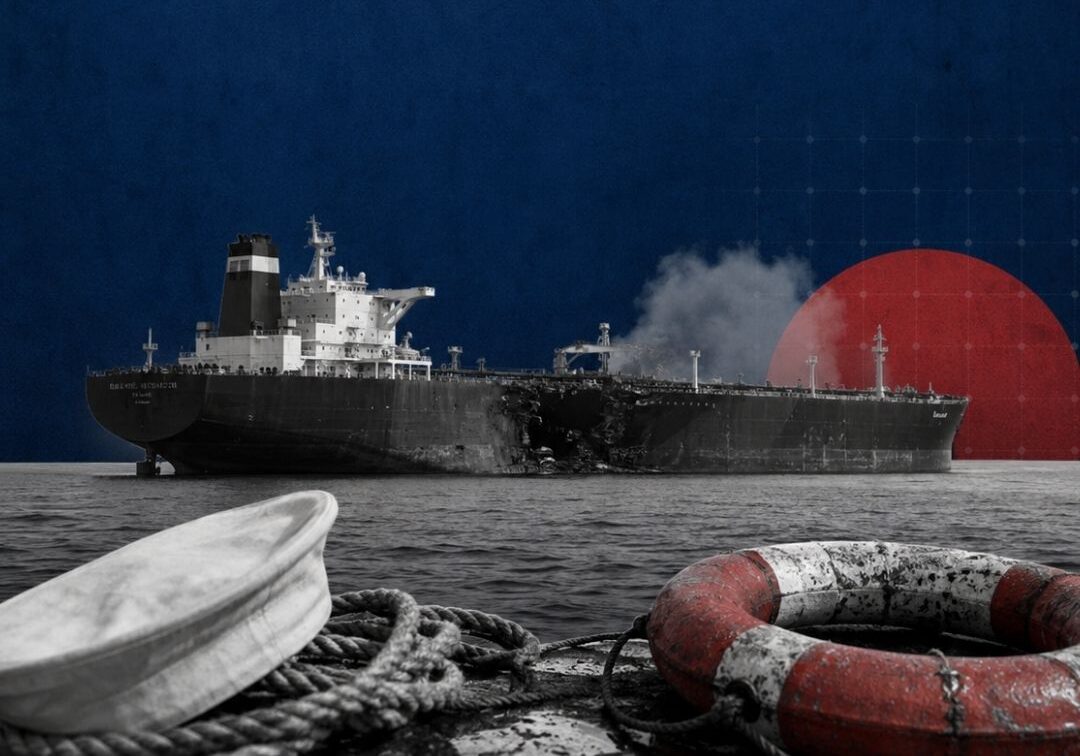
The third vessel, MT Jalveer, a Guinea-Bissau-flagged commercial tanker, was struck today, June 11, off Shinas port in Oman near the approaches to the Strait of Hormuz. Approximately twenty Indian seafarers were on board when a fire broke out in the engine room and funnel area. Evacuation is underway with support from the Royal Navy of Oman. The Indian Embassy in Oman confirmed it is “closely monitoring the situation and coordinating with local authorities for further details.” All Indian crew are reported safe so far.
Three ships. Four days. Three dead. Twenty more in emergency evacuation as of today. And a government response that has graduated from monitoring to summoning to monitoring again.
What the United States Has Said
Washington has not been subtle about what it is doing. The US has publicly confirmed strikes on vessels “violating the blockade” by attempting to transport Iranian oil or conflict- related cargo. This is not covert action. It is declared policy, enforced with lethal force, in international waters through which Indian seafarers routinely work.
India has approximately 240,000 active seafarers, one of the world’s largest maritime workforces. A significant number work on international merchant vessels operating in exactly the waters where the US is now enforcing its blockade with airstrikes. These are not military personnel. They are workers on commercial vessels, carrying cargo, doing the job that keeps global trade moving. Three of them are dead this week because the United States decided that the vessels they were working on were violating a unilateral blockade that no international body has authorized.
The UN Charter does not permit unilateral maritime blockades that kill neutral third- country nationals on commercial vessels. The laws of armed conflict require parties to distinguish between military and civilian targets. Whether the specific vessels struck were genuinely carrying Iranian military cargo, or whether they were commercial tankers that the US defined as blockade violators through criteria it has not fully disclosed, is a question that the three dead Indian sailors’ families deserve to be answered.
India’s Silence and What It Reveals
India has spent considerable diplomatic energy in the past decade building what it calls a Comprehensive Global Strategic Partnership with the United States. This partnership has produced defence technology agreements, the ICET framework for critical and emerging technology cooperation, joint military exercises, and the QUAD grouping. It has been presented to Indian citizens as evidence that India has arrived at the global high table as America’s valued partner.
This week, that partner’s military killed three Indian citizens on international waters and struck two more vessels carrying Indian crew in the same operational area within four days. India’s response: one summoning of a chargé d’affaires and an embassy monitoring statement.
Compare this to how India has responded to other provocations involving Indian citizens. When Sri Lanka’s navy detains Indian fishermen, India issues formal protests and raises the matter through multiple diplomatic channels. When Indian nationals are killed in conflict zones, the government typically demands accountability and issues strong public statements. When Pakistan is implicated in any incident involving Indian lives, the response is comprehensive, public, and sustained.
The United States has killed three Indian sailors in four days and India has issued a monitoring statement. The differential treatment is not about proportionality. It is about who India feels it can confront and who it cannot.
Shiv Sena UBT MP Sanjay Raut captured the political context directly earlier this month when he described India as “Trump-dependent,” asking whether America had told India what positions it could take on the West Asia war. The three ships struck this week, the three sailors dead, and the government’s calibrated near-silence constitute the clearest possible evidence for that characterization.
The Strategic Autonomy That Wasn’t
India has spent a decade claiming strategic autonomy as the defining principle of its foreign policy. The claim was always more aspirational than operational, but the West Asia crisis of 2026 has removed the last pretense from it.
India’s alignment with Israel before the war began cost it credibility with Iran and excluded it from the Islamabad peace process. Its reluctance to criticize the US-Israel strikes cost it leverage in every regional forum. Its trade relationship with Iran, including Chabahar port, was complicated by the same sanctions architecture that the US is now enforcing through airstrikes on commercial vessels. And now those airstrikes have killed Indian citizens and India’s most assertive public response has been summoning a deputy diplomat.
Strategic autonomy means the ability to act independently when your core national interests are threatened. Indian seafarers being killed by American forces on international waters is a core national interest. A government with genuine strategic autonomy would have said so clearly, publicly, and without diplomatic equivocation. It would have demanded an independent investigation. It would have raised the matter at the UN Security Council. It would have issued a statement proportionate to the provocation. India’s government has done none of these things. What it has done is “closely monitor the
situation.”
The Families Waiting for Answers
Behind the diplomatic language and the strategic calculations are three families in India who received news this week that their father, son, or husband, working on a commercial tanker in international waters, was killed in a US military strike. They were not soldiers. They were not combatants. They were seafarers doing the work that India’s maritime economy depends on.
India has 240,000 active seafarers working internationally. Their safety in conflict zones depends on the Indian government’s willingness to protect them, not just through evacuation coordination with Omani authorities, but through clear, unambiguous demands that even a strategic partner cannot kill Indian citizens on international waters with impunity and receive only a monitoring statement in response.
The three sailors killed on the Settebello this week deserve the same diplomatic energy that India deploys when Pakistani-linked actors are implicated in Indian deaths. They deserve a government that tells its most powerful partner, clearly and publicly, that this is unacceptable.
They received a summons to the chargé d’affaires.
That gap, between what Indian citizens deserve and what a Trump-dependent foreign policy can deliver, is the real cost of strategic partnership without strategic autonomy. It is being paid this week in the Gulf of Oman. In Indian lives. In Indian silence.








Leave a comment