




The USCIRF 2026 report doesn’t just criticize India’s religious freedom record – it names the institution responsible and demands sanctions. Here is the evidence they compiled.
There is a particular kind of denial that only governments practice. Not the denial of a person caught in a lie, which is anxious and improvised. This is the architectural kind- built in advance, load-bearing, designed to hold the weight of documented reality without cracking. When the United States Commission on International Religious Freedom released its 2026 Annual Report recommending targeted sanctions on the Rashtriya Swayamsevak Sangh, India’s government did what it does every time: called it interference, questioned the source, and changed the subject.
What it did not do was dispute a single fact in the report.
What USCIRF Actually Said
The Commission’s 2026 report recommends that the U.S. government designate India as a “Country of Particular Concern” under the International Religious Freedom Act, a designation reserved for the world’s worst violators. It calls on Washington to impose targeted sanctions on entities, including the RSS and India’s Research and Analysis Wing, specifically through asset freezes and entry bans into the United States. It further recommends linking future U.S. security assistance and bilateral trade policy with India to measurable improvements in religious freedom conditions, and calls for enforcing Section 6 of the Arms Export Control Act to halt arms sales to India.
These are not the recommendations of an organization that is mildly concerned. This is the language of institutional alarm.
USCIRF is an independent, bipartisan advisory body. Its recommendations are not an automatic policy. But in the architecture of U.S. foreign policy, these reports shape congressional hearings, State Department assessments, and the terms of bilateral negotiations. When a body of this stature names a specific Indian organization by name and calls for sanctions, it is not a talking point. It is a threshold.
When a Spy Agency Gets Named Alongside a Street Mob
The inclusion of RAW in the USCIRF sanctions recommendation is the detail that most Indian media have quietly buried. It deserves its own examination, because it represents something qualitatively different from criticizing vigilante violence or discriminatory legislation.
RAW, the Research and Analysis Wing, is India’s external intelligence agency, equivalent in function to the CIA or Britain’s MI6. USCIRF recommends sanctions on RAW in the same breath as the RSS, and specifically in the context of religious freedom violations, it is making an accusation that goes to the heart of Indian state conduct: that India’s intelligence apparatus has been weaponized, at least in part, against religious minorities and their advocates, including those operating outside Indian borders.
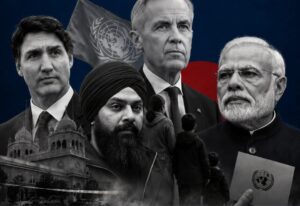
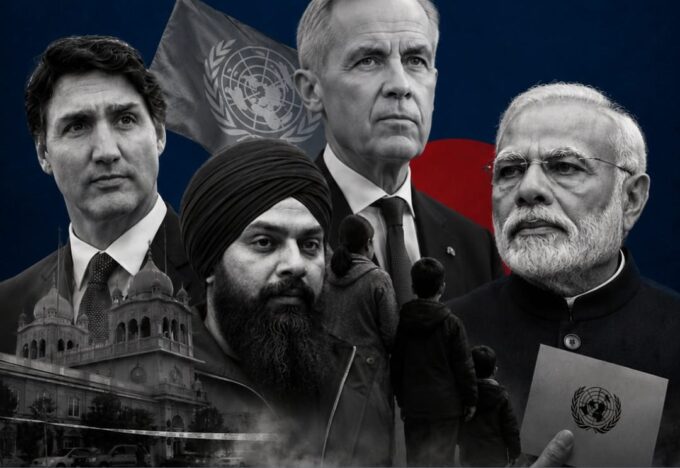
This is not without documented basis. In 2023, the United States Justice Department indicted an Indian national with ties to Indian intelligence for allegedly plotting the assassination of Gurpatwant Singh Pannun, a Sikh separatist and American citizen, on American soil. The plot, which the U.S.government said was directed by an Indian government official, sent visible tremors through the bilateral relationship. Canada had already expelled an Indian diplomat in connection with the killing of Hardeep Singh Nijjar, a Sikh activist, in British Columbia in June 2023. Ottawa directly attributed the killing to Indian government agents.
The Tom Lantos Human Rights Commission held a hearing in May 2025 specifically on transnational repression, which included testimony documenting acts by the Indian government to target religious minorities living abroad. The pattern emerging from these proceedings is not of rogue actors operating without sanction. It is of a coordinated posture in which Indian state intelligence resources are being directed against Sikh, Muslim, and Christian diaspora voices deemed threatening to the current government’s political interests.
Former RAW officer and author Amar Bhushan, speaking to The Hindu in a different context, noted that intelligence agencies by nature operate in spaces where accountability is deliberately obscured. That opacity, which may be defensible in counterterrorism, becomes dangerous when the agency’s target list begins including religious activists, journalists, and foreign citizens exercising lawful speech in democratic countries. USCIRF’s recommendation to sanction RAW is, therefore, a formal declaration that the United States government advisory process now views India’s external intelligence agency as complicit in the suppression of religious freedom, not just domestically but across borders. That is an extraordinary statement about a country that presents itself as the world’s largest democracy and a natural partner in the rules-based international order.
The Documented Record: What Built This Report
The USCIRF findings are not speculation. They are a compilation of incidents that played out on Indian streets, in Indian courtrooms, and in Indian parliament in 2025, most of which received negligible coverage in India’s prime-time media.
In March 2025, violence erupted in Maharashtra after the Vishwa Hindu Parishad called for the removal of the tomb of Aurangzeb. Dozens were injured. A curfew was imposed. BJP officials reportedly fueled the riots by spreading rumors about Quran desecration during VHP-led protests. In June, a Hindu nationalist mob attacked twenty Christian families in Odisha after they refused to convert to Hinduism. Eight people were hospitalized. Police did not intervene.
In May 2025, Indian authorities detained forty Rohingya refugees, including fifteen Christians, transported them to international waters near Burma’s coast, and forced them to swim ashore with life vests. In July, hundreds of Bengali-speaking Muslims from Assam were expelled to Bangladesh despite holding Indian citizenship. BJP officials called them Muslim “infiltrators,” threatening national identity.
Parliament passed the Waqf Amendment Bill in 2025, placing non-Muslims on the boards managing Muslim religious endowments, including mosques, seminaries, and graveyards. Deadly protests followed in West Bengal, leaving three people dead. The Supreme Court subsequently suspended key provisions of the bill.
Uttarakhand passed an anti-conversion law that criminalizes digital speech about religion and increased jail terms for “illegal conversions” from ten to fourteen years. Rajasthan adopted legislation making life imprisonment a possible punishment for conducting religious conversions, while requiring individuals to give two months’ notice to the government before voluntarily changing their own religion.
By the end of 2025, twelve out of twenty-eight Indian states maintained anti-conversion laws.
The RSS: Not a Fringe, an Architecture
The Indian government and its media allies consistently frame RSS criticism as an attack on Hinduism itself. This framing is deliberate and dishonest.
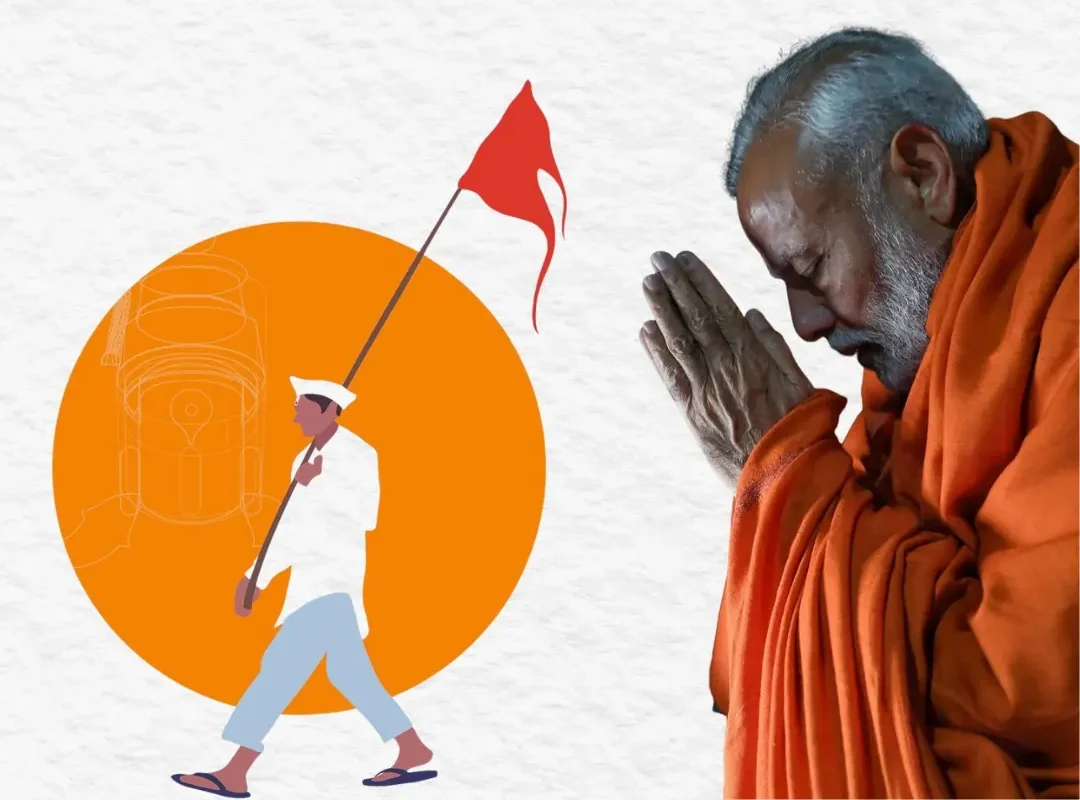
The RSS operates through approximately 38 affiliate organizations that collectively cover every domain of Indian public life. Bajrang Dal handles street-level enforcement and vigilante activity. The Vishwa Hindu Parishad manages temple-mosque disputes and religious mobilization. ABVP controls university campuses. Vidya Bharati runs thousands of schools. Seva Bharati manages social service organizations used as community entry points. Vanvasi Kalyan Ashram operates in tribal areas, specifically targeting Christian missionary presence.
This is not a social club with political sympathies. This is an organizational ecosystem, and its output over the past decade is documented in court records, human rights reports, and the USCIRF filing itself.
The FactChecker.in database, in partnership with Human Rights Watch, documented over 100 Muslims killed in mob lynching incidents between 2015 and 2023, the majority linked to cow vigilante groups with direct RSS affiliations. In most cases, convictions have not followed. In some cases, the perpetrators were publicly garlanded by elected BJP officials. In textbooks, the National Council of Educational Research and Training removed chapters on the Mughal period, deleted detailed content on Mahatma Gandhi’s assassination and the RSS’s connection to it, and removed the theory of evolution from certain standards in the 2023-24 curriculum revision cycle. The NCERT syllabus changes were widely reported and have faced challenges from educationists across the country.
The Political Pipeline
Prime Minister Narendra Modi is a lifelong RSS pracharak. Home Minister Amit Shah rose through the RSS and BJP structures in Gujarat. Chief Minister Yogi Adityanath of Uttar Pradesh, where the bulldozer has become a governing instrument rather than a construction tool, is the face of what BJP leaders openly call “bulldozer justice.” This convergence of RSS organizational background and executive power is not a coincidence. It is the stated design of the Sangh Parivar’s political project, articulated over decades.
As scholar and author Ramachandra Guha wrote in an essay for The Wire: “The RSS seeks not merely to govern India but to transform it, its institutions, its history, its self- understanding-in the image of Hindu nationalism.”
The USCIRF report is, in essence, a foreign body’s documentation of how far that transformation has progressed.
India’s Falling Rankings Are Not a Western Conspiracy
India dropped to 159th out of 180 countries in Reporters Without Borders’ 2025 Press Freedom Index. Freedom House downgraded India from “Free” to “Partly Free” in 2021 and has maintained that assessment since. The V-Dem Institute’s 2025 Democracy Report classifies India as an “electoral autocracy.” These are not organizations with an anti-India agenda. They are the same indices India cites approvingly when its rivals perform poorly. What the Silence Means
When the USCIRF report was released, India’s Ministry of External Affairs issued a brief statement calling it “biased” and having a “limited understanding” of India. No specific finding was challenged. No specific incident was disputed. No data contradicts.
Conclusion
USCIRF’s 2026 recommendations will not automatically translate into sanctions. The U.S.-India strategic relationship is complex, and economic and defense interests have historically overridden human rights considerations in bilateral diplomacy. President Trump’s own state visit with Modi in February 2025 passed with no public discussion of religious freedom.
But something has shifted. The naming of the RSS in an official U.S. government advisory body’s report, with a specific call for asset freezes and entry bans, marks a new level of international scrutiny that cannot be managed through press statements.
What one hundred lynchings could not force onto the front page, what thousands of anti- conversion arrests could not place in prime time, what the families of demolished homes in Jahangirpuri could not make the government acknowledge, an American commission has now put into an official document with citations, footnotes, and a formal recommendation to Congress.
The evidence was always there. The question was always whether anyone with power would read it.




Leave a comment