















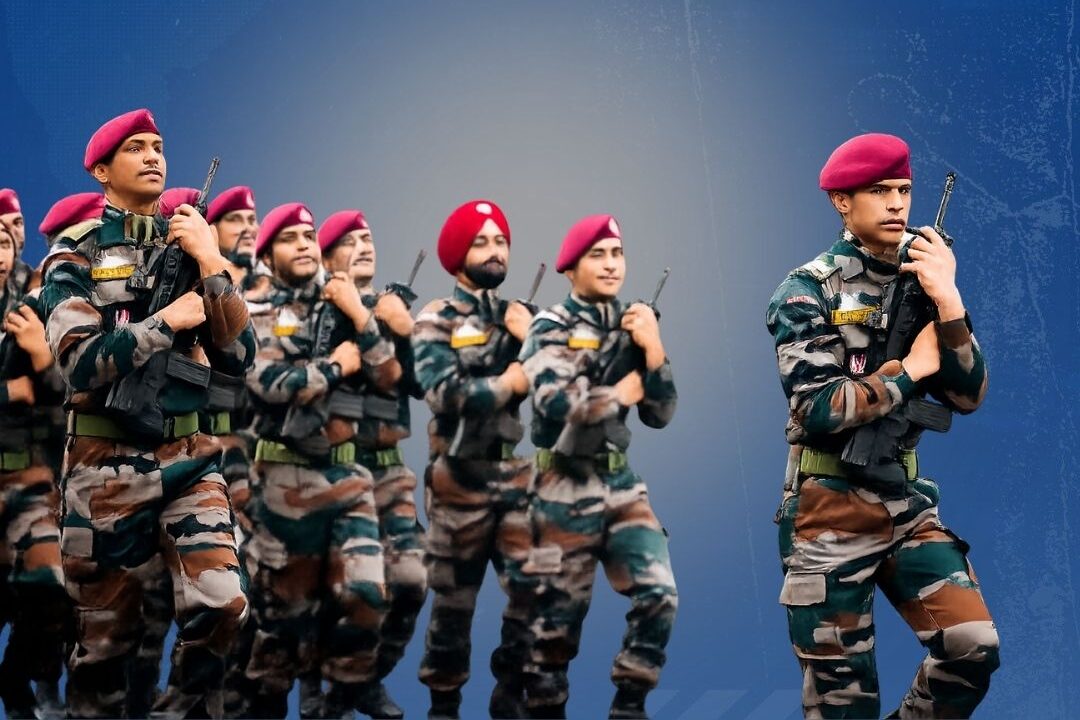
By March 2026, the theoretical debate surrounding the Agnipath scheme has collided with a cold, operational reality. As the first batches of Agniveers recruited in 2022 prepare to hang up their uniforms after their four-year “tour of duty,” the Indian Armed Forces find themselves at a perilous crossroads. The government’s fiscal gamble (trading long-term combat experience for savings on a burgeoning pension bill) is facing its ultimate stress test: the Technical Skill Void.
The Precision Paradox: S-400s vs. Four-Year Terms
The technical precision of integrated systems has replaced the determination of the infantryman in modern warfare. As of early 2026, India’s frontline defense is now dependent on high-tier assets such as the S-400 Triumph, which has three operational regiments, and the recently inducted MQ-9B Predator drones.
The fundamental critique persists: it requires nearly seven to eight years for a soldier or technician to achieve full combat readiness on these systems. The military is at risk of becoming a revolving door of semi-skilled labor by release 75% of these recruits just as they reach professional proficiency. India’s strategy appears to be akin to introducing an apprentice to a professional’s drone battle in the presence of a tech-heavy adversary such as China, where continuity is a fundamental component of PLA modernization
The Emerging Chaos: A Policy in Retraction?
The transition has been anything but smooth. A growing chaos within the ranks has been revealed by internal surveys and feedback from unit commanders. This chaos is a result of what many veterans refer to as “failed policies” that failed to consider the intangible ethos of the regimental system.
Two-Class Crisis: There is a discernible division between Agniveers and regular soldiers. In sectors such as Ladakh, the “all-important cohesion” that is essential for high-altitude survival has been fractured by different pay scales, leave policies, and the absence of a pension for the latter.
Competition over Companionship: Young Agniveers are becoming increasingly caught in an “unhealthy competition” to be among the 25% retained, rather than focusing on the mission.
Training Fatigue: Regimental centers are ensnared in a perpetual training cycle, with Junior Commissioned Officers (JCOs) being overburdened by the responsibility of training recruits who will be civilians before they are ever truly vets.
The military is not a laboratory for social engineering,” cautioned a senior officer in early 2026. We are presently imposing a significant operational disadvantage on units that are compelled to accept recruits who are barely trained and are only suitable for sentry duties.
The Manpower Deficit vs. Fiscal Modernization
The Union Budget 2026-27 is the foundation of the government’s defense strategy, as it places a higher priority on capital acquisition than personnel costs. The rationale is to restrict the pension budget, which has historically accounted for 20-25% of defense spending, in order to allocate funds to Atmanirbhar Bharat (self-reliant India) initiatives.
| Metric | 2022-23 (Launch) | 2026-27 (Projected) |
| Pension Allocation | ₹1.20 Lakh Cr | ₹1.71 Lakh Cr |
| Retention Rate | 25% | Proposed 60-75% |
| Active Soldier Shortage | 100,000 | 180,000 |
The government is reportedly contemplating a significant U-turn as of March 2026, which would involve increasing the Agniveer retention rate from 25% to as high as 75%. This change is a subliminal acknowledgment that the initial plan has precipitated a manpower shortage that hardware alone cannot resolve.
The Verdict: A Steep Price to Pay
The Agnipath scheme symbolizes a first term ‘business-first’ approach to national security. While the incentive for lowering the median age of the force was laudable, the execution has created a technical vacuum.
The policy failure narrative became more credible post the Jaisalmer Commanders’ Conference of late 2025 when the loss of ‘institutional memory’ was referred to as a key danger to northern border preparedness. India runs the risk of needing more than a ‘lean, mean fighting machine’ to remain relevant in the age of AI warfare. In the Himalayas, still ‘stable but sensitive’, the nation cannot afford the inexperience of a finger on the trigger, or a console, of a drone.











Leave a comment