










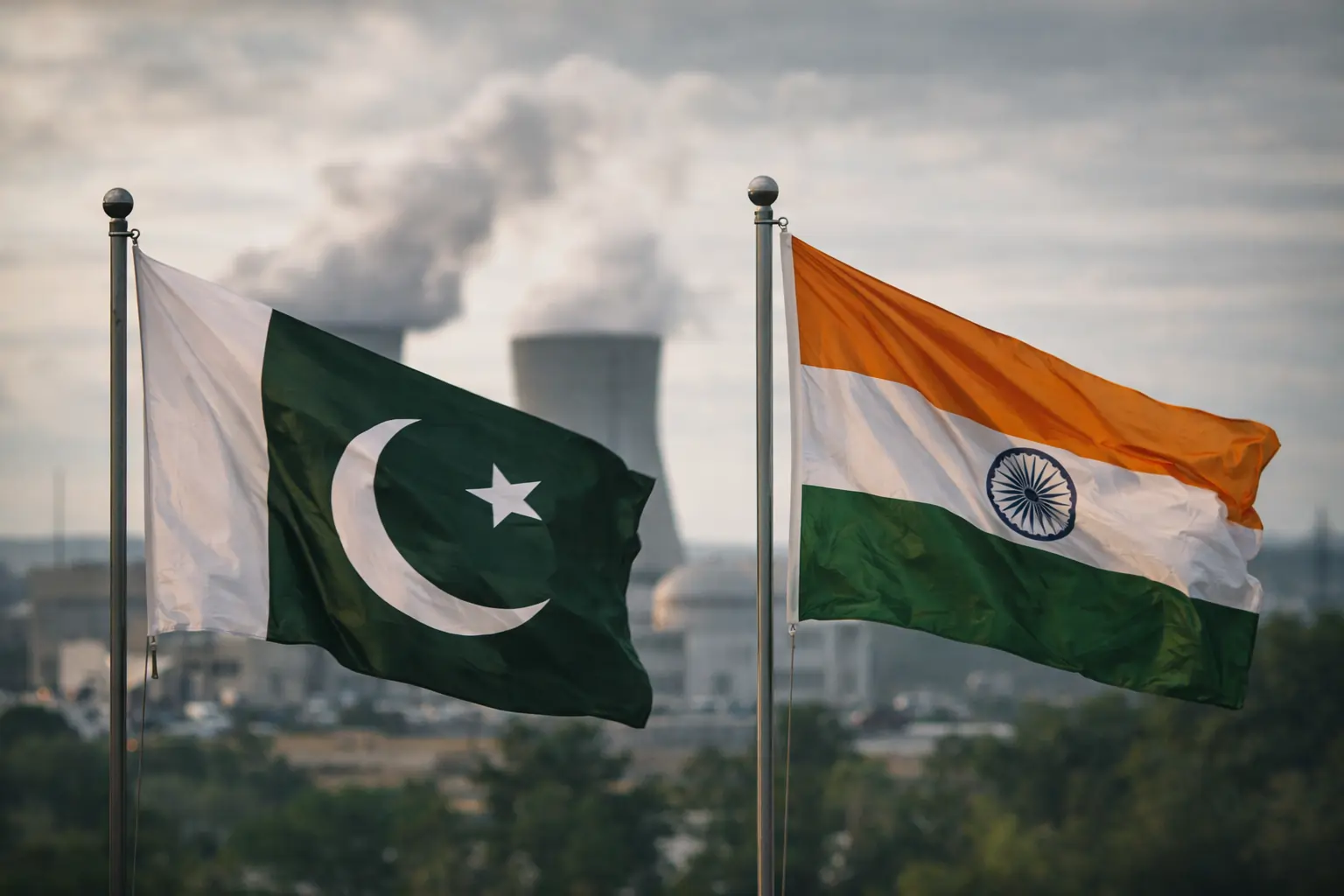
Pakistan has raised serious concerns over the long-term uranium supply and nuclear cooperation agreement recently concluded between India and Canada. Announced during Canadian Prime Minister Mark Carney’s visit to New Delhi, the deal encompasses both uranium supply for India’s civilian nuclear energy program and cooperation on advanced nuclear technologies, including small modular reactors. Pakistan’s apprehensions reflect broader issues surrounding selective nuclear agreements, non-proliferation norms, and regional strategic stability in South Asia.
The nuclear agreement between Canada and India is potentially worth $2.6 billion. It enables Canadian businesses to distribute nuclear fuel to India. This agreement, though, is considered to be for civilian purposes. However, Pakistani authorities assert that these types of agreements can strengthen India’s military nuclear capabilities. Guaranteed uranium sources could allow India to allocate other domestic reserves to military purposes, including the growth of nuclear weapons.
Concerns from Islamabad are based on historical context. India’s 1974 nuclear test, wherein India used plutonium from a Canadian-funded peaceful nuclear reactor, instigated the formation of the Nuclear Suppliers Group to control nuclear proliferation. With Canada’s recent decision to grant India preferential access to uranium and nuclear technologies, it also seems to be undermining its own historical commitment to global export controls on the spread of nuclear weapons.
As a result of the pact being civilian-centric, India is not obligated under the deal to place all of its nuclear installations under IAEA (International Atomic Energy Agency). This has led to scrutiny over India’s commitment to the international non-proliferation compliance, especially with its agreement to remain non-inspected. Pakistan posits that these selective exceptions to the nuclear supply framework are diversify to its purpose and may spur other states to enter parallel bilateral agreements that ignore multilateral controls.
The Strategic Impact of the Canada- India Deal on South Asia
The Canada- India nuclear deal poses a major threat to the already volatile security situation in South Asia, especially with the already pronounced strategic imbalances between Pakistan and India in the nuclear domain. India’s new Canada supply agreement is also likely to increase India’s strategic flexibility with its nuclear fissile material as it will be able to stockpile nuclear materials in an unconstrained manner, therefore, worsening the existing strategic imbalances, possibly resulting in a nuclear arms race. This would be detrimental to all efforts made to achieve strategic stability in the region.
Pakistan believes the arrangement impacts more than just bilateral relations; it has ramifications for international security. Individual-state nuclear agreements tend to erode specific non-proliferation agreements and mechanisms. Such deals might violate the international order regarding nuclear agreements for non-NPT states, which is that nuclear cooperation liberalization must be accompanied by specific qualifying criteria.
Pakistan’s Position on Nuclear Policy Discrimination
Pakistan has advocated for the same policy across the board with no discrimination. As stated by the Pakistani Foreign Office, nuclear cooperation must not be discriminatory. No country should be privileged outside the established frameworks that emphasize multilateralism. Agreements like the Canada-India nuclear cooperation agreement may, at best, inspire other states to defy the spirit of global non-proliferation agreements and prompt further nuclear proliferation.
In relation to India, Pakistani officials have noted that extended nuclear use for peaceful purposes, coupled with non-participation in international nuclear oversight, poses security concerns. Several officials noted that nuclear cooperation must be accompanied by transparency and adequate safeguards. Cooperation has been used to mean the opposite of non-cooperation. Pakistan has used this to indicate that international oversight may be selective, and thus, it is not truly international, in the case of India and the United States.
Canada’s Bilateral Relations
Pakistan maintains cordial relations with Canada in spite of reservations regarding the India-Canada nuclear agreement. Ishaq Dar, the Deputy Prime Minister and Foreign Minister, recently engaged in a telephonic conversation with Canadian Foreign Minister Anita Anand to explore opportunities for strengthening bilateral ties and economic cooperation. The conversation reportedly encompassed a variety of sectors, such as agriculture, clean energy, and critical minerals, and also underscored the importance of the Pakistani diaspora in Canada and the connections between individuals.
Despite the fact that the nuclear deal was not the primary topic of discussion, it continues to be a strategic concern for Pakistan. The country’s engagement with Canada is indicative of an effort to maintain a delicate balance in diplomatic relations, while also expressing concern regarding potential developments that could potentially undermine regional stability. The significance of sustained communication in addressing potential risks and promoting cooperation that is consistent with international norms is emphasized by high-level dialogues.
Strategic Dialogue and Regional Stability
The necessity of regional dialogue and diplomacy is emphasized by Pakistan’s response to the Canada-India nuclear agreement. In order to prevent escalation, it is necessary to adhere to international law, have transparency in nuclear programs, and engage in dialogue between states in order to ensure stability in South Asia. Although selective nuclear cooperation agreements are advantageous to individual nations, they pose a risk of generating strategic imbalances that could have long-term repercussions for the region’s peace and security.
In order to guarantee that civilian nuclear cooperation does not inadvertently support military nuclear programs, a balanced strategy would necessitate that all states outside the NPT, including India, adhere to consistent safeguards and inspection measures.
The Canada-India nuclear deal is a critical test for the strategic stability of South Asia and the global non-proliferation regime. Pakistan’s apprehensions are indicative of the potential for selective nuclear cooperation to exacerbate regional disparities and undermine established export control norms, despite the agreement’s framing as a civilian energy initiative. There are legitimate concerns regarding the potential impact on India’s military nuclear capabilities and the broader security landscape of an assured uranium supply that lacks comprehensive safeguards.
Pakistan’s stance underscores the necessity of nuclear policies that are transparent, non-discriminatory, and based on criteria, and that are applied uniformly to all states outside the NPT. It is imperative to maintain peace in South Asia by balancing security and non-proliferation imperatives with economic and technological cooperation. Sustained diplomatic engagement, strategic dialogue, and adherence to international frameworks are essential to prevent the erosion of global and regional security, as the most recent developments have demonstrated.








Leave a comment