


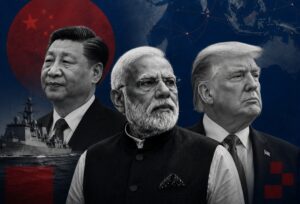
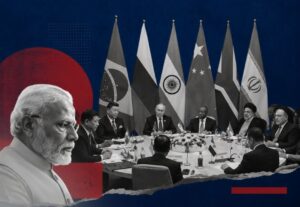

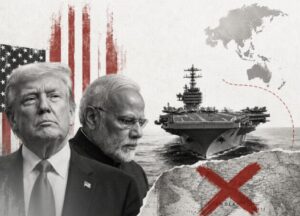

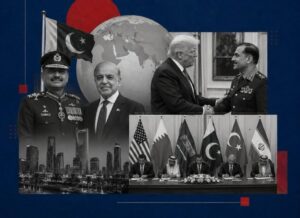
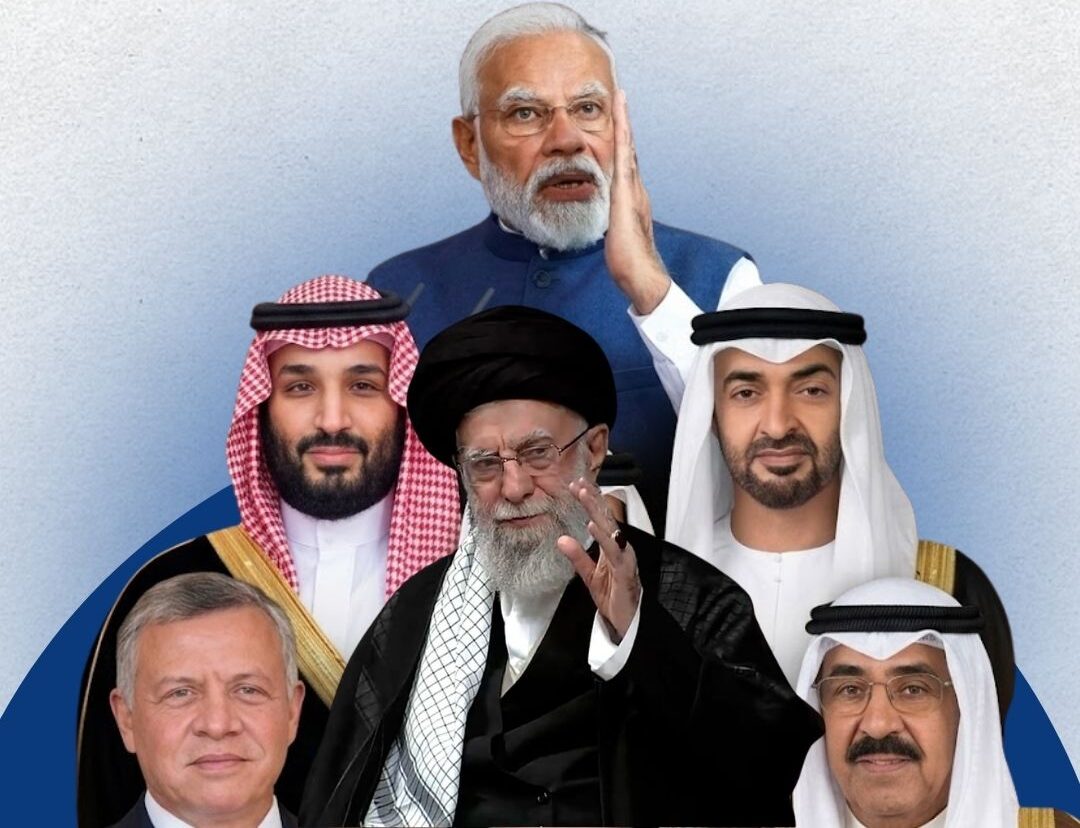
The Middle East isn’t foreign policy for India-it’s survival policy. As US-Israeli strikes pound Tehran and Iranian missiles rain down on Dubai, Abu Dhabi, Doha, and Bahrain, India faces an economic nightmare it engineered itself. By abandoning cheap Russian oil under Trump’s pressure, exiting the Chabahar port to appease US sanctions, and deepening defense ties with Netanyahu days before coordinated strikes on Iran, Modi has transformed India from a balanced regional player into a vulnerable hostage to Strait of Hormuz disruptions. The stakes are existential: 8.9 million Indian citizens scattered across the exact countries Iran just targeted, 48% of oil imports and 68% of LNG flowing through a region now under missile fire, 38% of remittances from Gulf workers whose jobs evaporate if economies freeze, and 15% of goods export markets shut by airspace closures and port disruptions. Modi chose America and Israel. Now India pays the price.
The Energy Stranglehold: Middle East War Impact on India
India imports nearly 90% of its crude oil needs, approximately 5.22 million barrels per day as of February 2026, according to Business Standard. Of this, 51% now comes from West Asia after India slashed Russian oil imports to their lowest level since March 2022 under US pressure. According to Nomura, around 50% of India’s crude oil imports currently transit through the Strait of Hormuz, 2.5- 2.7 million barrels per day from Iraq, Saudi Arabia, UAE, and Kuwait. The vulnerability is even worse for cooking gas: 80-85% of India’s LPG is sourced from the Gulf with no strategic reserves, meaning any disruption immediately hits 1.4 billion people at home.
Oil traffic through Hormuz has halted due to “extremely high insurance rates” following Iran’s attacks on US bases in Gulf countries, according to CNBC. War risk premiums for Very Large Crude Carriers have tripled since January 2026. Goldman Sachs estimates losing 1 million barrels per day of Iranian exports adds $8 to oil prices.
Trade expert Biswajit Dhar told Business Standard: “Oil prices may rise to $120-130 per barrel, and it would push our import bill, and may hurt inflation.” Every $10 increase in oil prices adds roughly $13-14 billion to India’s annual import bill, widening trade deficits and fueling inflation.
By aligning with the US-Israel axis against Iran, India traded a price risk (the loss of Russian discounts) for a supply risk (deepened dependence on Hormuz). China, by contrast, can mitigate Hormuz risk by stepping up Russian oil and gas purchases via overland routes. Beijing absorbs additional Russian supplies at critical junctures while New Delhi becomes more exposed. Modi’s costly bet hands India’s principal adversary a strategic advantage at the worst possible time.
For a detailed analysis of India’s shifting Middle East policy and strategic choices, see: From Tehran to Tel Aviv: How Modi Sold Out Iran for American Approval
The Human Crisis: Middle East War Threatens 9 Million Indians
Nearly 9 million Indian expatriates live and work across West Asia, with Indians accounting for more than a third of the population in countries now on the frontlines of Iranian attacks-Bahrain, Qatar, UAE. According to Business Standard, most are employed in low-skilled jobs in construction and hospitality from Uttar Pradesh, Bihar, West Bengal, and Telangana, while skilled workers mostly belong to Kerala and Tamil Nadu. Evacuating such large numbers from these hot zones “will be challenging in itself,” the editorial notes. Dubai airport is shut.
Gulf airspace is closed. Flight routes are being altered. For millions of Indian families, the war isn’t geopolitical theory-it’s parents, siblings, and children trapped in missile zones.
The remittance impact is catastrophic. India receives 38% of its remittances from Gulf workers-billions of dollars annually supporting millions of Indian families. If the conflict deepens and Gulf economies freeze, that flow stops, hitting households directly. As Business Standard warned, “the additional issue to contend with will be the diminution of remittances.” Kerala’s economy, dependent on Gulf remittances, faces particular devastation. States like UP, Bihar, and West Bengal-where low-skilled workers send money home will see immediate income shocks rippling through rural communities.
The Trade Collapse: 15% of Export Markets Under Fire
India’s extensive trade links with Gulf nations-including Saudi Arabia, UAE, Qatar, and Kuwait-mean prolonged tensions “could disrupt key supply chains and raise overall trade costs,” according to analysts. Fifteen percent of India’s goods export market sits in this warzone. Every port closure, every diverted ship, every suspended contract directly hits Indian exporters already struggling with global headwinds.
Rising freight and insurance costs are pushing up input costs for exporters and importers alike. If diversions become prolonged, shipments may reroute via the Cape of Good Hope, adding 15-20 days to transit time for Europe and the US, according to expert assessments.
The Bab-el-Mandeb Strait-a crucial shipping route connecting the Red Sea and Mediterranean to the Indian Ocean-already faced disruptions in 2024 during the Israel- Hamas war, forcing longer routes. Now, with both Hormuz and Red Sea routes under threat, Indian trade faces a logistics nightmare.
The conflict may also slow FTA talks with the GCC (Gulf Cooperation Council)-Saudi Arabia, UAE, Qatar, Kuwait, Oman, and Bahrain. India recently started negotiations with the GCC bloc and already implemented a free trade pact with UAE in May 2022. Prolonged instability undermines these economic integration efforts, costing India market access and investment opportunities.
The Domestic Fallout: Stock Markets, Inflation, and Unrest
Dalal Street opened the week sharply lower, mirroring global risk aversion. Indian equity indices declined over 1% on March 2, “pressured by weak global cues as escalating tensions between the US and Iran drove crude oil prices sharply higher,” according to market reports. The Week noted that “for India, the shockwaves are immediate” as fears over Hormuz transit surge.
If oil prices reach $120-130 per barrel as experts predict, inflation will spike across sectors. Higher retail fuel prices tighten household budgets.
Transportation costs affect daily commuting and goods delivery. Aviation, logistics, chemicals, and agriculture face increased operating costs. State-owned refiners and fuel retailers experience margin pressure if they cannot fully pass on higher costs. The government must balance inflation control, revenue needs, and political considerations, a fiscal tightrope during economic crisis.
Ellen Wald, president of Transversal Consulting, told CNBC: “It is bad timing for India. India’s oil purchases will be under the microscope if it buys additional Russian oil cargo.” Modi is trapped: buy Russian oil and face US tariffs, or accept $120+ oil prices and economic devastation. Either choice exposes India’s lack of strategic autonomy and dependence on American approval.
Modi’s Iran Betrayal: The Strategic Mistake
Modi’s failure to publicly condemn US-Israel strikes on Iran or support Tehran in its hour of crisis will haunt India for decades. In 2016, Modi stood in Tehran declaring India-Iran friendship “as old as history.” India committed $500 million to Chabahar Port. Fast forward to 2026: India allocated zero rupees for Chabahar in the budget, transferred its entire $120 million commitment to exit the project, and Modi visited Israel days before coordinated strikes killed Iran’s Supreme Leader Ayatollah Ali Khamenei.
Former Ambassador K.C. Singh stated bluntly: “PM Modi’s visit to Israel was wrongly timed and has completely ripped India off our neutrality on the subject.
We are seen in the Israeli corner.” Congress called it “ill-timed” and a “betrayal of India’s values.” But Modi didn’t just abandon neutrality—he actively aligned with Iran’s enemies at Iran’s most vulnerable moment. India stopped speaking with Iranian and UAE leaders, called for halting hostilities, condemned attacks in UAE, but “stopped short of directly addressing developments inside Iran,” according to analysts.
Iran has every right to anger. India stopped buying Iranian oil in 2019 under US pressure. India delayed Chabahar investments for years despite sanctions waivers. India exited Chabahar in 2026 just as Iran faced US military threats. India deepened Israeli defense cooperation ($8.6 billion in arms deals) days before strikes killed Iran’s leader. This isn’t diplomacy-it’s comprehensive betrayal of a civilizational partner that once helped India at UNHRC and cooperated on Afghanistan stability.
Survival Policy Abandoned for American Approval
The Middle East represents 48% of India’s oil, 68% of its LNG, 38% of its remittances, 8.9 million citizens, and 15% of export markets. As Iranian missiles hit Dubai and Abu Dhabi, as Hormuz traffic halts, as oil prices surge toward $130, as Gulf economies freeze,India discovers the price of Modi’s strategic choices. By abandoning Russian oil, exiting Chabahar, and embracing Netanyahu days before strikes on Iran, Modi transformed India from a balanced regional player into a vulnerable hostage to conflicts it cannot control.
Former Ambassador K.C. Singh’s warning echoes: “We are seen in the Israeli corner.” Congress’s assessment stands: this is “betrayal of India’s values.” But beyond diplomatic posturing lies economic reality-1.4 billion Indians will pay the price through higher fuel costs, inflation spikes, job losses for Gulf workers, remittance collapse, and stock market volatility. Modi chose Trump’s approval over Iran’s partnership. Now 8.9 million Indians in missile zones, millions of families dependent on Gulf remittances, and an economy facing $13-14 billion additional import costs for every $10 oil price rise discover what survival policy abandoned for American friendship actually costs. The Middle East isn’t foreign policy for India. It’s survival. And Modi just gambled India’s survival on a war India had no stake in starting, except the stake Modi created by choosing Netanyahu’s embrace over balanced diplomacy that served India’s interests for decades.






Leave a comment