



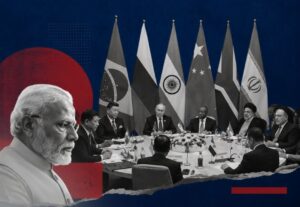

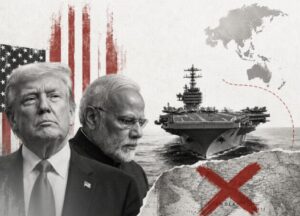

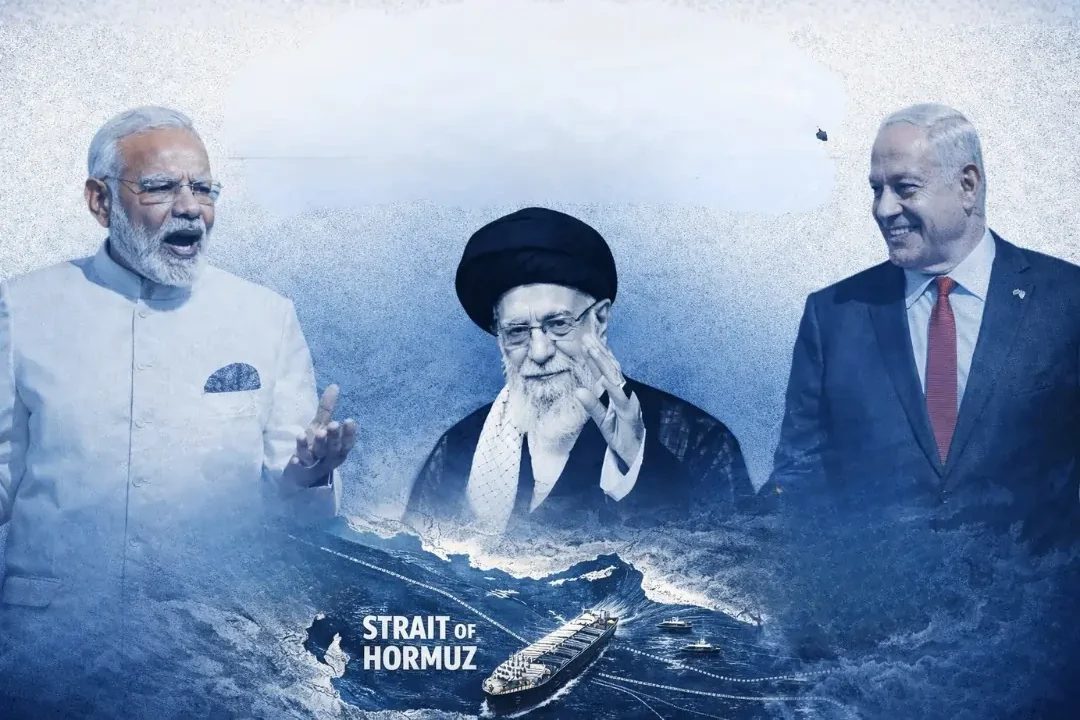
For more than two decades, India viewed Iran’s Chabahar Port as a strategic masterstroke. Located on the Gulf of Oman, just outside the narrow Strait of Hormuz, the port was designed to give India direct access to Afghanistan, Central Asia and even Europe without depending or Pakistan. Chabahar wasn’t just about Afghanistan access or Central Asian connectivity, it was India’s insurance policy against the Strait of Hormuz closure. Ten years later, as US-Israeli strike on Iran have shut Hormuz traffic and oil prices surge toward $130 per barrel, India discovers the price of abandoning that insurance. Modi allocated zero rupees for Chabahar in the 2026-27 budget, transferred the entire $120 million commitment to exit the project under US pressure, and visited Israel days before coordinated strikes killed Iran’s Supreme Leader. Now, with 50% of India’s crude oil imports, 2.5-2.7 million barrels per day, trapped behind a closed Hormuz and no alternative route, India faces an energy crisis Modi himself engineered by choosing Trump’s approval over strategic foresight.
Why Chabahar Mattered: The Strategic Calculus
Chabahar Port sits on Iran’s Makran coast along the Gulf of Oman, critically positioned outside the Strait of Hormuz. This geographic advantage made it invaluable: if Hormuz closed due to conflictas it has now in February 2026-Chabahar provided an alternative maritime route for energy imports and trade bypassing the chokepoint entirely. According to strategic analysts, developing Chabahar gave India leverage to diversify energy supply routes, reducing dependence on a single vulnerable passage through which 21% of global petroleum liquids transit.
Beyond Hormuz insurance, Chabahar offered India its only viable route to Afghanistan and Central Asia that bypassed Pakistan. As Foreign Policy noted, the port “is meant to enable India to reach, via Afghanistan, Central Asia-a region rich with natural gas and critical minerals.” Pakistan denies India transit rights, making Chabahar essential for accessing landlocked markets worth billions in potential trade. The port was also a key node in the International North-South Transport Corridor (INSTC), a 7,200-kilometer trade route connecting India with transit times by 40% and reduce logistics Costs by 30%
India’s strategic objective was clear: invest in Iranian infrastructure to gain energy security, regional connectivity, and geopolitical leverage against China’s $62 billion investment in Pakistan’s Gwadar port, located just 76 nautical miles from Chabahar. By developing Chabahar, India countered Chinese influence while securing alternatives to Hormuz-dependent energy flows.
What India Invested: $500 Million Promise to $144 Million Reality
In May 2016, India committed $500 million for Chabahar Port development and associated infrastructure. The agreement included $85 million in direct investment by India Ports Global Limited for terminal development, a $150 million credit line through Exim Bank of India, and $400 million worth of steel for the Chabahar-Zahedan rail link. India also pledged $8 billion for industries in the Chabahar Special Economic Zone.
By December 2018, India took over operations at the Shahid Beheshti Terminal. In May 2024, India signed a 10-year contract committing approximately $370 million- comprising $120 million in direct investment for infrastructure and a $250 million credit line. According to Iran International, since 2016, India Ports Global Limited invested $85 million in developing the port. India supplied mobile harbor cranes and container handling equipment worth $25 million. From FY 2016-17 to FY 2023-24, India’s government allocated 4 billion ($48 million) for Chabahar, with 1 billion ($12 million) budgeted for 2024-25.
In total, according to multiple analyses, India spent approximately $144 million over nine years on a project it promised $500 million to develop-less than 30% of the original commitment. Despite receiving multiple US sanctions waivers specifically for Chabahar, India held back investments, causing delays that undermined the port’s viability. By 2019, only 10% of Chabahar’s 8.5 million-ton capacity was utilized because “foreign companies became reluctant to participate in the port’s expansion” following US sanctions-and India was among those reluctant companies despite holding exemptions.
Why India Left: Trump’s Tariff Ultimatum
India’s Chabahar exit stems directly from Donald Trump’s January 2026 ultimatum: any country doing business with Iran faces 25% tariffs on all US trade. India’s bilateral trade with the United States stands at approximately $86 billion, making America one of India’s most important economic partners. Facing tariffs potentially reaching 50-75% on Indian exports, Modi chose to capitulate.
According to The Economic Times investigation published January 2026, India transferred its entire $120 million financial commitment to Iran and informed the US Treasury’s Office of Foreign Assets Control (OFAC) that it intended to “wind down all activities” at Chabahar. The 2026-27 budget allocated zero rupees for Chabahar-the first time in nearly a decade. The US granted a six-month sanctions waiver valid until April 26, 2026, allowing a “structured wind-down.” But as one government source told NDTV: “India has no choice but to exit the Chabahar port.”
What India Lost: Strategic Leverage at the Worst Moment
India’s Chabahar exit creates catastrophic losses precisely when India needs the port most. First, India lost its Hormuz bypass route. As US-Israeli strikes shut down Hormuz traffic in February 2026 due to “extremely high insurance rates,” 50% of India’s crude oil imports-2.5-2.7 million barrels per day from Iraq, Saudi Arabia, UAE, and Kuwait-are trapped. According to Nomura and Business Standard analyses, India now depends entirely on Hormuz for West Asian oil with no alternative maritime access. If India still controlled Chabahar, Iranian and alternative suppliers could deliver via the Gulf of Oman route, bypassing the closed Hormuz entirely.
Second, India lost energy diversification. Chabahar provided potential access to Iranian oil and gas without Hormuz transit. With India having stopped Iranian oil imports in 2019 and now exiting Chabahar, India has zero energy relationship with Iran-a country sitting on the world’s second-largest natural gas reserves and fourth-largest oil reserves. Meanwhile, China’s $400 billion strategic partnership with Iran and continued purchases of Iranian crude give Beijing the energy security and Hormuz alternatives India abandoned.
Third, India lost Afghanistan and Central Asian access. The Taliban government announced a $35 million investment in Chabahar in February 2024, signaling intention to reduce dependence on Pakistan. India’s exit undermines this alternative connectivity and strengthens Pakistan’s geographical stranglehold over Afghan trade. Central Asian states -Kazakhstan, Uzbekistan, Turkmenistan, Tajikistan-viewed Chabahar as their gateway to the Indian Ocean. India’s withdrawal means their trade flows continue routing through China or Russia, strengthening Beijing’s influence while marginalizing New Delhi.
Fourth, India lost credibility as a long-term strategic partner. As WION noted: “Walking away from Chabahar would damage India’s credibility as a long-term partner.” India committed $500 million in 2016, spent less than $150 million over nine years, and abandoned the project under US pressure. Future partners will factor India’s susceptibility to American coercion when evaluating partnership proposals.
The Insurance Policy Modi Tore Up
When Modi stood in Tehran in May 2016 declaring India-Iran friendship “as old as history” and signing the Chabahar agreement, he secured India’s insurance against Hormuz closure. That $500 million commitment-even if only $144 million was actually spent- bought India strategic leverage, energy alternatives, regional connectivity, and geopolitical influence. Ten years later, Modi tore up that insurance policy to appease Donald Trump’s tariff threats.
Now, as Hormuz shuts down, as oil prices surge toward $130, as 2.5-2.7 million barrels per day of Indian imports are trapped, as LPG supplies face disruption, as shipping costs explode, India discovers the cost of abandoning Chabahar. Every dollar added to oil prices, every disrupted shipment, every delayed cargo-all are direct consequences of Modi’s choice to exit Iran’s strategic port under US pressure.








Leave a comment