






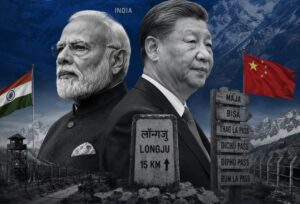

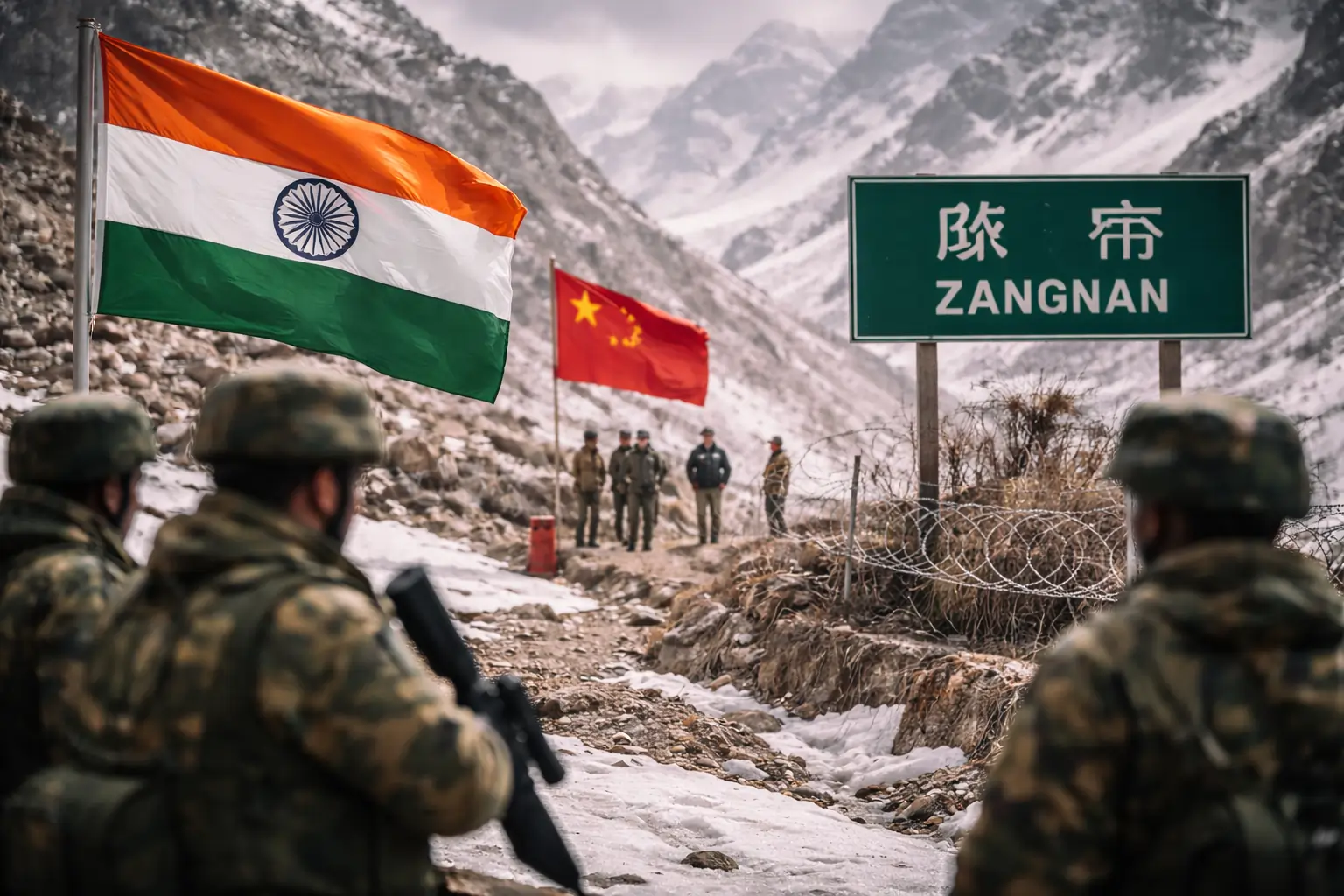
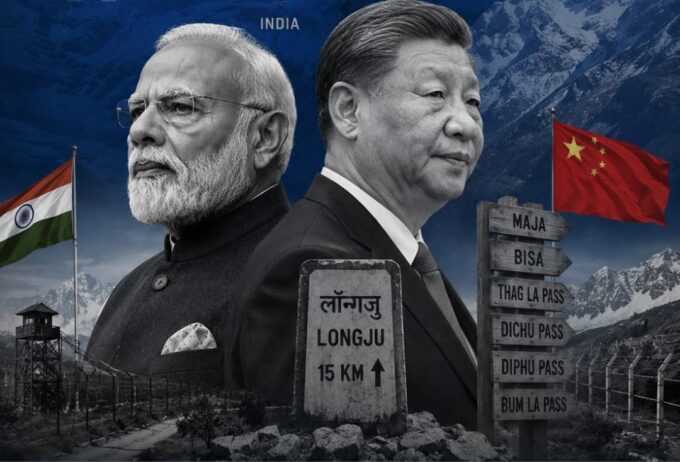
In early April 2026, Beijing once again reignited tensions with New Delhi by officially publishing a fresh set of names for locations in Arunachal Pradesh—a state in India’s far‑eastern Himalayas—referring to the region as “Zangnan” (Southern Tibet) and asserting sovereign rights over it. China’s Foreign Ministry spokesperson said that issuing these “standardized names” was fully within China’s sovereign prerogative and underscored that Beijing does not recognize the so‑called Arunachal Pradesh established by India.
India’s response was predictable: New Delhi rejected the move as “baseless,” “fictitious,” and “mischievous,” cautioning that such cartographic assertions could inject needless negativity into bilateral ties. External Affairs Ministry (MEA) spokesperson Randhir Jaiswal insisted that Arunachal “was, is and will always remain an integral and inalienable part of India.”
But beneath these diplomatic boilerplate statements lies a deeper strategic question: Is India doing enough to shape the narrative and deter continued Chinese assertion on its borders?
What China’s Renaming Really Means
Zangnan is not simply a case of naming places for the sake of it. In diplomacy, the name of a place is of great significance, as it serves purpose of asserting a claim of ownership over the place as it legitimizes the use of the place. For the past ten years, China has incrementally produced standardized lists of names for places in Arunachal, starting 2017 and continuing in 2021, 2023, 2025, and now 2026. To external analysts, this is a routine bureaucratic process. However, in terms of geopolitical landscape, Beijing is communicating intent to the far and wide, embedding the belief that Arunachal is part of China’s lock and key domain. This is part of the increased use of maps by Beijing to influence other countries in the world. China is legitimizing and promoting its name on all maps that include regions that are in dispute over other countries.
Additionally, the most recent event has not occurred without context. Alongside recent reports about the new administrative restructuring in the sensitive border regions like the formation of new counties in Xinjiang bordering Pakistan-occupied Kashmir and Afghanistan, it indicates that China is reorganizing its governance structure of the borders.
While China claims that there has been no change in its efforts to improve relations with India, the new administrative restructuring is, in a way, altering the perception of the new status quo, even if it does not change it physically.
India’s Response: Reactive, Not Proactive
New Delhi’s forthrightness is commendable, but it has primarily been reactive. Official statements focus on reasserting claims of sovereignty and dismissing the Chinese claims as completely misplaced, which is definitely needed, but does not help in creating a positive image in the international arena or countering the claim of China in the most vital global platforms.
For a long time, India has preferred a foreign policy that emphasizes the virtue of strategic ambiguity while dealing with China, but that has often been the key reason for China to continue unilateral incursions to India’s detriment without facing any real diplomatic costs. The recent Zangnan naming episode shows this very clearly: India claims that this act does not change anything, but it, for some reason, lacks the ability to compel China to withdraw its claim and, therefore, China does not face any diplomatic consequences. There is a solid chance that India’s reflexive denial, in fact, signals a defensive posture while attempting to convey to the domestic audience that there is a firm stance on sovereignty but, in reality, the strategic ambiguity in the international arena is quite pronounced. It leads to the perception that the dispute is a stalemate, and India is not actually shaping the outcomes or enforcing the desired standards, but simply responding to the situation.
Normalization’s Danger
Normalization via repetition is another aspect of concerning China methodology; in this case, India is the obvious target. Without consistent rebuttals from India, it becomes increasingly plausible that geopolitical actors will buy into the incorrect, legally and historically baseless, assertions in the China media, academic papers, and increasingly in digital cartography that India’s territory extends to include the Zangnan. The contested historical narratives and maps of the region are nothing new. China’s assertion that Zangnan is rightfully theirs is resulted from the history of how Tibet was viewed; pulling in the notion of the People’s Republic’s or any of its geographical areas being inextricably linked. India’s claims rest on the postcolonial doctrine and the governance of the region that was attributed to the British.
China’s control of narrative that has been established has a great deal of importance, and more so because of how the current geopolitical atmosphere is and the places these countries are geographically and diplomatically located.
What Could Happen Next?
There are several potential outcomes if India merely continues to assert its claim and state its sovereignty in rejection of China.
1. The People’s Republic Rampant Mapping Indoctrination
China will, with no doubt, divert resources to an already established initiative that poses digitized maps with embedded Zangnan and alternatives; the cartography will essentially become state sponsored and throughout the globe widely spread.
2. Widening of the Diplomatic Arena
China will expand the base of this ‘naming game’ tactic and will outright, distantly, and close geographically request places; using this name strategy will provide China with the means to qualify Indoctrinate relations by trading border perception liberalization i.e., relationship improvement with India.
3. Increased Regional Hostility
The indirect actions China will take will lead to a cumulative effect, to systematism, which will, in effect, encourage other countries to neutralize India’s claim by siding China.
4. Harder Strategic Bargaining
China may find it easier to defend more entrenched positions at the Line of Actual Control when negotiating. With time, this may enable the justification of arguing of ‘common understanding’ based on entrenched perceptions.
India for now has chosen to counter with mere rejections, while the narrative being formed, perceiving the situation as ‘China’s move’, has to do with global standing more than the realities on the ground, but in modern geostrategy, narratives are legitimacy and thus, legitimacy determines the outcomes. India has to elevate its regional strategic communications to the level of its territorial claim, and in doing so, it will have to employ the repressive actions on the ground to curb China’s actions, in whatever form, in order to, preserve the control over the narrative, while the ground situation remains the same.







Leave a comment