













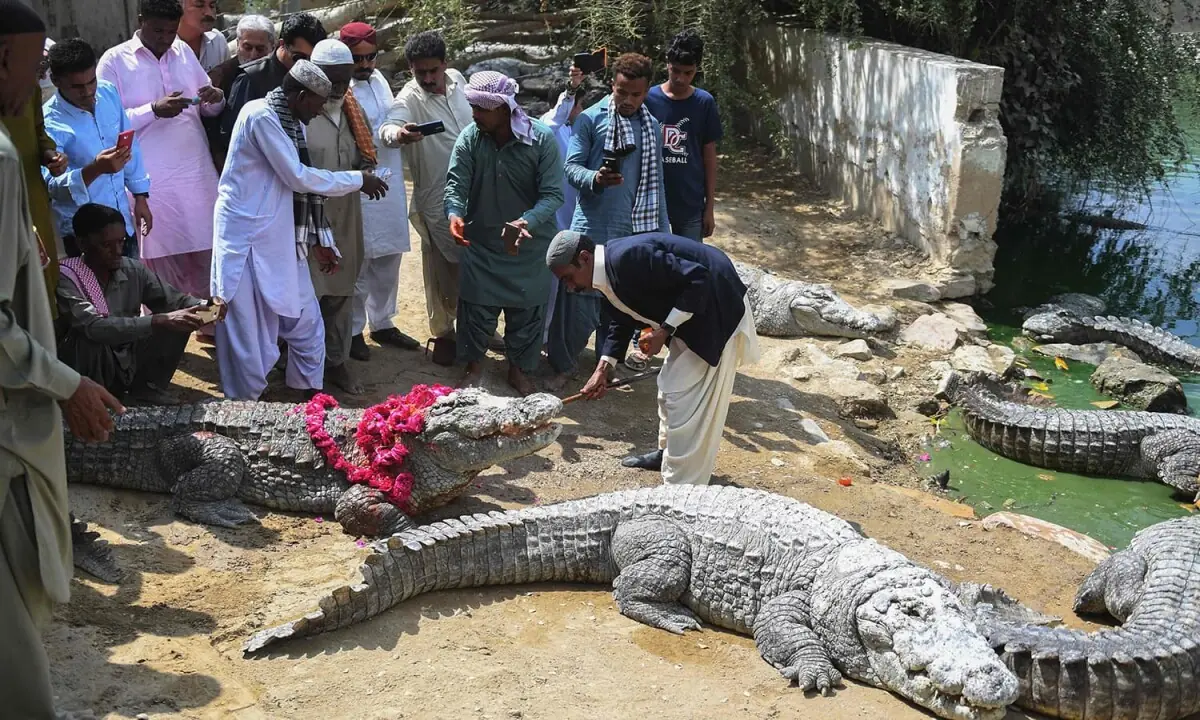
In a novel approach to border security, India’s Border Security Force (BSF) is reportedly considering the use of reptiles, including snakes and crocodiles, along riverine stretches of the Bangladesh border to prevent infiltration and curb criminal activities. The proposal comes following directions from Home Minister Amit Shah, though authorities have clarified that no implementation has taken place yet.
The eastern border with Bangladesh is 4,967 km long. Large parts of it flood easily. Are hard to build on. This makes it tough to put up fences. In these areas the Border Security Force (BSF) has a time keeping an eye on the border. They are looking into security ideas. The plan to use reptiles is new. It also raises safety worries. Villagers living along the border might be in danger. This is especially true during floods when snakes could move out of their areas. Local communities on both sides of the border could be affected. Security experts say they need to think before doing anything.
A report from March 17th says that out of 4,967 km of border fencing 3,326.14 km was approved for construction. 2,954.56 Km of fencing is already done. 371 Km of fencing is still to be built. This is mostly in areas where the land and rivers make it hard to build.
The BSF is, in charge of securing India’s borders with Bangladesh and Pakistan. They use barriers, patrolling and technology to keep the borders safe.. In some areas traditional fencing might not be enough to stop smuggling illegal crossings or other crimes.
Authorities say the idea of using reptiles is still an idea. They need to do risk assessments and think about the environment. Any decision would require talking to wildlife experts, local communities and disaster management authorities.
This proposal shows that Indian security agencies are trying to adapt to the challenges of the border. They are looking into solutions that balance the challenges of the land population density and national security. The BSF and other agencies want to keep India’s borders safe. They are exploring ways to do this.






Leave a comment