

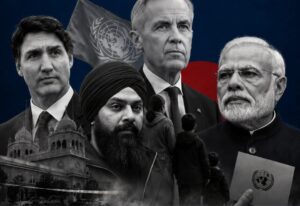

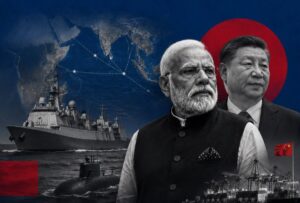
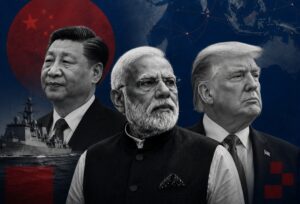


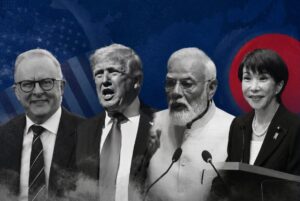
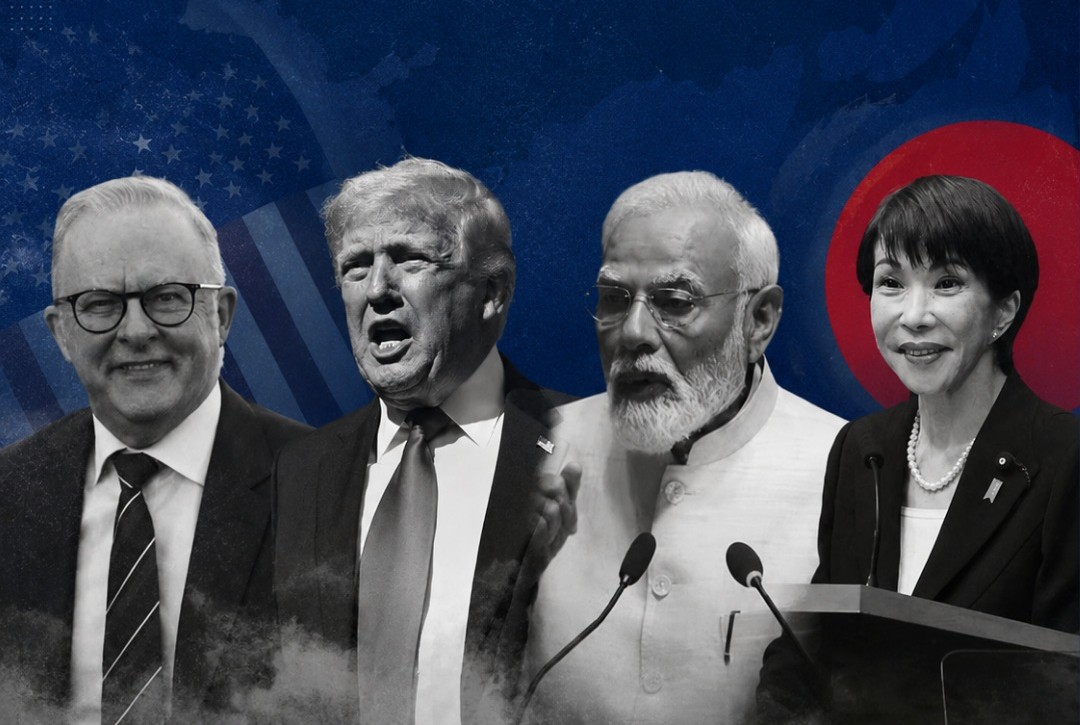
The Quad foreign Ministers, who had planned to discuss China in New Delhi, instead discussed the Strait of Hormuz, fertilizer supply and shipping insurance costs. The party had been a failure since the start of the Iran war; in fact, it revealed something that was more important than a scheduling surprise. It revealed a stark difference in the understanding of the Quad’s purpose between India and its partners. Washington, Canberra, and Tokyo have always viewed the Quad as a response to China to some degree. But it’s a different thing for India, one instrument in a larger policy to hedge against relying on a single power. Not indecision. It is a conscious, strategic policy that New Delhi has been pursuing for years, and that this year has been only sharpened.
Hedging Logic
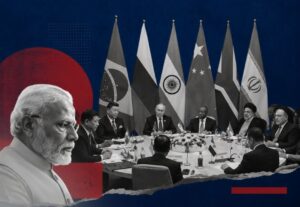
Consider the numbers. Almost 50% of the crude oil imports into India go through the Strait of Hormuz. The effects of threatening this choke are immediate and political, as they were during the Iran crisis. High oil prices lead to high inflation; and high inflation can have an election impact on a government in power in India. Hence, when India was at the Quad summit, it was not a call to arms against Beijing but rather an appeal for energy security, maritime stability, and security of supply chains. Meanwhile, Russia has been one of India’s biggest energy suppliers and events of enhancing India-Russia defence cooperation, such as joint weapons production, continue to be heard. Meanwhile, BRICS has grown to comprise Saudi Arabia, the UAE, Egypt and Iran, all of which are key players in India’s energy diversification goals.
There is no such contradiction, as New Delhi’s response is rather straightforward. Intelligence, defense access and technology are provided by the Quad. Energy diversity is one of the attractions of BRICS, as is a geopolitical cushion against western dependency. Both aren’t regarded as ideological habitats. Both are rather used as instruments.
The Frustration Within The Alliance
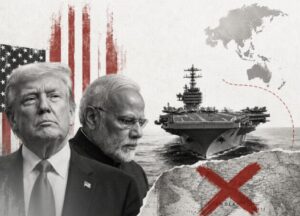
This is a real pain, and understandable, for American policymakers. The Quad has been institutionalized in the U.S. for years, with the hope of formalizing the group into a sort of coherent security framework, including joint naval exercises, semiconductors cooperation and critical tech partnership. Those efforts presuppose a common strategic perspective for the four members. It is an assumption that India has never made completely. It has consistently denied it is, or is supposed to be, a containment mechanism to stop China, but Beijing has claimed it is that. India desires to reap the benefits of Washington’s company while avoiding the price of formal alignment. It craves sophisticated technology but doesn’t want to close out all the possibilities with Moscow. It is not willing to move to the side if it wants to be part of the table in the Indo-Pacific, without excluding itself from the BRICS table as well. This balancing act is more difficult to maintain in a graceful manner during a Trump presidency. Indian confidence in American reliability has eroded over trade disputes, derogatory remarks about India’s Russian oil deals, murky AUKUS messaging and more over the past few years, especially during the India-Pakistan tensions of last year. From a geopolitics logic, United States remains the most vital ally for New Delhi.
It now doesn’t consider it to be fully reliable. This is a big deal, since it’s exactly what India needs to keep many options open in mind, not just lessen them.
Lack of Nerve or Policy
Such a strategy is sometimes referred to by critics in Washington, and even by some in India’s strategic community, as “fence-sitting,” or even a lack of “nerve. It’s a criticism that’s fundamentally wrong about what’s going on. Multi-alignment does not mean there is no strategy for India. It is the strategy.
Over the last ten years New Delhi has seen power shift, and become less concentrated and predictable. The American focus is now shared across two continents and various regions – Europe, West Asia, and Indo-Pacific – each with a reduced bandwidth. That environment is such that if India’s destiny is bound up with any single power center, whether it is Washington or Moscow or Beijing, it would be a strategic misjudgment.
This is reflected in the Fiji port initiative, which was one of the few concrete deliverables of the recent Quad summit. It was supported by all four members, but with different reasons. Australia desires to be part of a region. The U.S. is looking to challenge China’s influence. Japan is seeking maritime security. India will move forward with its own Indo-Pacific Outreach. It is a cooperation which is real, but based on the overlap of interest and not on a common vision. No, that’s not a bug in the Quad. It is just what the Quad has been and what India’s policy on the Quad is.
The Road Ahead
None of this is without risk to India’s balancing act. With Washington increasingly heading down a confrontational path with China, there might be less room for ambiguity. At some stage, greater integration of the defense, sharing of technology or intelligence among the Quad will require more assurances than New Delhi has been prepared to give. The real question that India will have to grapple with in the long run is how far one can go in sustaining strategic autonomy before it begins to appear as strategic indebility to partners. But, for the time being, India seems happy with the Quad as part of its foreign policy toolbox, and not its main foreign policy plank. It’s a safe guess for a newly emerging great power in a new multi-polar world. The reasonableness of the decision will depend less on India’s decision than the amount of patience that Washington and the Quad are willing to show a partner that is saying it will keep its options open. The main concern of the Quad doesn’t really hinge on whether India will eventually take a stance, though. The real concern is whether the alliance is going to tolerate a partner which remains the reason for its weak cohesion.






Leave a comment