


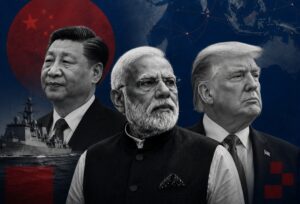
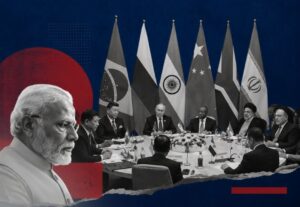

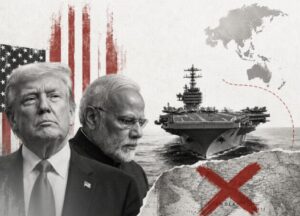

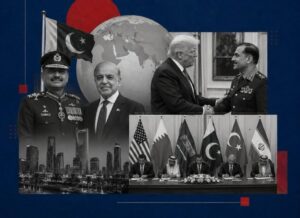

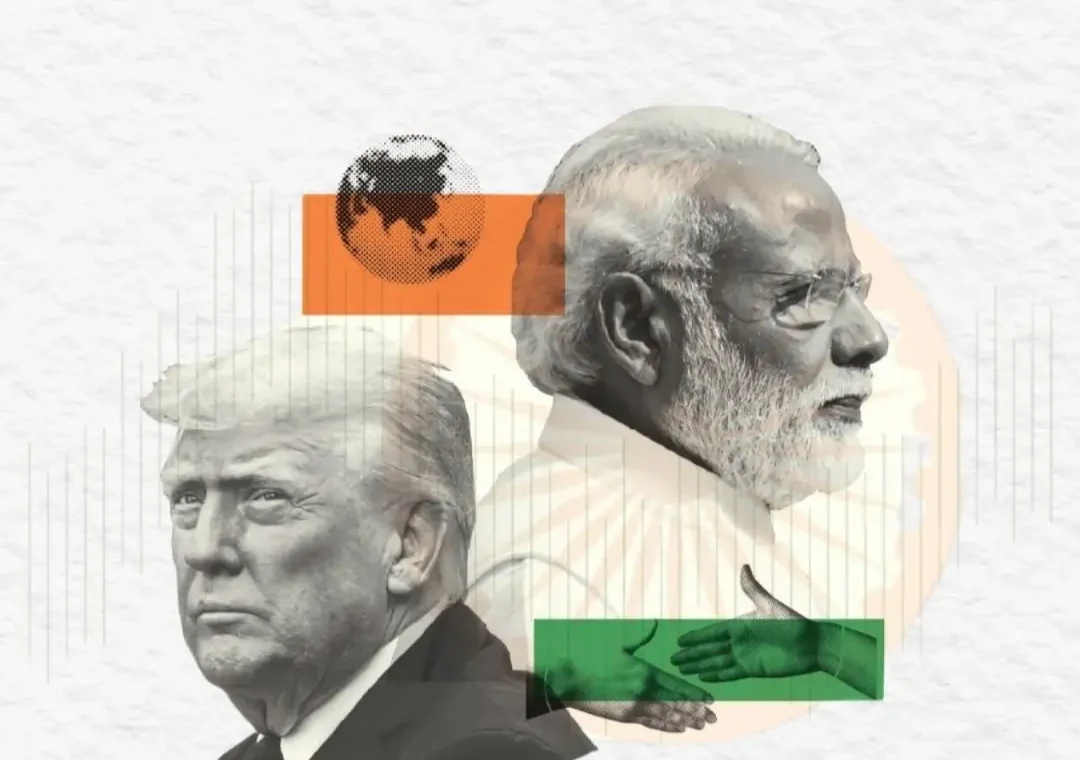
The hallmark of Indian foreign policy has traditionally been its “strategic autonomy” the ability to navigate a multipolar world without becoming a junior partner to any superpower. However, as we pass the first quarter of 2026, a series of geopolitical shocks and domestic policy shifts have ignited a fierce debate: Is Prime Minister Narendra Modi’s administration compromising India’s independence to appease a second-term President Donald Trump?
The Interim Trade Deal: Farmers at the Frontline
With the US-India ‘interim’ trade framework announced in February 2026, economic sovereignty is also in focus. While in theory, Free Trade is supposed to be regulated by David Ricardo’s principle of Comparative Advantage, in practice, it is rather complicated for India.
| Area | US Gain | Potential Indian Risk |
| Agriculture | Access for tree nuts, soybean oil, and fruits | Pressure on small-scale Indian farmers |
| Technology | Access for tree nuts, soybean oil, and fruits | Reciprocal 18% tariffs on certain exports |
| Automotive | Preferential quota for US Parts | Competition for domestic manufacturers |
General Secretary Jairam Ramesh has termed it as ‘one-sided’ and claims that India has been too soft in yielding to Trump’s ‘reciprocal tariff’ policies. The concern is that in return for technology cooperation, India is sacrificing the lives of its most vulnerable class of citizens small farmers.
The West Asia Crisis and the IRIS Dena Incident
The risk involving the Strait of Hormuz has now become a tangible day to day reality for the people of India. The U.S. and Iran conflict which recently sparked in Early 2026 has already caused intermittent disruptions to the Strait of Hormuz. This is the primary route for most of India’s imports of cooking gas (LPG).
“In Bengaluru and Mumbai, some hotels are experiencing up to eight day delays with their commercial LPG orders and are having a hard time obtaining cylinders. This war’s impact will be felt in every Indian household for years to come.”
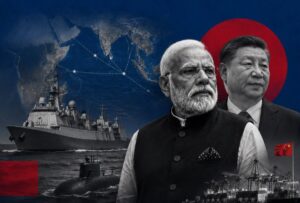
The diplomatic strains were stretched thin with the sinking of the Iranian frigate IRIS Dena. The vessel was torpedoed by a US submarine in March 2026, shortly after the ship had participated in the Milan 2026 naval exercises hosted by India. Many saw this as a sign of the U.S. ignoring India’s diplomatic sensitivities by attacking a ship in international waters after India had just hosted the exercise. New Delhi’s silence regarding the assassination of the Supreme Leader of Iran has signaled another significant departure from India’s traditional non-aligned position.
The Defense Dilemma: From Co-Production to Dependency?
A major part of the “New Era” of India-U.S. relations is the ICET (Initiative on Critical and Emerging Technology). Under the Trump administration’s second term, this has resulted in the high-profile deals for the GE F414 jet engines and MQ-9B Predator drones. However, this is coming at the cost of a gradual and quiet constriction of India’s defense diversification.
For years, India practiced a multi-vendor approach for sourcing hardware from Russia, France, and Israel. For the next few years, the demand to “de-Russify” the Indian military is inevitable. Critics say that by shackling India’s most advanced platforms to American supply chains, New Delhi is offering Washington a “kill switch” to India’s defense capabilities. In the event of a future dispute over Kashmir or human rights, the White House would control the flow of spare parts and software updates that would become a point of contention. While this move from “buyer-seller” to “co-production” may seem like an elevation, it may result in India being relegated to a high-end service center for the U.S. military-industrial complex instead of becoming an autonomous country if there is no complete technology transfer.
The Indo-Pacific: A Subservient Security Provider?
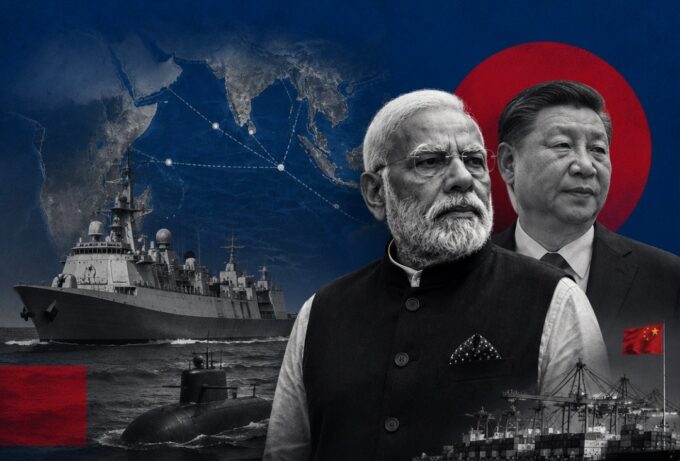
India has for a long time promoted itself as the “Net Security Provider” in the Indian Ocean. However, the recent sinking of the IRIS Dena by a U.S. submarine after a naval exercise that India had invited the US to, was a wake-up call for the Global South. It demonstrated that the U.S. considers itself free to carry out military operations in areas that are traditionally dominated by India.
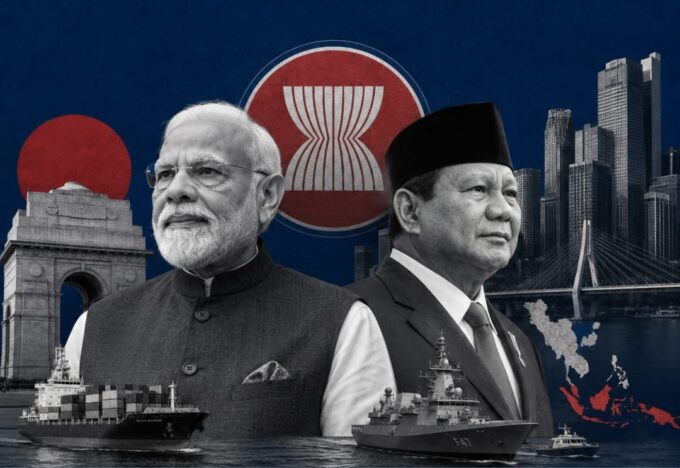
India’s responses to the recent events coupled with the escalating tensions with the U.S. and Iran show a stark shift away from the earlier vision of the Indo-Pacific that was more inclusive and focused on India showing more interest towards a Quad-only focus with the U.S. focus on Containing China. With the recent hostile relations with Iran and diminished relations with Russia, India has strategically obliterated any bridges that gave her a unique East West Mediator role.
The question of 2026 is not with India being a major power, but can she remain a major power while saying no. The more the external factors dictate the foreign policies being adopted by New Delhi, the more the historical legacy of leaders like Nehru and Vajpayee is reduced to a relic. If India is more inclined towards seeking short term trade gains and Defense contracts and is willing to sacrifice its long term strategic autonomy, she can claim to be a major power but only in name while serving Washington’s agenda rather than New Delhi’s.
Regression or Realignment?
The constraints on India’s foreign policy are more than evident. The apparent shift from ‘multi alignment’ to ‘US centric alignment’ is a downward shift from the legacy of strategic autonomy which India once enjoyed.
If India is to attain the status of a truly major power, she must achieve a balance in her relations with the United States and not allow herself to become an agent of American interests. If not, the personal foreign policy being pursued today, may very well lead to strategic isolation tomorrow.





Leave a comment