




Nine million Indians live in the Gulf. Ninety percent of India’s cooking gas passes through the Strait of Hormuz. And when the crisis hit, New Delhi had to beg Iran for two tankers.
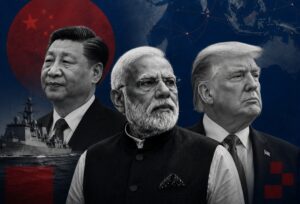
There is a phrase that has echoed through a decade of Indian foreign policy briefings, think-tank seminars, and prime ministerial speeches: “strategic autonomy.” The idea, presented with considerable self-congratulation, was that India had achieved something rare and valuable – a position close enough to every major power to benefit from all of them, and independent enough to be beholden to none.
The Gulf crisis of 2026 has exposed that idea for what it always was. Not a strategy. Performance.
When the United States and Israel struck Iran, India was caught in a position that no amount of Quad summits, BRICS meetings, SCO memberships, or 12U2 photo opportunities had prepared it for. Nine million Indian citizens live and work in the Gulf. Ninety percent of India’s supply of liquid petroleum gas, the fuel that cooks food in hundreds of millions of Indian homes, passes through the Strait of Hormuz. And when that strait became contested, India discovered, with some embarrassment, that it had no meaningful leverage with the country controlling access to it.
As Bloomberg Opinion columnist and Observer Research Foundation senior fellow Mihir Sharma wrote with surgical precision: “India has friends everywhere, but leverage nowhere.”
That sentence should be read slowly by every Indian who has spent the last decade being told their country had arrived on the world stage.
The Numbers Behind the Crisis
The scale of India’s presence in the Gulf is well known. It is a structural vulnerability that successive governments have acknowledged, and none have adequately addressed.
Over 50,000 Indians returned from the Gulf in the first week of March 2026 alone, according to Reuters, with hundreds of thousands more remaining at risk. Remittances from the Indian diaspora in Gulf countries are a foundational pillar of India’s foreign exchange reserves, supporting welfare spending and propping up the rupee in periods of pressure.
On the energy side, the numbers are starker. Fertilizer plants across India were already running at 70 percent capacity within days of the crisis beginning. Less fertilizer means reduced agricultural output. Reduced output means food inflation in a country where inflation is already a politically combustible issue. Restaurants in major cities began truncating menus or shutting entirely. The government advised citizens not to panic. That advice, as is usually the case when governments issue it, did not appear to be working.
In 1991, after Iraq invaded Kuwait, India came within weeks of sovereign bankruptcy, saved only by an emergency airlift of gold reserves to London. That crisis forced the economic reforms of 1991. Thirty-five years later, India finds itself in a structurally similar position of energy dependence, without having built the diplomatic architecture to protect itself.
What “Strategic Autonomy” Actually Produced
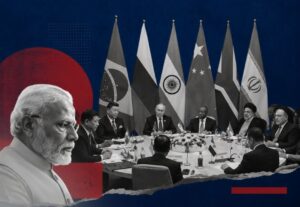
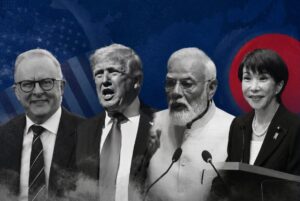
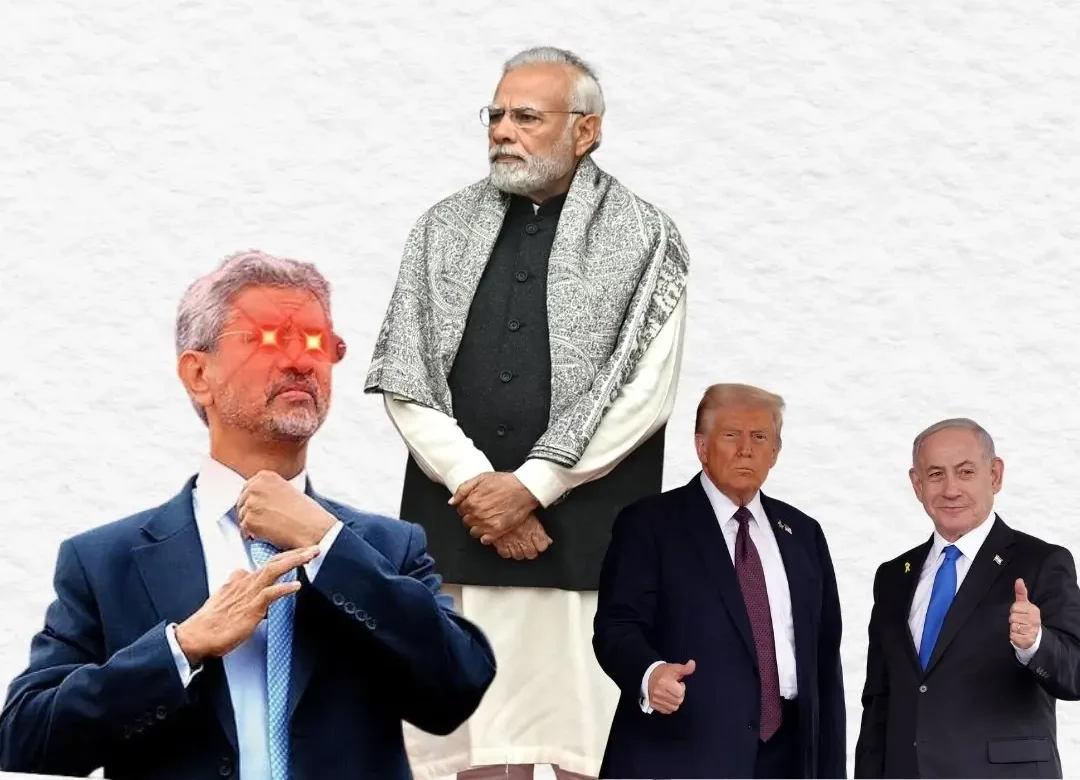
For more than a decade, New Delhi cultivated what it called strategic autonomy by booking a place at every high table simultaneously. The Quad with Washington. The Shanghai Cooperation Organization with Beijing. BRICS with Moscow. The 12U2 Group with Tel Aviv and Abu Dhabi. Officials became expert at the rhetorical win, the carefully worded statement that pleased everyone and committed to nothing.
The Gulf crisis revealed the cost of that approach. India spent three years deepening its strategic partnership with Israel, including technology transfers, military cooperation deals, and Prime Minister Modi’s visit to Tel Aviv, which came just hours before the U.S.- Israel strikes on Iran began. From Tehran’s perspective, as Sharma notes, this made India either a bad friend or a naive one. Either way, not a trusted interlocutor.
When New Delhi finally began making calls, Prime Minister Modi spoke to the Iranian president, and Foreign Minister S. Jaishankar called his counterpart in Tehran, announcing the conversations were “already yielding some results.” Two tankers carrying 93,000 tons of liquid petroleum gas were permitted through the strait. Twenty-two others, according to Reuters, remained stranded.
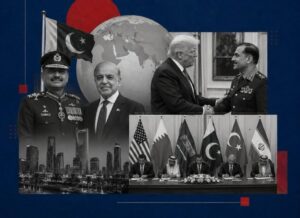
Indonesia, Turkey, and Pakistan had already secured the same case-by-case consideration that India was now negotiating for. India was not uniquely trusted. It was not even uniquely untrusted. It was, in the most damaging possible way, simply not a priority.
Operation Sindoor: When India Stood Completely Alone
Before the Gulf crisis, there was Operation Sindoor. And if any single episode should have forced a reckoning with the true state of India’s global standing, it was that one.
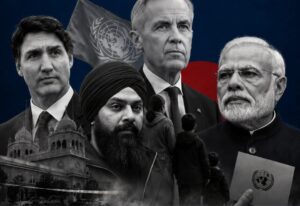
When India launched cross-border strikes under Operation Sindoor, the government’s response to the Pahalgam terror attack, not a single nation on earth issued an unqualified statement of support. Not the United States, which urged “restraint.” Not Russia, which stayed carefully neutral. Not the Gulf monarchies, where millions of Indians work and send money home. Not a single member of the Quad, the grouping India had spent years presenting as the cornerstone of its Indo-Pacific strategy, stood up and said: India is right, and we are with it.
What followed was one of the most expensive diplomatic embarrassments in recent Indian memory. A lavish multi-city delegation, funded entirely by Indian taxpayers, fanned out across world capitals to explain India’s position, present evidence of Pakistani complicity in the Pahalgam attack, and build an international coalition of understanding. Senior ministers, former diplomats, and ruling party spokespersons traveled to Washington, London, Brussels, Moscow, Tokyo, and the Gulf. The exercise was grand in its ambition and humiliating in its outcome. The world listened politely. It was not persuaded. No major power shifted its position. No joint statement of support was issued. No ally broke ranks to stand with New Delhi.
A government that had spent a decade telling Indians their country was vishwaguru, teacher to the world, a civilizational power whose voice carried unique moral weight in global forums, could not, at its moment of military and political need, secure a single unambiguous endorsement from any nation it called a friend. The delegations came home. The silence from the world remained. And the government, with characteristic discipline, ensured that prime-time television moved on before anyone could ask the obvious question: if India has all these friendships, where were they when it mattered?
The Cascading Losses
Beyond the immediate crisis, India is absorbing losses across the region that have received insufficient public attention.
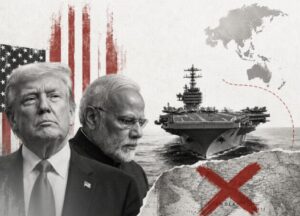
Chabahar port in Iran, into which India has invested significant diplomatic and financial capital as its primary route into Afghanistan and Central Asia, bypassing Pakistan, is now directly imperiled by the conflict and by the question of whether New Delhi will be forced to defy U.S. sanctions to maintain the relationship with Tehran that the port requires. Rice export markets in the Gulf, worth billions annually to Indian farmers, are disrupted. The Trump administration had signaled that India would be permitted to continue buying Russian oil to compensate for Middle Eastern supply disruptions, but that indulgence is contingent on India not openly defying the broader U.S. sanctions architecture. To earn enough trust with Tehran to secure its tanker routes, India may need to burn bridges with Washington. The two requirements are in direct contradiction.
India’s security establishment has also registered alarm at the war’s stated aim of regime change in Iran. A power vacuum west of Afghanistan and Pakistan’s already extremism- prone highland regions is, from New Delhi’s perspective, a threat considerably larger than the Revolutionary Guard ever was. India’s Shia minority, historically among the most integrated and institutionally loyal communities in the country, is watching the government’s response with visible unease.
The Question That Remains
Mihir Sharma frames the fundamental problem with precision: India’s confused presence in the region. Being at every table does not mean you shape what happens at it. A decade of summits, bilateral agreements, and strategic partnership declarations has produced a country that is diplomatically visible and strategically weightless.
The question New Delhi must answer, once this crisis passes, is not a tactical one. It is not about which calls to make or which tankers to prioritize. It is whether a foreign policy built on rhetorical positioning, careful ambiguity, and the avoidance of hard choices can actually protect the things that matter: the lives of Indian citizens abroad, the energy that fuels Indian kitchens, the food that feeds Indian families.
Operation Sindoor showed the world did not believe India’s narrative enough to endorse it. The Gulf crisis showed the world did not trust India enough to prioritize it. Taken together, they deliver a verdict on ten years of vishwaguru diplomacy that no delegation, however lavishly funded and widely traveled, can talk its way around.
India spent a decade building a global profile. When it needed leverage, it found it had built a reputation instead.
Reputations do not move tankers through contested straits. And they do not bring allies to your side when the guns are firing.







Leave a comment