




In Gaza, the combined casualty and injury count has surged past 72,000, with women, children, and the elderly bearing the devastating brunt of the violence. Thousands of miles away, the meat grinder of the Russia-Ukraine war continues unabated. By the spring of 2026, military casualties in Eastern Europe are projected to reach a staggering two milliona, of industrialized slaughter not seen on the continent since the fall of the Third Reich.
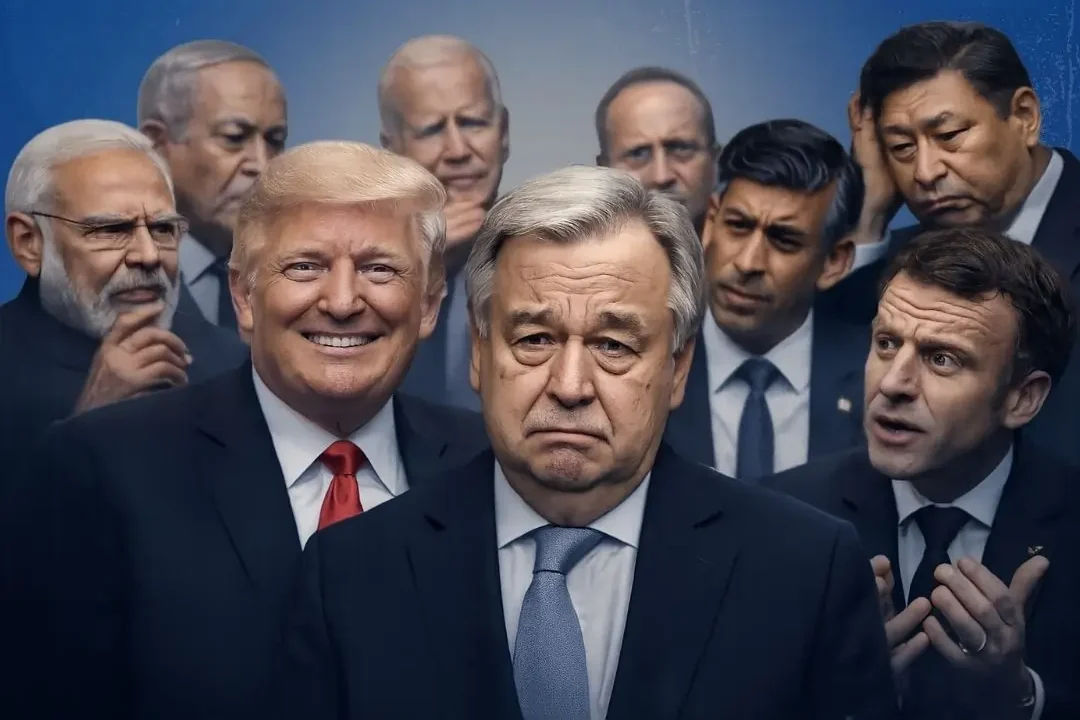
As the world burns, a glaring question echoes through the empty, polished halls of international diplomacy: Where is the United Nations?
Constructed in 1945 from the ashes of the Second World War, the UN was sold to the global public as the ultimate safeguard against tyranny, conflict, and genocide. Today, boasting 193 member states, it has utterly failed its primary mandate. The United Nations has not prevented war; it has merely become a spectator to it, trapped in a cage of its own bureaucratic design.
The Dictatorship of the Veto
The root of the UN’s paralysis is no secret. When the institution was founded, five nations, the United States, the United Kingdom, France, China, and the Soviet Union (now Russia), awarded themselves a geopolitical cheat code: the permanent veto power within the Security Council.
This mechanism allows any single member of the “P5” to instantly kill any resolution, regardless of overwhelming global consensus or the desperate need for intervention. Instead of acting as the architects of global stability, these five nations operate as an exclusive cartel, holding international peace hostage to serve their own domestic agendas and shield their regional proxies.
The human cost of this diplomatic gridlock is staggering. According to Oxfam’s scathing “Vetoing Humanity” report, 27 out of the 30 vetoes cast over the last decade regarding protracted conflicts were used specifically to block action in Syria, Ukraine, and the Palestinian territories. Across the 23 global conflicts analyzed in the report, over a million people have perished, and 230 million have been driven into desperate need of humanitarian aid. Russia and the United States stand out as the primary culprits, routinely abusing their veto power to block peace efforts that conflict with their strategic interests.
A Legacy of Blood and Apathy
The current paralysis over Ukraine and the Middle East is not an anomaly; it is the defining feature of the UN’s modern history. The institution possesses a dark, unforgivable legacy of abandoning the vulnerable precisely when they need protection the most.
In 1994, despite clear warnings, the UN pulled its peacekeepers out of Rwanda, practically clearing the stage for the slaughter of 800,000 Tutsis. A year later in Srebrenica, Dutch forces wearing the UN’s signature blue helmets stood idly by while Serbian forces rounded up and massacred 8,000 Muslim men and boys in what was supposed to be a UN-designated “safe area.”
From 2011 to 2024, repeated vetoes by Russia and China shielded Bashar al-Assad from international intervention, granting him the political cover to massacre half a million Syrians. From the chaotic streets of Haiti to the war-torn villages of Congo and South Sudan, the UN’s inability to enforce peace has turned it into a symbol of hollow rhetoric.
Institutional Rot and Moral Decay
The UN’s moral authority has been greatly damaged by institutional rot, in addition to its political impotence. The 1996 Oil-for-Food scandal, which was very well known, showed that there was a lot of corruption at the top of the organization. The UN’s own peacekeepers, on the other hand, have a much worse record.
For decades, there have been terrible reports from Congo, Bosnia, Liberia, and Haiti about UN troops raping and sexually abusing women and children who were supposed to be safe. The UN says it has a “zero-tolerance” policy against sexual abuse, but in reality, there is no punishment for it. The UN can’t legally prosecute its own peacekeepers, so soldiers who are accused of crimes are sent back to their home countries, where they won’t have to go to court because they are immune from prosecution.
The Humanitarian Band-Aid
People who support the United Nations are quick to point out its clear successes. It is true that organizations like the World Health Organization (WHO), UNICEF, and the World Food Programme (WFP) do amazing work that saves lives by bringing vaccines and food to the most remote areas of the world. The UN is also an important place for climate initiatives like the Paris Agreement. It has also helped to cool nuclear tensions in the past, such as during the Cuban Missile Crisis in 1962 and the Iran Nuclear Deal in 2015. UN missions have been able to keep peace in some places, like Cyprus and Liberia after the civil war.
But this defense misses the main point. It’s good to give refugees blankets, grain, and medicine, but it’s not enough to stop the warlords who made them in the first place.
Reform or Irrelevance
Nearly eighty years after its inception, the United Nations is suffering a fatal crisis of identity. It was designed to be the sword and shield of global justice. Instead, it has been reduced to a glorified humanitarian cleanup crew. It excels at treating the symptoms of global conflict while actively enabling the disease.
As long as the unchecked veto power of the P5 exists, and as long as UN forces can commit atrocities without facing independent tribunals, the United Nations will remain a paralyzed, hypocritical entity. We are living in a 21st-century world governed by 20th-century architecture.
The international community is in a desperate need of functional, multilateral system to defend human life and uphold international law. The current iteration of the UN is not that system. Unless the veto is abolished or radically reformed, and strict accountability is enforced, the United Nations will inevitably fade into total obsolescence, a tragic monument to a world that knew exactly how to save itself, but simply chose not to.





Leave a comment