













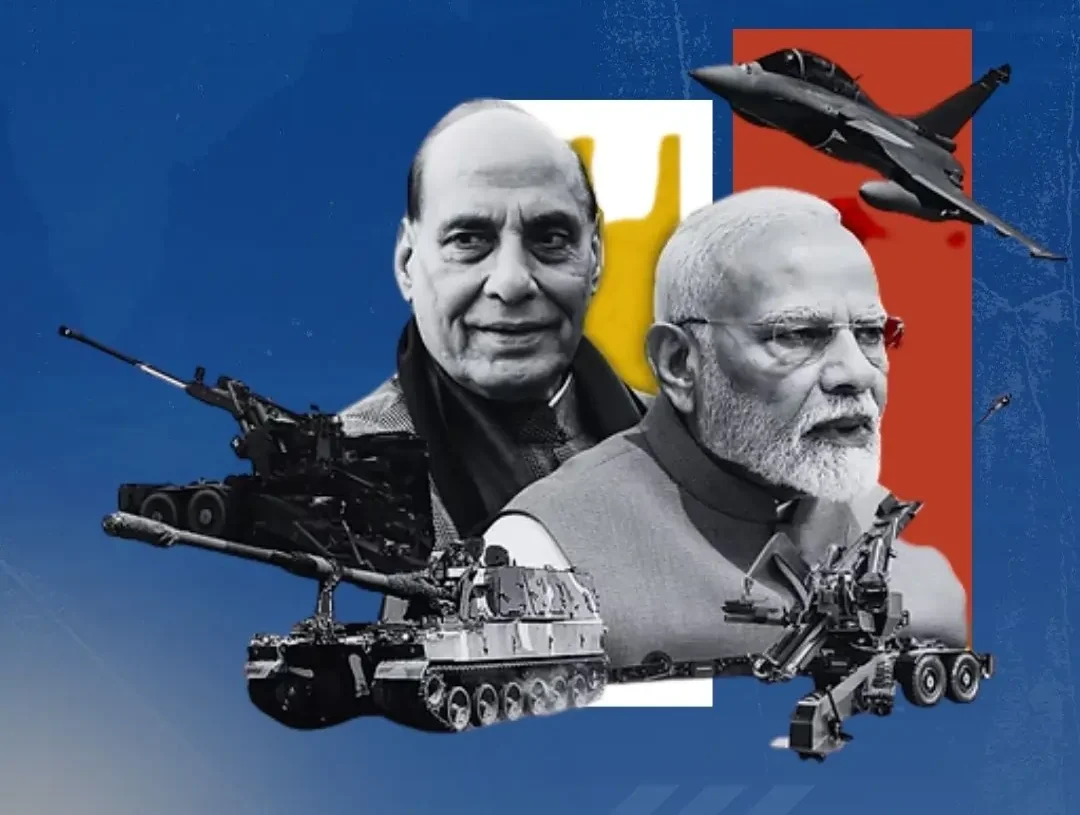
While India’s military leadership publicly claims that the country is well-prepared to defend itself against any potential adversary, a closer examination of its battlefield capabilities tells a different story. Among the many areas of concern, artillery long regarded as the most decisive element in ground warfare remains a glaring weakness. Despite modernization programs and ambitious procurement plans, the Indian Army’s artillery is insufficient in both quantity and capability to meet the demands of contemporary high-intensity conflicts.
Historical Lessons in Artillery Deficiency
In India’s military history, the consequences of not having enough artillery have been repeated. In 1526, The First Battle of Panipat (India’s first battlefield in history to witness the employment of artillery) saw the defeat of the Delhi Sultanate by invading forces of Zahir-ud-din Muhammad Babar. The result of the battle saw Ibrahim Lodhi (the Delhi Sultanate) having more numbers in his army; however, artillery was an absence. The absence of artillery, while being numerically superior, led to the psychological shock and a losing battle against the relaxing fires of cannon artillery. Elephants of war panicked, and soldiers were trammeled to defeat, illustrating that the presence of some elements of artillery can contribute to and determine the outcomes of battles.
Rewind to the earlier years of the 20th century and the same pattern was repeated. In India’s campaigns of Kashmir in 1947-1948 and the 1962 Sino-Indian war, the lack of artillery exposed Indian soldiers to enemy fires without the capacity of making an effort to fire, let alone, determine the fires in the battlefield. The lack of sufficient infrastructure led to a worsening of the absence of a gun’s poor mobility in the battleground in response to the road system. The problem persisted even decades afterward. While the Indian Army modernized and expanded its artillery, an absence of artillery remained. Remaining bent-out modernizations and expansions of the Indian Army led to a remained artillery.
Current Artillery Strength and Limitations
2026 India’s army projects to have 226 field artillery regiments, aiming to have 270 in the next years. Each regiment has an average of 18 guns (3-4 reserve guns). This makes up an all total of 5670. This number artillery regiment guns while appearing large, still remains a far reach to achieving the overall operational requirements of the armed forces in a synergized combat against enemies in all three? fronts.
Learning from the Kargil War of 1999, the Army introduced “mediumizing.” This involves the more recent replacement of older 105 mm and 130 mm artillery pieces with the more powerful 155 mm systems. In addition, the Army introduced multiple-barrel rocket launchers (MBRLs), including ten regiments of Pinaka, three of Russian SMERCH, and five of GRAD BM-21. To achieve saturation fire for extended regions, the Army bolstered its BrahMos cruise missile units, of which four are operational and the fifth is being formed, for precise strikes on crucial enemy assets.
Acquired capabilities, however, leave large gaps. Each mechanized strike corp, responsible for deep operations in the enemy’s rear, is supposed to have four medium self-propelled (SP) artillery regiments. The under-production of the Indian K-9 Vajra SP howitzers, which is limited to five regiments (100 guns), leaves the strike corps under-equipped. To address operational shortcomings, the Army is left with the consideration of buying an additional 100–200 self-propelled guns, though the potential is hindered by bureaucracy, budget limitations, and the procurement process.
Artillery Modernization Efforts and Operational Technology Upgrades
India is making incremental process in the modernization and operational technology enhancement of its artillery. The Army has developed its own Swati Weapon Locating Radar (WLR) and acquired Israel’s LOROS for counter-battery fire. Based on a range of 20–25 kilometers, these technologies are able to detect and locate enemy artillery pieces and vehicles, thereby enhancing the operational capacity of its guns.
In collaboration with the private sector, the Defense Research and Development Organization (DRDO) is developing the Advanced Towed Artillery Gun System (ATAGS). It is a 155 mm howitzer with a 25-liter chamber, the largest in India’s inventory. With respect to the chamber size of older Bofors guns, which are 19-liters, the ATAGS is expected to produce shells of improved lethality and kill power. Research is currently being performed to improve the range, precision, and kill power of shells with respect to ramjet-assisted projectiles, high-performance explosives, and bi-modular charge systems (BMCS).
Still, many of these techniques are underdeveloped and still in the early stages of production. ATAGS is expected to be the heart of Indian artillery; however, without the increase in mass production, there will be a deficiency in operational support. Additionally, while the ramjet projectile and graded explosive project are promising, they have not been implemented in large quantities.
India’s artillery procurement problems are not limited to domestic production; its procurement problems are also evident when looking internationally. For instance, the 145 M777 ultralight guns from BAE Systems are useful in providing artillery support in low-income, high-mountain regions, especially in the northern borders of India where there is conflict with both Pakistan and China. However, they do little to solve the broader issue of the shortfall of India’s artillery. Furthermore, when looking to India’s reliance on international procurement, the slow domestic production becomes more evident. This is further compounded by the fact that many international markets for artillery are limited by high costs, licensing issues, and geopolitical concerns.
These delays in producing affordable and long-range artillery guns have left the Indian Army without the advanced levels of firepower and operational capabilities to function in high-intensity combat. It has also shown how the reliance on domestic production is a sign of the failures of the Ordnance Factory Board (OFB) and certain DRDO programs.
Operational Implications
The shortfall of artillery cannons is not substantiated in mere numbers; it has extreme operational ramifications. Artillery is still an invaluable asset in the sculpting of the battlefield, the neutralization of enemy positions, and the support of infantry and combat units. An army without sufficient firepower risks the inability to deliver decisive blows. Soldiers and tanks from the combat units will subsequently have to perform the highly dangerous tasks of their mission with minimal support.
The operational ramifications will hit specifically hard in the case of India’s sufficiently complex and multi-faceted bordering nations. In this case, it is possible to illustrate the improvement of the enemies’ artillery and missile systems. An enemy with sufficient resources, aligned against India’s restrictive firepower, is able to completely and absolutely remove any operational advantages that may be afforded to India due to numerical superiority. Therefore, the firepower restrictive enemy has the capability to pose serious threats to India’s operational functionality, both offensively and defensively.
Although the Indian army has sought to addresses these artillery deficiencies for a number of years through international developmental aid, technological advancements, composite systems, and surveillance and precision targeting means, these enhancements have only partially addressed the deficiencies of artillery systems. These enhancements, with the integration of advanced surveillance and precision targeting means, have only partially addressed the deficiencies.
Without a firepower restriction on the enemy, India will remain limited in operational functionality. These deficiencies and the long lead times of production and procurement illustrate the dangers that India faces in warfare. For India’s complex multi-faceted border, altering this firepower restriction is not only an issue of warfare, but a matter of national survival.












Leave a comment