





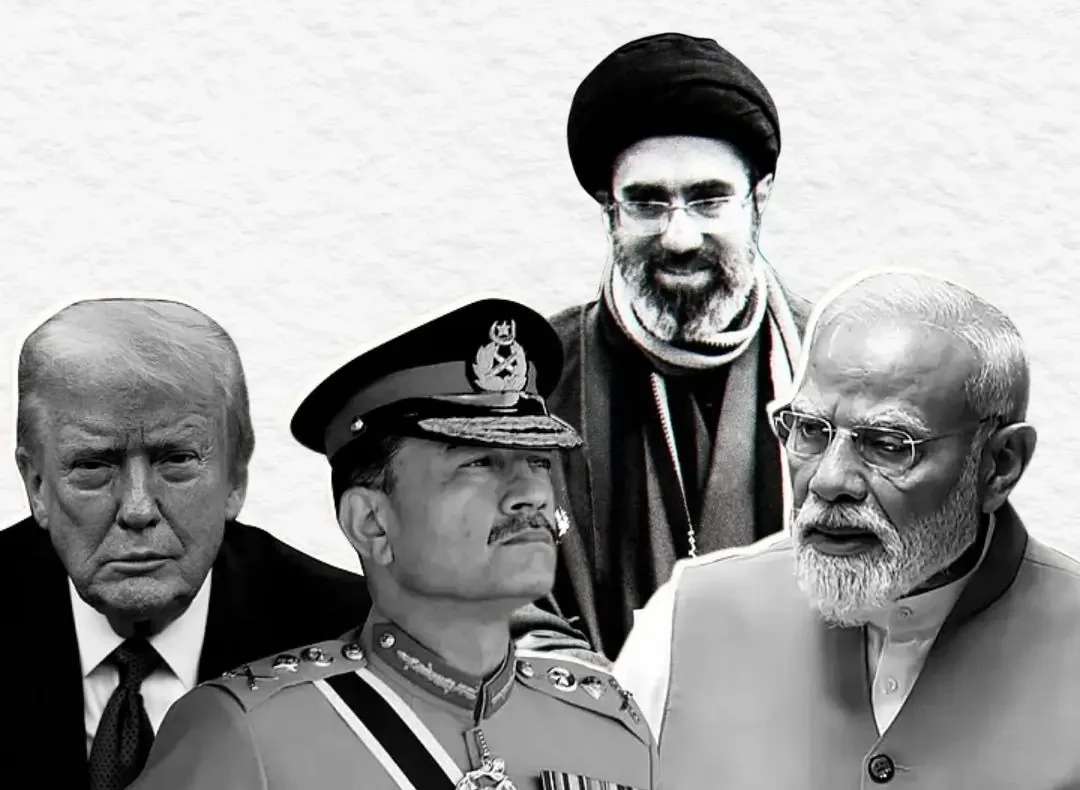
The Gulf War’s Bill Has Arrived. South Asia Is Paying It – But India Is Footing Most of It. From cooking gas in Kolkata to stranded tankers in the Strait of Hormuz, the U.S.-Israel war on Iran has exposed every structural weakness South Asia spent a decade pretending it had fixed – and India’s are the deepest of all
Wars have a way of settling arguments that peacetime rhetoric keeps open. For ten years, India’s foreign policy establishment told a story of a rising power, strategically autonomous, diplomatically indispensable, economically resilient, and too important to any single bloc to be pushed around by events it did not choose. The U.S.-Israel war on Iran has not just challenged that story. It has dismantled it, sector by sector, number by number, with a thoroughness that no opposition party or critical journalist could have managed on their
own.
The conflict’s shockwaves are traveling across the entire South Asian region. Every nation from the Maldives to Nepal is absorbing damage. But the damage is not equal. It is not even close to equal. Ranked by the combination of economic exposure, diplomatic failure, energy vulnerability, and governance unpreparedness, India sits at the top of the casualty list. Pakistan, despite its chronic fragilities, is absorbing the shock with more diplomatic flexibility than New Delhi. Bangladesh, Nepal, Sri Lanka, and the smaller economies each carry specific wounds. But it is India, the largest, the most diplomatically active, and the most self-congratulatory about its global standing, that has the most to answer for.
The Transmission Mechanism: How a Gulf War Reaches South Asian Kitchens
Before examining each country, understand the chain of damage. The Strait of Hormuz carries approximately 20 million barrels of crude and oil products daily, roughly 25 percent of global seaborne oil trade, according to International Energy Agency estimates. It also handles a material share of global LNG exports. When war-risk conditions elevate in the Gulf, the cascade into South Asia follows a predictable but devastating sequence.
War-risk insurance premiums, which ran at approximately 0.25 percent of vessel value per voyage in normal conditions, surged to as high as 3 percent during the crisis, a twelvefold increase that makes every cargo more expensive even when it can physically move. Shipping companies pause transits. Freight rates spike. Those spikes translate into higher delivered prices for fuel, food inputs, fertilizers, and medicines across every import- dependent economy in the region. Governments respond with rationing, emergency procurement, and subsidies that strain already pressured fiscal positions. The entire sequence, from a missile strike near the strait to a family in Dhaka or Delhi paying more for cooking gas, takes weeks, not months.
South Asia, as a region, is structurally exposed to exactly this chain. It is import-dependent on energy, remittance-dependent for household welfare, and diplomatically too small to shape events in the Gulf. What differs between nations is how deep the exposure runs and how well or badly their governments prepared for it.
India: The Biggest Loser, Across Every Domain
Start with the number that deserves to be on every front page: 90 percent. That is the share of India’s LPG imports that transit the Strait of Hormuz. India imports approximately 60 percent of its total LPG consumption. That means the cooking gas used in hundreds of millions of Indian homes depends on a waterway now operating under active war conditions.
India imports 87 percent of its crude oil consumption, according to petroleum ministry data. Its strategic crude storage capacity stands at 5.33 million metric tonnes. As of March 23, 2026, only 3.372 million metric tonnes, roughly 64 percent of that capacity, was filled. That represents approximately four to five days of national oil consumption. A decade of energy security rhetoric, and India enters a Gulf war with its strategic reserves less than two-thirds full. That is not a crisis that arrived without warning. It is a policy choice that prioritized optics over preparedness.
Fertilizer plants dropped to 70 percent capacity within days of disruptions beginning. The government issued a natural gas control order prioritizing household LPG, meaning industry rationing had already begun. Less fertilizer output means reduced agricultural production in the coming season, which means food inflation, which in India is not an economic indicator but a political detonator. It brought down governments in 1979 and defined the inflationary collapse of the UPA’s second term. The current government knows this history intimately. It apparently did not act on that knowledge.
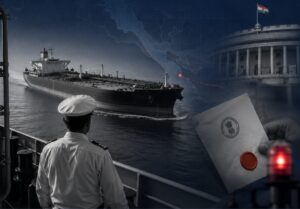
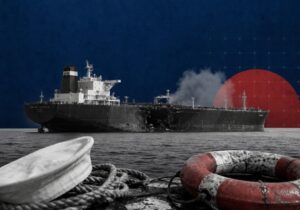
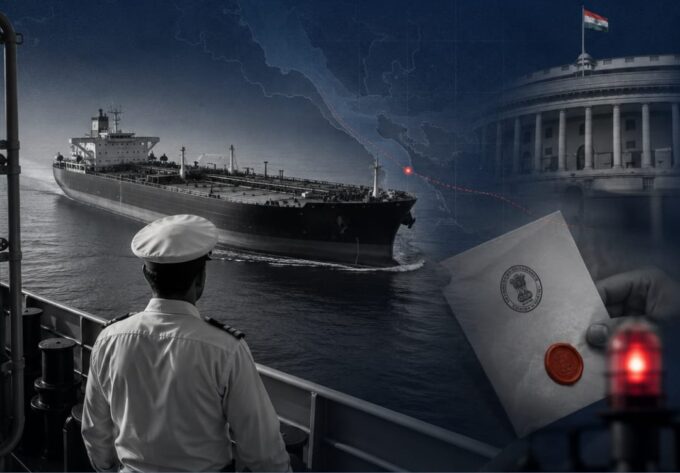
Twenty-four Indian-flagged ships were stranded in Gulf waters, including LPG carriers. According to Reuters, twenty-two tankers remained stranded even after Prime Minister Modi’s calls to Tehran secured the release of two. Indonesia, Turkey, and Pakistan had already secured the same case-by-case access India was now negotiating for. A country with 15 million nationals in the Gulf region, according to MEA estimates, including 4.33 million in the UAE and 2.75 million in Saudi Arabia alone, was not receiving preferential treatment from any party. It was in the queue.
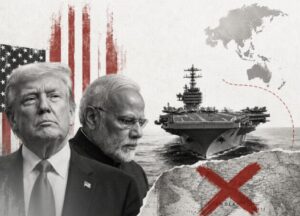
The diplomatic reason is not mysterious. India spent three years deepening its partnership with Israel. Prime Minister Modi visited Tel Aviv and embraced Benjamin Netanyahu. That visit came hours before the U.S.-Israel strikes on Iran began. From Tehran’s perspective, India’s alignment was unambiguous. That alignment cost India the credibility it needed with Iran at the precise moment Iran controlled access to India’s cooking gas.
On the trade front, India’s exposure compounds further. Higher freight and insurance premiums raise input costs across manufacturing, delay export shipments, and pressure the current account at a moment when the rupee is already under strain. The UN Conference on Trade and Development has modeled that freight-rate shocks of this nature produce measurable consumer price increases in import-dependent economies. India is among the most import-dependent large economies in the world on energy.
Across energy, trade, maritime security, supply chains, and diplomacy simultaneously, no other South Asian nation carries India’s combination of exposures at this scale. Bloomberg Opinion columnist Mihir Sharma, a senior fellow at the Observer Research Foundation, delivered the verdict with clinical precision: “India has friends everywhere, but leverage nowhere.”
Pakistan: Fragile but Diplomatically Flexible
The conventional assumption in any Gulf crisis is that Pakistan, chronically underfunded, perpetually on IMF programs, and structurally dependent on external financing, would suffer most. That assumption deserves revision.
Pakistan’s fuel import exposure is acute. Most of its fuel imports transit Hormuz, and its finance ministry flagged letters of credit pressure and bank capacity limits within days of disruptions beginning. Diesel stocks offered approximately 24 days of cover, a thin buffer in a prolonged scenario. Pakistan’s remittances equal 9.4 percent of GDP, compared to India’s 3.5 percent, meaning Gulf labor market disruption hits Pakistani household welfare proportionally harder than Indian household welfare. Its energy import bill stood at approximately $15.9 billion in FY25, according to State Bank of Pakistan data, a major macro driver even when oil prices moderate.
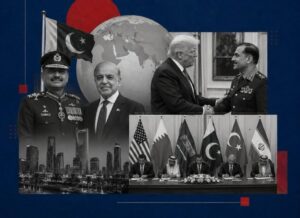
But Pakistan has something India does not in this crisis: diplomatic positioning that did not self-destruct before the war began. Islamabad condemned the strikes on Iran. It has a shared border with Iran, functioning trade relationships, and no recent history of publicly embracing Israel. Pakistan was not negotiating from a position of self-inflicted credibility damage. It sought alternative fuel routing via Yanbu in Saudi Arabia and began coordinating import financing through official channels with multilateral support. Pakistan is genuinely fragile. Its external balance, fiscal position, and financing constraints mean a prolonged disruption could tip it toward another balance of payments crisis. But in the immediate diplomatic and energy management phase of this specific crisis, Pakistan has handled its exposure with more flexibility than India, not because it is stronger, but because it did not voluntarily compromise its relationship with the country controlling the strait before the crisis began
Bangladesh: The Power Crisis Nobody Is Watching
Bangladesh enters this crisis already carrying 10.5 percent inflation in 2024, a
manufacturing sector dependent on stable energy for its garment export engine, and a power system significantly reliant on LNG for generation capacity.
When Qatar halted LNG deliveries and spot LNG prices spiked, according to Reuters reporting, Bangladesh’s power and industrial gas system faced immediate stress. Load- shedding, which Bangladesh had worked hard to reduce over the previous decade, returned as a management tool. For an economy whose competitive advantage in global manufacturing rests on reliable, low-cost production, power instability is not merely inconvenient. It is an existential threat to export competitiveness.
Bangladesh’s remittances are approximately https://unctad.org/6.1 percent of GDP, meaningful but lower than Pakistan or Nepal in proportional terms. Its primary binding constraint is the interaction between LNG disruption, power generation capacity, and industrial output. Higher freight and insurance premiums also raise input costs and delay garment shipments, squeezing manufacturers who operate on thin margins and tight delivery windows. With inflation already elevated and limited fiscal space for subsidy expansion, Bangladesh faces a policy dilemma with no comfortable exit.
The Verdict South Asia Cannot Afford to Ignore
Ranked across energy, trade, maritime security, diplomacy, governance preparedness, and supply chain vulnerability simultaneously, India is the Gulf war’s biggest loser in South Asia. That is not a political judgment. It emerges from the data and from a decade of choices that prioritized the appearance of strength over its substance.
Pakistan is fragile but diplomatically positioned better than its reputation suggests in this specific crisis. Bangladesh faces a targeted but serious threat to its manufacturing competitiveness through power and LNG disruption. Nepal faces proportional household devastation through remittance exposure. Sri Lanka faces stabilization program risk. Bhutan and Maldives face import cost crises disproportionate to their size. Afghanistan faces a humanitarian surge.
But India, with the largest absolute exposure across the most domains simultaneously, with strategic reserves at 64 percent, with 24 ships stranded, with a diplomatic relationship with Tehran damaged by choices made in Tel Aviv, with fertilizer plants at 70 percent capacity, and with a government that spent a decade building a global profile instead of building resilience, has the most to account for.
As former Foreign Secretary Shyam Saran has observed across multiple forums: “India’s foreign policy has consistently confused the appearance of influence with its substance.” The Gulf war is the invoice for that confusion. It is being paid not in diplomatic embarrassment alone, but in gas cylinders, food prices, stranded ships, and the daily calculations of ordinary South Asians who were never told how exposed their region actually was, and how thoroughly their governments had failed to prepare.








Leave a comment