






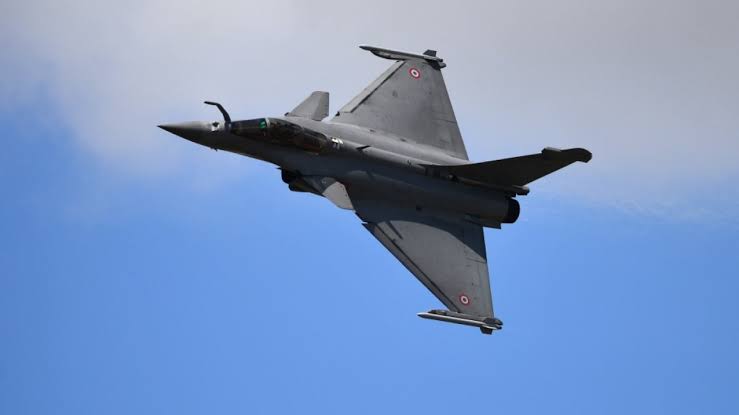
In the journey towards Aatmanirbhar Bharat, one key aspect of India’s arms procurement is the Rafale Deal that has left critical technology in the hands of France. The ‘Rafale’ deal is a critical aspect of India’s Aatmanirbhar Bharat quest that leaves critical technology in the hands of the French.
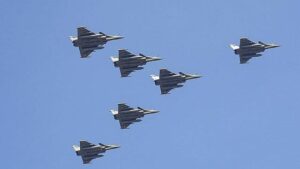
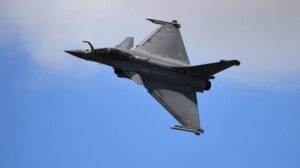
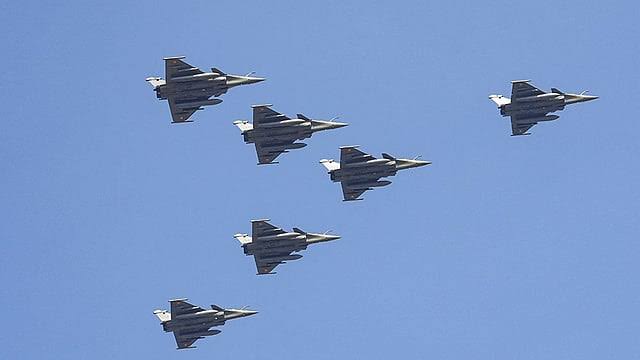
The Indian government’s quest for a big order of French-made Rafales is being touted as yet another move towards self-reliance in the name of ‘Aatmanirbhar Bharat.’ Indeed, the most recent industrial offer for the proposed 114-aircraft programme demonstrates the contrary: that New Delhi will pay a very high price to make sure the plane is made locally and the most important tech and source codes stay with the French. Not only is this an opportunity that has been wasted, but it is a shame for a nation that has been severely affected by a shortage of its fighter squadrons and had four Rafales shot down in the conflict in May 2025.
In February 2026, the Indian Defence Acquisition Council had approved the requirement of 114 Rafales. As it stands now, most of the airframe is to be manufactured in India, and there are some parts of the airframe which have already been agreed for manufacture by Tata Advanced Systems (TAS). Safran has also said that it will establish an M88 engine assembly plant in India. These measures allow Indian industry to effectively make a manufacturing presence and create jobs in India. They will not, however, give up the primary design, software or, crucially, the propulsion-speed-making parts of the plane.
French statements have clearly set the boundaries. Safran says they will only make the most essential parts of the M88 engine in France. In the electronics area, France has been unwilling to hand over the source code for the Thales RBE2 AESA radar, the SPECTRA electronic warfare suite and the Modular Data Processing Unit mission computer. Interfaces are likely to be provided for at least some of India’s weapons to be integrated, but not the rights to modify or upgrade the software that manages the aircraft’s sensors, electronic warfare and mission systems. There will remain French involvement if there are any changes to weapons that have not been approved by France. To sum up, the jets that will be rolling out of an Indian facility will continue to be aircraft whose evolution will be decided in Paris.
This is not accepting the “self-reliance” mantra that always accompanies important defence expenditure announcements. Local manufacturing of airframes and engines is a helpful industry, but it is not the same as having the technological sovereignty to sustain, modify and further develop a platform over decades. There is long-term vulnerability due to dependence on French-supplied critical spares and French controlled software. India will be at risk for political changes or any disruptions to its supply chains, even with the production of a large number of planes on its home soil.
The lag in technology transfer is more pronounced in terms of timing. India’s Air Force strength is still less than its sanctioned strength of 42 against the current strength of the force in the low thirties. The Indian Air Force (IAF) has not officially revealed the numbers, but there were reports of a Rafale shot down, with visual evidence and statements from the French authorities indicating that, for the first time, the IAF had lost Rafale jets in combat. The combat use of a small fleet by the Indian Air Force highlighted not only its vulnerability due to the limited numbers but also its inability to adapt its deep software and electronic systems.
The agreement to give no access after many years of negotiation to the source codes and key technologies of the engine doesn’t make any sense in the context of the investment made and the IAF’s needs. It implies that the industrial involvement and political profile has been taken care of more than the harder call for true technological independence. Like all exporters, France has ensured the protection of its own systems.
The suggested Rafale programme will solve the number problems of the Indian Air Force and give a boost of industrial work to India. It won’t provide the autonomy over key technologies promised by self-reliance talk.




Leave a comment