


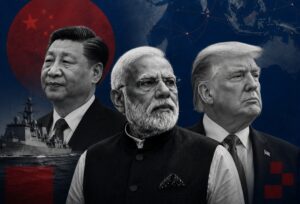
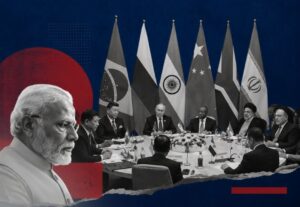

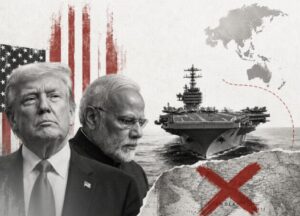

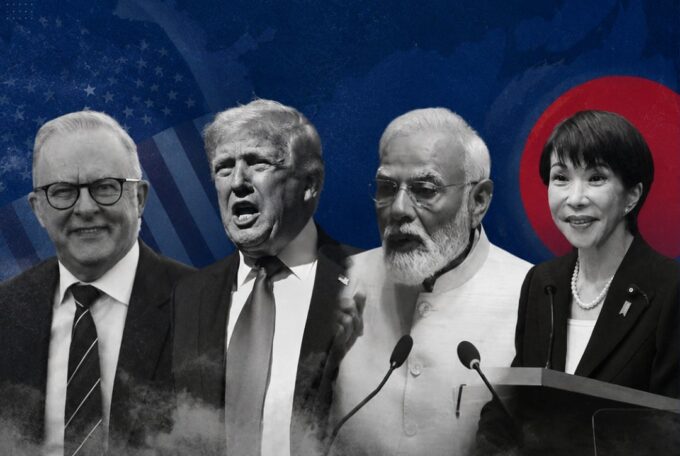
The history of the US-India relationship for three decades had been on a remarkably positive trajectory. Both Republican and Democrat administrations in the United States appeared to contribute to the construction of the structure – more trade, greater defense cooperation, and a greater sense of alliance, as the two democracies grew more closely united in their fear of China. When Donald Trump switched from the presidency, in 2025, India would have been in for continuity not rupture. Instead, it received a business lesson in the rate of strategic trust erosion.
Geopolitics is Back, Honeymoon is Over
At first, it seemed to be going in a good direction, if not a very good one. The high spirits of their past relationship were replaced in February 2025 when Modi visited the White House with his counterpart, warm, broad words of cooperation in the defense, energy, technology, and people-to-people areas and doubled speed. At that time it was so simple to think that the relationship was continuing as it had in the past.
This belief was not to last long into the year. In the background of the diplomatic niceties, the second Trump administration was putting in place a foreign policy that was not alliance-driven but rather leverage-driven – and India, for all its care and attention to its relationship-building, was not spared of being treated as a ‘bargaining chip’.
Tariffs; A Geopolitical Punishment
The first break occurred on the trade. India was caught up in Washington’s broadside assault on over 70 nations including India, where the export sensitive consumer goods, diamonds, jewelry were slapped with a punitive 25 percent rate, making them un-competitive with the Chinese and Vietnamese. The government of India had sought to engage in “good faith negotiations” with New Delhi for reciprocal “zero tariff” agreements on steel, auto parts and pharmaceuticals. Washington refused to accept the offer.
This time, it was the deeper cut – an extra 25 percent tariff, based on this time, the continued purchasing of Russian crude oil by India, and not on trade imbalances. The Ministry of External Affairs was forthright in stating that it was unfair and uncalled for. Minister for External Affairs, S. Jaishankar, was forthright in his reply, calling the idea of a self-styled pro-business administration lecturing others on how to do business an irony.
It’s even more ironic. The decision to import energy from Russia was never about ideology, it’s been a matter of energy security – as openly declared by the earliest days of the Ukraine war. India has no such stake in the conflict as Europe, or an advantage like China’s from Moscow’s increasing reliance on it.The war affects India no more than Europe and no more than China would, that’s dependent on Moscow. The pragmatism of the Delhi government is as different from Beijing’s opportunism, or the anxiety of the frontline European governments, as the difference between the two is between India and China.India and China have very different strategic positions. And the pragmatism of the Delhi government is as different from Beijing’s opportunism as it is from the frontline anxiety of the European governments.
What is so harmful about the tariff episode as compared with its economic cost is what it showed about the attitude of Washington. These were not sector-specific and well-thought out measures, like two trusted partners could jointly agree on. They were untested, overreaches, dictated on little apparent economic basis and so cobbled together that they are in legal tangles in the American courts. If it is a relationship based on mutual respect, then being grouped along with dozens of unrelated economies and then being plucked out again for the Russia policy was a clear message: when it comes to being close to Washington’s good graces, India would get little cover.
The Pakistan Reversal
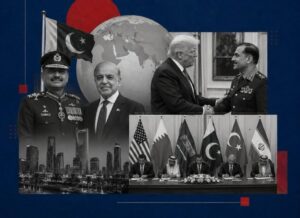
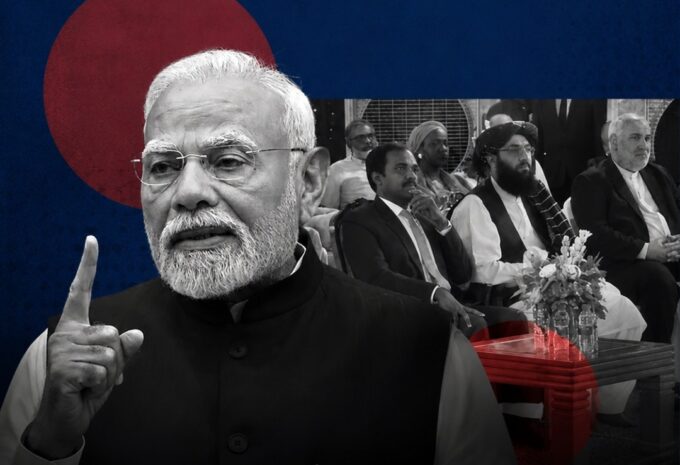
Washington’s reconciliation with Pakistan was a wound to India’s strategic self-image while tariffs were a wound to India’s economic interests. New Delhi had become a bit at ease with this scenario: Washington could continue with a modicum of engagement with Islamabad but not actively rehabilitate a country with a long history of relations with China and its increasing closeness to Beijing.
That baseline shifted. The Trump administration extended economic relations with Islamabad, sought its military support, and – most irksome for India -played a prominent role in the India-Pakistan crisis in May. As usual, Pakistan the transactional partner played its cards right, extraditing a person wanted for the 2021 attack at the Kabul airport, crediting Trump with his efforts towards peace, and dangling access to critical minerals and defence cooperation.
All this did not compel Washington to give up on India. It only needed to be done by seeing Pakistan as a convenient, pliable ally at the moment – a short-term thinking that ignored the wisdom and experience of successive governments.
Quad’s Crisis
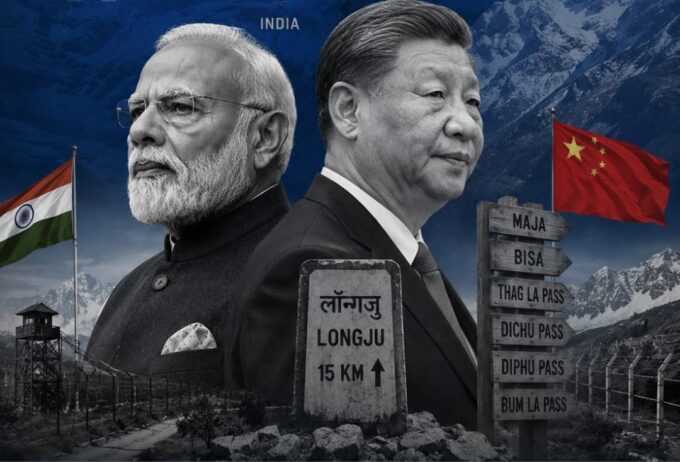
But perhaps the biggest letdown has been on China policy, which has implications far beyond the China-U.S. relationship. India believed that the second Trump administration would follow the path laid down by its predecessor and that the country would keep applying economic pressure on Beijing, strategic de-coupling and maintain consistent investments in the Quad as the thread that binds the Indo-Pacific strategy.
But the Quad – already under-resourced on military cooperation, and already limited on economic instruments – emerged more and more obsolete in an administration that justifies every commitment through a narrowing prism: will it make America safer, stronger, richer, today? It was always going to be hard for a loose Mini lateral grouping to meet that test given solid bilateral support. Washington’s simultaneous squeezing of India and wooing of Pakistan was not only a case of neglecting to pay attention to the Quad, but also an undercutting of the bilateral trust that the grouping relies on.
Conclusion
This does not reflect a complete breakdown of the US–India relationship. The logic of attraction that brought two nations together – the rise of China, the shared economic interests, the strengthening defense relationship over 20 years has not gone away. 2025, though, provided India with an uncomfortable but clarifying lesson: personal chemistry between leaders is no substitute for a strategic alignment that is institutionalized, and goodwill built up over 30 years can be taken for granted by an administration that values only the leverage that can be gained in the near term.
The strategic independence of which India has always aspired – that is, refusal to become a client state of any single power – seems more like a necessity than an ideology. A partner who would agree to put tariffs at the disposal of government, hedge on Pakistan and allow the Quad to wither is one that you should not take for granted. New Delhi should diversify its stock strategically, accordingly, using Washington as a good asset that may not always prove to be good for a lifetime bond.
None of this means the US-India relationship is broken beyond repair. The structural logic that drew the two countries together – a rising China, overlapping economic interests, deepening defense ties built over two decades – has not disappeared. But 2025 offered India a clarifying, if uncomfortable, lesson: personal chemistry between leaders is not a substitute for institutionalized strategic alignment, and goodwill accumulated over thirty years can be discounted overnight by an administration that evaluates every relationship through the narrow lens of immediate leverage.




Leave a comment