

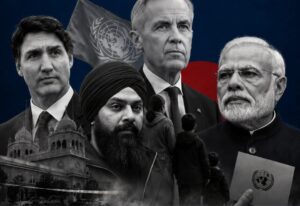



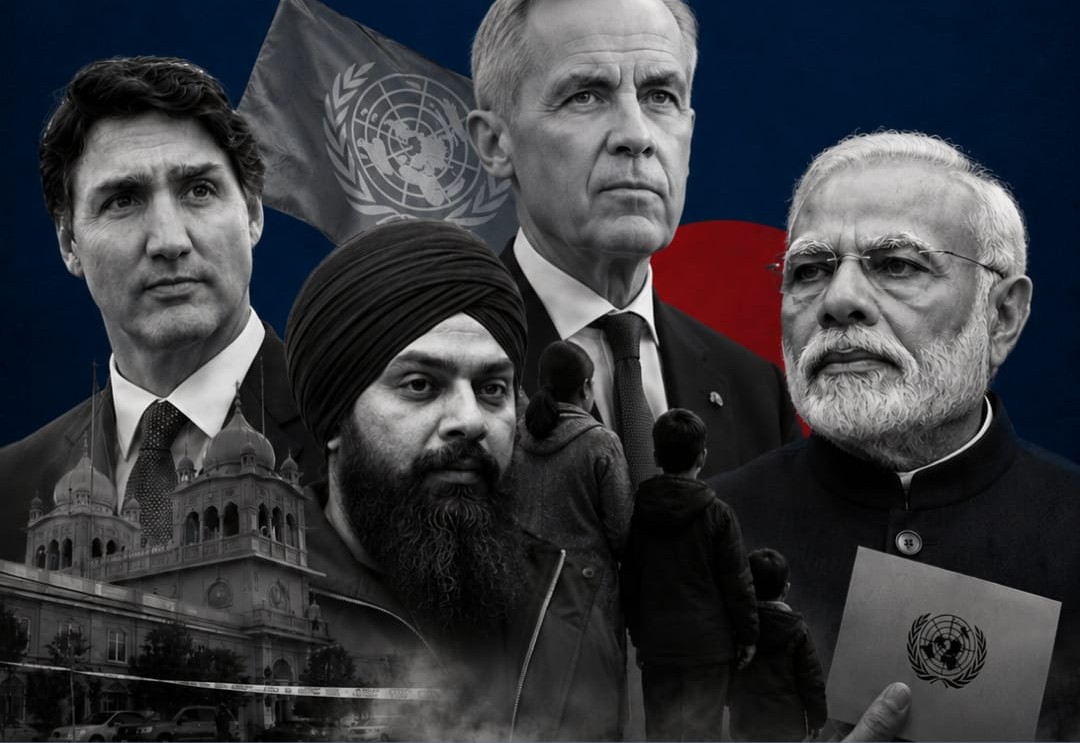
Three years after Hardeep Singh Nijjar was shot dead outside a Surrey gurdwara, another Sikh Canadian’s name has landed in front of the United Nations. This time, it’s Moninder Singh, a friend of Nijjar’s, and the details in the new UN letter are, if anything, more alarming than what came before.
What’s Actually New Here?
Five UN special rapporteurs, independent experts appointed by the Human Rights Council, wrote to the Canadian government in early August urging it to “take all feasible measures” to protect Singh, a 44-year-old Sikh activist from British Columbia who advocates for an independent Khalistan.
The specifics matter. Since 2022, Singh has received four “duty to warn” notices, formal alerts Canadian police issue when they assess a threat to someone’s life as credible and imminent. That alone would be serious. What makes this case different is the most recent notice, delivered in February 2026, which for the first time extended beyond Singh himself to name his wife and two children as targets. The UN letter calls it the most alarming warning Singh has received to date.
There’s a pattern within the pattern, too. The rapporteurs pointed out that several of the threats against Singh coincided with his appearances before UN human rights bodies in Geneva, including warnings in August 2023 and March 2025, both shortly after he spoke at the UN Human Rights Council, and another just two days before a scheduled February 2026 appearance. The implication the UN experts are raising, carefully, is that Singh may have been targeted specifically for engaging with international institutions on India’s treatment of Sikh activists.
The letter states plainly that these threats “fall within a broader pattern of transnational repression by Indian authorities against Sikh activists in different countries, including Canada.” A copy was sent to the Indian government. No arrests have been made.
Why This Lands Differently Than the Nijjar Case
Nijjar’s killing became the highest-profile flashpoint in Canada-India relations precisely because it moved from allegation to headline in a single moment: Justin Trudeau standing in the House of Commons in 2023, publicly linking Indian government agents to a murder on Canadian soil. That triggered diplomat expulsions, and years of frozen ties.
The Moninder Singh case doesn’t have that kind of singular moment yet. What it has instead is something arguably more damning in the aggregate: a UN body, not a national government with its own strategic incentives, documenting a repeated, years-long pattern of threats against a specific person, now expanded to include his children, and connecting it explicitly to his advocacy work at international institutions. That’s a different kind of evidence than a single intelligence assessment. It’s a paper trail.
It’s also worth being precise about what the letter does and doesn’t establish. UN special rapporteurs are independent experts, not investigators with law enforcement powers, and their communications are formally framed as requests for information and action, not verdicts. The letter says the threats “may constitute” unlawful intimidation and reprisal if the allegations are true. That’s diplomatic language doing real work: raising the alarm while stopping short of a finding of fact. Canadian police, notably, aren’t disputing the threat assessments themselves. Who is behind them remains formally unresolved.
The Timing Problem
Here’s the detail that gives this story its edge: the most alarming warning Singh received, the one naming his wife and children, arrived in February 2026, just as Prime Minister Mark Carney’s government was working to restore normal diplomatic relations with India after the post-Nijjar freeze.
That timing invites an uncomfortable question. If threats against a Sikh activist and his family were escalating at precisely the moment Ottawa was moving to warm ties with New Delhi, what does that say about the price of that reconciliation, and who’s being asked to quietly absorb it? This connects to a broader story worth watching: India’s growing strategic value to Western governments, as a democratic counterweight to China and a market too large to alienate, appears to be buying it real latitude on accusations that would sink almost any other country’s diplomatic standing.
The Wider Pattern This Fits Into
Singh’s case doesn’t exist in isolation. It sits alongside a set of episodes that Sikh advocacy groups and now UN experts describe as a consistent operating pattern:
Nijjar’s 2023 assassination, still the subject of separate investigations even after US prosecutors charged an organized crime network, not the Indian state, with carrying it out.
A foiled 2023 plot in New York, where an Indian national pleaded guilty to orchestrating an assassination attempt against another Sikh separatist, a case US officials have directly tied to a former Indian government employee.
A steady drumbeat of threats against Sikh activists across multiple Western countries with large diaspora populations, enough that “transnational repression” has become the specific term of art UN bodies now use rather than treating each case as isolated.
India has consistently denied any state role in these incidents. That denial is getting harder to evaluate in isolation as the number of documented cases, across multiple countries and now backed by UN scrutiny, continues to grow.
What Comes Next
The UN rapporteurs have asked Canada to respond to a formal list of questions about how it’s handling the Singh case, and the letter urges Ottawa to accelerate its investigations and hold perpetrators accountable, whoever they turn out to be. As of now, Canada hasn’t publicly filed a response, and Singh himself has said as much.
What happens next will say a lot about how much appetite Western governments actually have for pressing India on this issue versus managing it quietly. Canada already has a template for the difficult version of this conversation: it produced one in 2023, and the relationship survived, if strained. Whether it produces another one now, with a case that’s arguably better documented and involves threats against children, or whether this becomes another episode absorbed into the broader trade and strategic relationship, is the real story to watch.




Leave a comment