


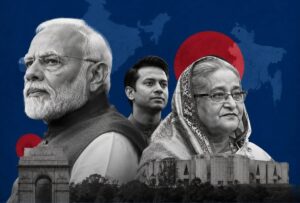


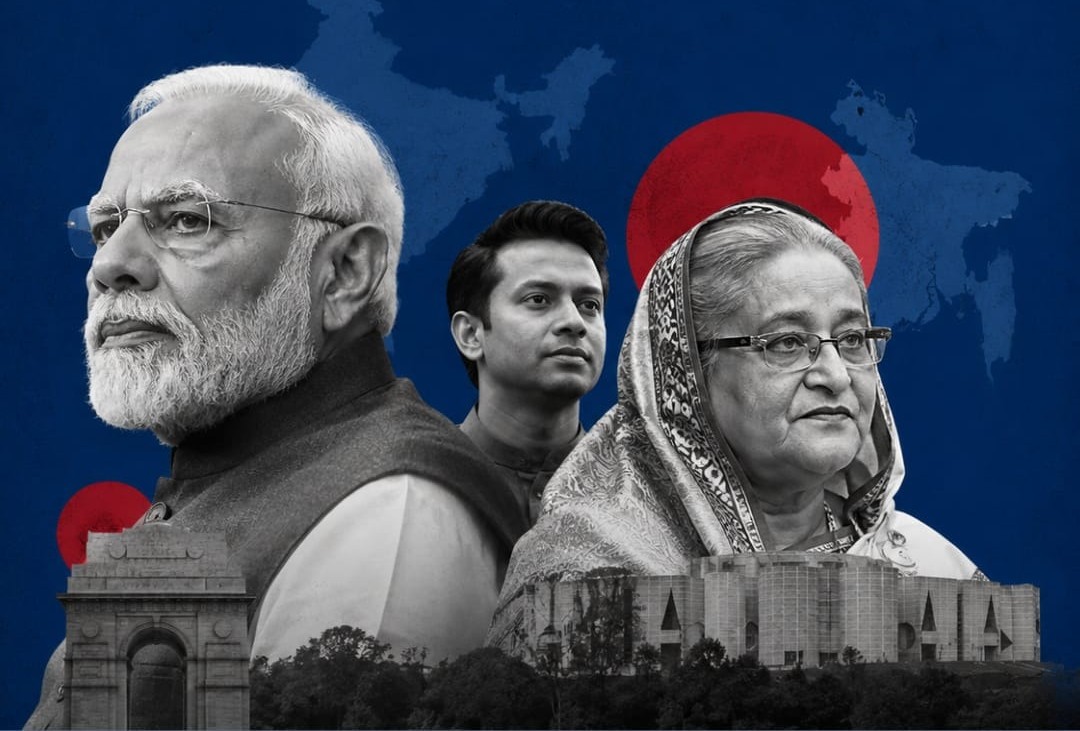
The political crisis surrounding former Bangladesh Prime Minister Sheikh Hasina has created one of the most difficult diplomatic challenges for India in recent years. For more than a decade, New Delhi and Dhaka developed a close strategic partnership based on security cooperation, connectivity, trade, and regional stability. However, the political transformation in Bangladesh after the 2024 uprising has changed the regional equation and forced India to rethink its traditional approach toward its eastern neighbor. The issue became even more complicated after Sheikh Hasina held a press conference from New Delhi, where she defended her political record, rejected allegations against her, and criticized the current political environment in Bangladesh. Her public statements created a sensitive diplomatic situation for India because Dhaka viewed the platform given to Hasina as a political challenge, while India had to balance humanitarian considerations with its relationship with Bangladesh’s new leadership.
For New Delhi, the question is no longer only about Sheikh Hasina. The bigger question is whether India can protect its strategic interests in Bangladesh while convincing the Bangladeshi public that its partnership is with the country itself, not with any specific political leader.
Sheikh Hasina’s Presence: A Diplomatic Balancing Test
Sheikh Hasina’s continued presence in India has become the most visible symbol of the tension between Dhaka and New Delhi. Bangladesh has repeatedly raised the issue of her return under the 2013 India–Bangladesh Extradition Treaty, arguing that legal accountability should be respected.
The situation became more sensitive after Hasina used a platform in New Delhi to make political statements. Bangladesh’s authorities criticized the move, arguing that it affected bilateral relations, while India maintained that private events organized by individuals do not represent government policy.
For New Delhi, this has become a classic foreign policy dilemma: protect a long-standing relationship with a former ally or rebuild trust with a new political reality in Bangladesh.
India’s Historical Partnership with Sheikh Hasina
During Sheikh Hasina’s 15-year rule, India considered Bangladesh one of its most important regional partners. Cooperation expanded significantly in areas including border management, counterterrorism, energy, transport connectivity, and economic cooperation.
India benefited from improved security cooperation because Bangladesh took strong action against several insurgent groups operating near India’s northeastern states. New Delhi also supported connectivity projects linking India’s northeast with ports and markets in Bangladesh.
From India’s perspective, Hasina provided political stability and predictable cooperation. However, New Delhi became too closely associated with one political party, creating a perception problem among opposition groups and sections of Bangladeshi society.
BRICS Invitation to Bangladesh: A Diplomatic Warning for India
India’s decision to engage with Bangladesh through BRICS diplomacy, including the invitation to Bangladesh’s leadership for the summit outreach session, highlights New Delhi’s strategic confusion. On one hand, India continues to maintain close ties with Sheikh Hasina, while on the other hand, it is attempting to build relations with the new political reality in Dhaka. This mixed approach risks weakening India’s credibility and influence in Bangladesh.
China’s Growing Influence: India’s Strategic Miscalculation
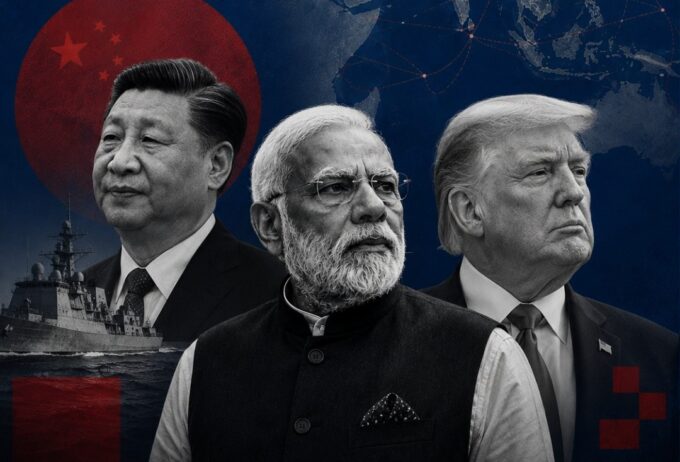
China’s expanding role in Bangladesh is a key challenge for India in its regional planning. As China is deepening relationships with investment, infrastructure, and trade, and India is not able to maintain its partnership after recent political conflicts with Dhaka. The 2026 China-Bangladesh engagement shows that New Delhi cannot rely on historical connections solely and should develop an active and dynamic approach. India’s hesitation and erratic diplomacy have created space for China to intensify its economic and strategic presence. Should New Delhi want to keep its relevance then it would have to work to reconstruct trust and would have to provide Bangladesh with meaningful collaboration rather than political pressure.
India’s Tough Choice: Adapt or Lose Influence
India is now facing a historic choice in Bangladesh. The old strategy of depending heavily on one political partner may no longer be enough.
Bangladesh’s political environment has changed. New leaders, new public expectations, and stronger Chinese engagement have created a different reality.
For New Delhi, the choice is clear: continue relying on the politics of the past or build a new relationship that reflects Bangladesh’s changing political reality. The decision will determine India’s influence in one of South Asia’s most strategically important countries.






Leave a comment