




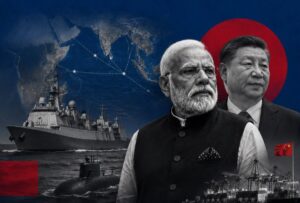
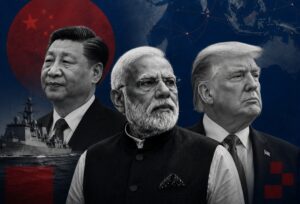



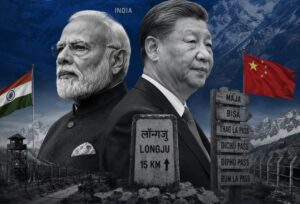
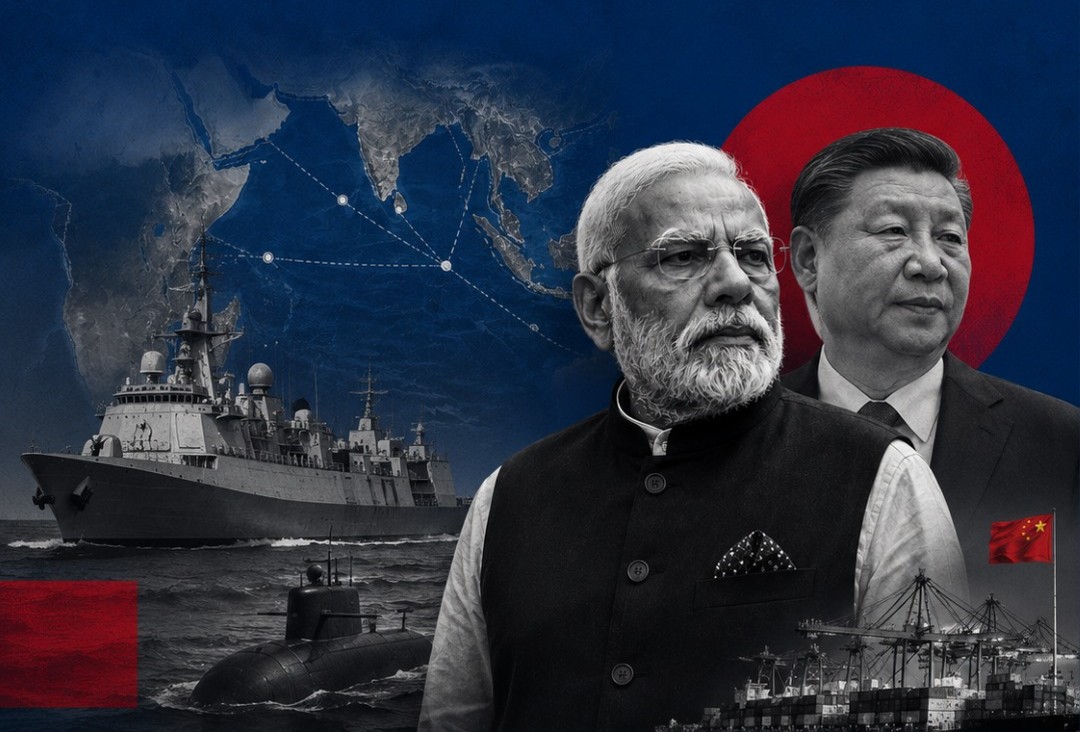
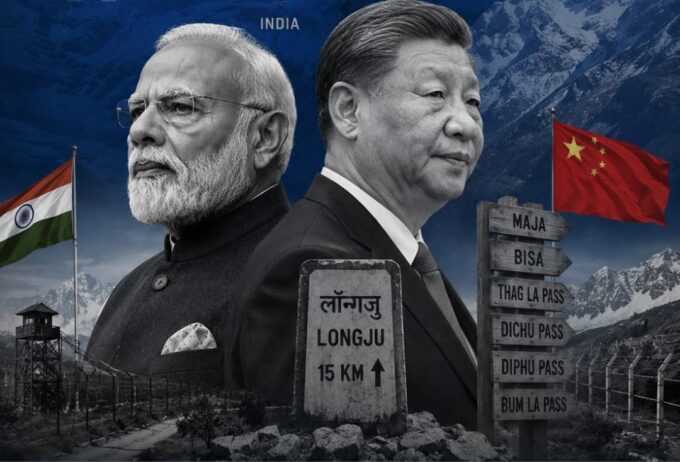
For decades India has tried to handle its competition with China by carefully balancing out the relationship through what scholars have dubbed “evasive balancing” – by carefully balancing the relationship, without letting it go off the boil. This went downhill during the months of May 2020 in the hills of Ladakh. Chinese troops marched across the LOC, a deadly skirmish ensued and for the first time in little over 40 years soldiers were killed on the LOC. The situation, in addition to the economic shock caused by COVID-19, made New Delhi realise the need to re-strategize its entire approach.
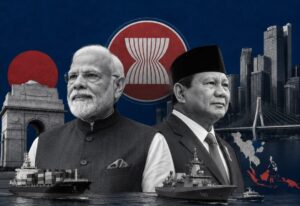
That which resulted, in the helpful terms of scholar Arzan Tarapore it can be described as a new approach that can be best understood as “zone balancing. Instead of matching China’s power directly by a costly military build-up or by joining binding alliances with the Chinese which would mark a sharp change from the non-alignment policy, India has opted to put its weight behind the strengthening of other states in the region. The rationale is simple: Without being able to coerce or purchase influence over India’s neighbors, China’s ability to dominate the region is curtailed, even if it can send one fewer Indian soldier and/or one fewer warship against it.
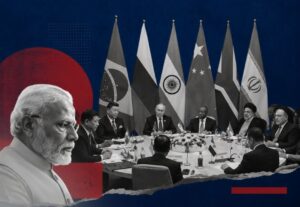
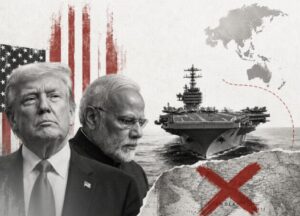
The most obvious sign of this change in attitude is India’s newfound enthusiasm for the Quad that had languished for years as little more than a talking shop. The Quad has shifted from generalities to action since 2021: vaccine distribution, strengthening resilience of undersea cables, maritime domain awareness, standards for secure telecommunications, and financing for infrastructure. All of this is not an army pact. None of the members have joined forces to defend another. But, then again, this is what it does. India and its partners hope to stave off Chinese pressure or ‘economic dependence’ in the region by enhancing the ability of the third parties to stand up to it, while avoiding a ‘security dilemma’ which a formal alliance would provoke.
This is a neat tactic and it’s something that may be required. Arming itself up using the military will not give India a competitive edge against the Chinese military; the political reality of the ‘strategic autonomy’ clause of the Indian constitution makes alliances based on formal pacts a challenge; and a stance of confrontation will only invite an aggressive response from the adversary. Zone balancing will allow New Delhi to do something rather than nothing – without the cost and risk of alternatives.
Cleverness is certainly not the only thing that is important to the strategy, however, and the limitations are significant.
Does not discourage threats that are most important. Zone balancing is basically about making it more difficult for China to coerce third parties, such as Sri Lanka, Vietnam, Pacific Islands and more. It does very little to answer the question of what India is doing to combat direct territorial aggression, as it has suffered in Ladakh, or Taiwan could encounter in a future crisis. It does not transport any more troops from a Himalayan border to the other side, to build maritime surveillance capacity in Southeast Asia. Notably, that’s where the Quad is failing to even mention a Chinese attack on Taiwan. The very approach that aims to pressure-resist is not geared towards the question of India’s borders.
It relies on the factors which India cannot fully influence. Unlike the internal balancing, which is dependent on the choice of a state to invest itself, the success of the zone balancing depends on the choice of third party government whether they accept the help or resist the temptation of the Chinese and whether they are able to develop genuine resilience. But Sri Lanka’s economic crisis in 2022 is a warning of how vulnerable these initiatives could be as crises can happen beyond the balancer’s ability to foresee.
In fact, India’s defence spending has remained almost the same percentage of GDP since the Quad has come into being, and this has been true for 10 years. Because a resource-constrained state has an obvious temptation to let an ambitious multilateral agenda; when it comes to the less sexy, more costly business of beefing up their own military posture, accines, technology standards and infrastructure funds are more popular. When zone balancing is applied in this manner it is not a hedge against China, it is a cover for failure to come to terms with some differences in capability.The use of zone balancing in this way is not a hedge against China; it’s a cover for failure to come to terms with some differences in capability.
It will never be able to forever escape the security dilemma that it’s meant to overcome. But Beijing is not sitting on its hands in response to the Quad’s growing agenda, and it is hard to imagine that it will continue to see infrastructure financing and the setting of 5G standards as benign as they are currently being billed, even though they are referred to as “public goods” instead of as security cooperation. A strategy that is not as provocative as a formal alliance but is still provocative can be equally provocative, albeit a bit later and less clearly defined as to where the retribution will be felt.
All this does not mean that zone balancing was an incorrect decision. The most feasible after 2020 was surely this option because of India’s economic, political and strategic situation. It is important to realize, however, that it is not a comprehensive China strategy, it’s simply a partial solution to a very limited set of problems. It must go hand in hand with the hard work that went into developing credible deterrence on the border, the ongoing defense modernization, and the political will to do so in the face of budget constraints, in the Quad. Beijing’s calculation of the margins can get complicated when it comes to capacity building on a regional level. It can, however, by itself, not keep the peace on the Line of Actual Control and thus policymakers in India shouldn’t get carried away with its achievements.






Leave a comment