






India’s “Act East” policy has always been better at producing headlines than outcomes, and 2026 is no exception. A flurry of agreements with Indonesia, covering BrahMos missiles, critical minerals, and digital payments, is being presented as proof that India has arrived as a serious Indo-Pacific security player. Meanwhile, the one ASEAN country India actually borders, Myanmar, remains a slow-motion failure of policy that New Delhi has no real answer for.
The gap between those two stories is worth sitting with. It’s not that nothing is happening. It’s that what’s happening doesn’t add up to the influence India’s own diplomats claim it does.
Why ASEAN Is Such a Big Deal for India
It helps to remember the scale of what’s at stake. ASEAN is home to more than 680 million people and some of the fastest-growing economies on the planet. It sits at the crossroads of the Indian and Pacific Oceans, along some of the busiest shipping lanes in the world. For India, deepening ties here isn’t a nice-to-have. It’s central to how New Delhi sees its own future as an Indo-Pacific power.
That’s why India upgraded the relationship to a Comprehensive Strategic Partnership back in 2022, with cooperation spanning maritime security, defence, the digital economy, supply chains, counterterrorism, and disaster relief. On paper, the ambition is enormous. In practice, 2026 is showing just how much regional instability can complicate even well-laid plans.
Myanmar: The Border That Keeps Getting in the Way
Myanmar is the one ASEAN country that actually shares a land border with India, which makes it the linchpin of any real overland connection to Southeast Asia. Big-ticket projects like the India-Myanmar-Thailand Trilateral Highway and the Kaladan Multi-Modal Transit Transport Project were built around that fact, designed to link India’s northeast to the wider region and finally give landlocked border-states a real trade artery.
Then came the 2021 military coup, and Myanmar hasn’t had a stable government since.
The fallout has landed directly on India’s doorstep: cross-border insurgent activity, refugees moving into India’s northeastern states, stalled infrastructure work, and a rising risk of arms and narcotics trafficking across a border that was never easy to secure in the first place. Myanmar’s military leadership, for its part, has continued pushing back against outside pressure, including from ASEAN itself, which hasn’t made finding a diplomatic off-ramp any easier.
ASEAN as a bloc has its own Five-Point Consensus for Myanmar, calling for dialogue, humanitarian access, and an end to the violence. But member states don’t agree on how hard to push: some want firmer pressure on the junta, others favor continued engagement. India has landed somewhere in the middle: maintaining working ties with Myanmar’s authorities out of border-security necessity, while still backing ASEAN’s broader push for stability. It’s a balancing act driven less by ideology than by the simple fact that India can’t afford chaos on its northeastern frontier.
Indonesia: The Partnership That’s Actually Moving
While Myanmar has been a drag on India’s regional ambitions, Indonesia has quietly become one of its biggest wins.
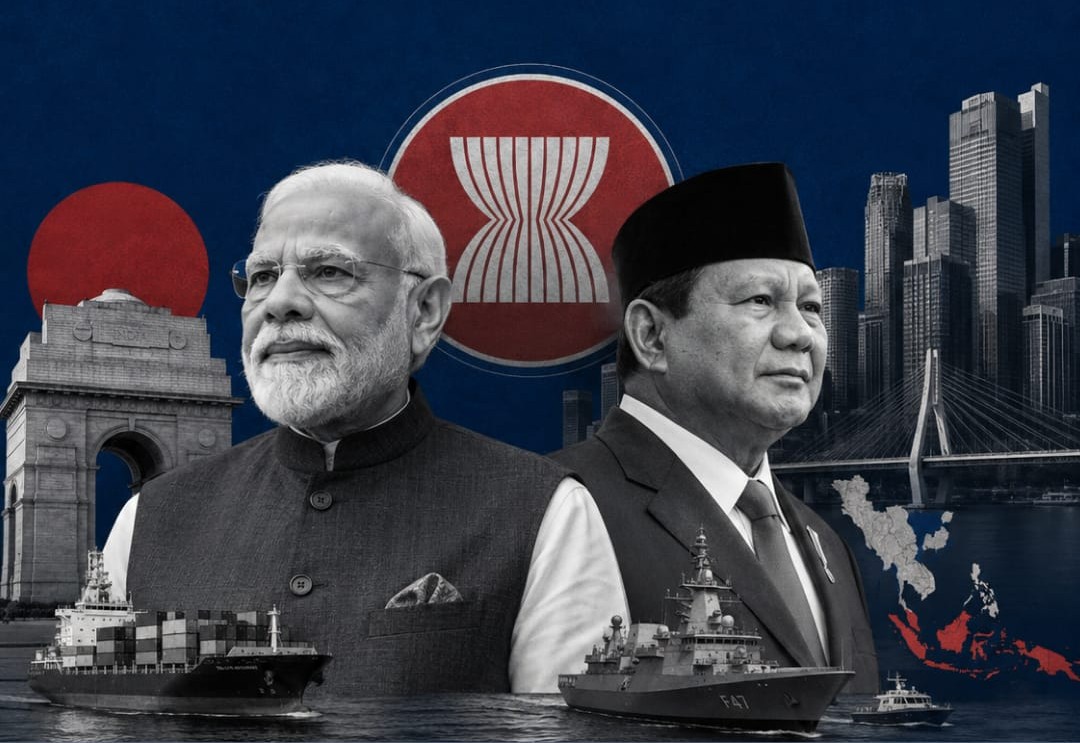
As ASEAN’s largest economy and a major maritime power in its own right, Indonesia has real weight to bring to the table, and 2026 has seen that relationship take a notable step forward with the proposed acquisition of India’s BrahMos supersonic cruise missile system.
It’s a genuine milestone. The two sides had reportedly been discussing it for close to eight years, so this isn’t something that came together overnight. It also gives India a real claim to being a defence exporter rather than just a buyer, following its earlier BrahMos deal with the Philippines.
But it’s worth being skeptical about how much strategic weight to hang on a single missile agreement. Framework agreements and “cooperation” announcements are not the same as delivered capability, and India’s defence-export track record has a habit of front-loading the announcement and back-loading, or quietly shelving, the follow-through. Whether this becomes an actual transfer of operational systems, on a serious timeline, is the real test, and it’s one that won’t be settled by a joint statement in Jakarta.
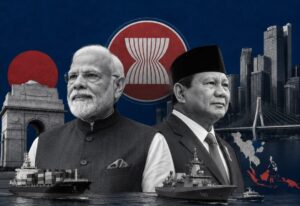
There’s also a more revealing detail buried in the fine print. Compared to the joint statement from Indonesian President Prabowo Subianto’s visit to India in January 2025, the 2026 statement dropped an entire paragraph on the South China Sea. This language had previously backed a binding Code of Conduct and referenced UNCLOS explicitly. The 2026 version settled for vaguer, safer phrasing about a “free, open, rules-based” Indo-Pacific. Read one way, that’s Jakarta and New Delhi calibrating their language to avoid provoking Beijing. Read less charitably, it’s a sign of how little either country is actually willing to spend diplomatically on the issues that matter most to Indo-Pacific security. It’s the same pattern that shows up whenever India’s rhetoric about “strategic partnership” meets an actual point of friction with China.
The Maritime Thread Connecting It All
India and Indonesia’s cooperation isn’t just about missiles. Both countries sit close to critical global shipping routes, including the approaches to the Malacca Strait, and share a clear interest in keeping those waters open and stable. That’s translated into joint naval exercises, maritime domain awareness cooperation, coast guard collaboration, anti-piracy work, and disaster relief coordination. This is the unglamorous but essential groundwork of a functioning security partnership.
India isn’t a claimant in the South China Sea disputes, and neither is Indonesia in the central territorial fights there. But both consistently back the UN Convention on the Law of the Sea, peaceful dispute resolution, and freedom of navigation. These are shared principles that give the relationship a steady foundation even without a direct territorial stake.
Not Just About China
It’s tempting to read all of this purely as India countering China’s influence in the region. That’s part of the picture, but not the whole story. China remains ASEAN’s largest trading partner and biggest source of investment by a wide margin, and that isn’t changing anytime soon.
Most ASEAN states aren’t picking sides. They’re hedging, building relationships with China, the US, India, Japan, and Australia all at once rather than betting everything on one partner. That reality puts a fairly low ceiling on how much influence India can actually exert over ASEAN’s collective direction, no matter how the bilateral photo-ops with Jakarta are framed back home.
This is where the “India as rising Indo-Pacific power” narrative deserves real scrutiny. India isn’t offering ASEAN states anything close to the scale of Chinese investment, and it isn’t providing the security guarantees the US does. What it’s offering is a mid-tier defence partnership and a lot of summit diplomacy. It’s useful to Southeast Asian states as one more hedge in the portfolio, not as a centerpiece of their regional strategy. New Delhi’s own commentary tends to describe bilateral wins like the BrahMos deal as evidence of ASEAN-wide relevance, when in reality it’s evidence of a good relationship with one country, Indonesia, that doesn’t automatically translate into leverage over the bloc as a whole.
Where This Leaves India’s Act East Policy
Strip away the summit photographs and the picture is less flattering than New Delhi’s messaging suggests.
Myanmar, the one country where India has an unavoidable, physical stake, remains a policy dead end. India has neither the leverage to push the junta toward stability nor the willingness to break with it entirely, and the result is a decade-old connectivity vision that keeps slipping further out of reach. That’s not a minor footnote; it’s the actual test of whether “Act East” means anything as an overland strategy, and by that test, it’s failing.
The Indonesia relationship is real, but it’s also doing a lot of narrative lifting it can’t fully support. One bilateral defence deal, even a significant one, doesn’t amount to regional influence. The quiet softening of language on the South China Sea suggests that even this flagship partnership has limits neither side wants to test. ASEAN states are hedging across multiple powers precisely because none of those powers, India included, offers enough on its own to be worth full alignment.
India is a moderately losing its influence and becoming less active player in Southeast Asia than it was a few years ago, on the strength of one strong bilateral relationship. It is not becoming a central force in ASEAN’s regional architecture, and its own connectivity ambitions are actively regressing on its most consequential border. Those two facts don’t cancel out. They coexist, and coverage that leans too hard on either one misses what’s actually happening.





Leave a comment