


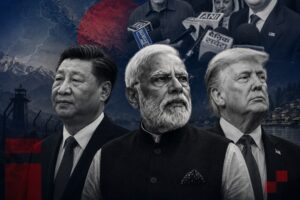
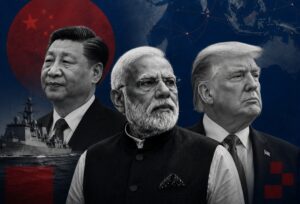
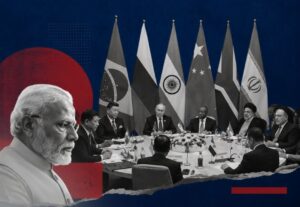



New Delhi has tried for more than a decade to present itself as India, which is not only a rising power but a Vishwaguru—an exceptional civilization that would be able to lead the international order based on its democratic experience, economic rise, and strategic autonomy. The narrative was frequently used in speeches, international negotiations, and diplomacy conducted by the Prime Minister, Narendra Modi. It was promoted with projects such as the G20 Presidency, International Day of Yoga, Global South Summit, and Indian role as the mouthpiece of developing countries.
The strategy of the Indian leadership was ambitious and politically efficient. However, international prestige is not solely created by slogans. Credibility, consistency, strong institutions, and implementation of intentions into sustainable diplomatic influence are the necessary elements of the successful foreign policy.
Currently, Indian foreign policy faces the strange paradox when the country is still an important player in the economic and strategic terms in the Indo-Pacific region, while the assumptions that made the Vishwaguru project were put into question because of diplomatic blunders, problems with regional partners, democratic situation in the country, and strategic mistakes. Instead of establishing uncontested leadership in South Asia and the Global South, New Delhi struggles with its own created crises.
The Pitfall of Narrative Over Strategy
The idea of Vishwaguru was meant to raise the status of India above regular geopolitics and project the image of India as a civilizational state and hence moral leader of the world. The scholars argue that the idea of Vishwaguru was based on the identity and geopolitics of India which made India both a strategic and normative leader.
But moral leadership is recognized internationally and not proclaimed domestically.
As India’s economy grew and geopolitically the significance of India became important because of the efforts of the West to balance China, it seemed that New Delhi took the idea for granted that international prominence would come automatically. However, there were certain policy decisions that undermined this image.
Losing the Neighborhood
A rising power cannot overlook its immediate neighborhood.
India had long considered South Asia to be its natural neighborhood of influence. However, in recent years there have been increasing concerns among several neighbors.
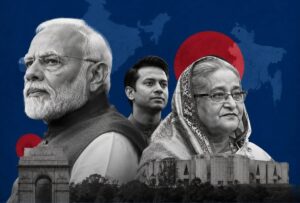
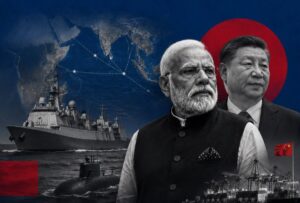
Bangladesh, which used to be seen as India’s best partner in the region, entered an uncertain political phase after the fall of Sheikh Hasina’s government. This changing political climate is now providing openings for other foreign players to assert their influence. The Nepal government from time to time has accused India of interfering in its internal affairs, while the successive governments of the Maldives have sought to reduce India’s influence in the country under programs like “India Out.” Meanwhile, the Sri Lankan government has actively strengthened ties with Beijing even as India strives to assert itself as the dominant player in the region. It is being increasingly argued that China’s rise in the region has highlighted deficiencies in India’s neighborhood policy.New Delhi’s neighborhood policy has always seemed more reactionary than proactive.
Great powers build institutions; they don’t just develop personalities.
The Canada Crisis: A Self-Inflicted Diplomatic Wound
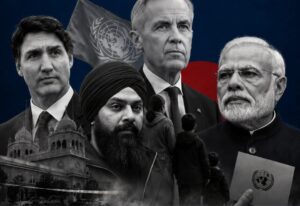
There is perhaps no incident which better exemplifies the repercussions of policy miscalculation than the diplomatic spat with Canada.
The Canadian Government claimed that Indian representatives were implicated in the assassination of Sikh activist Hardeep Singh Nijjar, and later made allegations of transnational intimidation. The Indian Government, for its part, vehemently denied all charges and claimed that they were politically motivated.
Whether or not the case is settled in courts, the diplomatic fallout was immediate.
Ties between two Commonwealth democracies of significance deteriorated quickly, cooperation through intelligence suffered, diplomatic expulsions happened, and the image of India as a responsible democracy came under fire.
India’s attempts at becoming a permanent member of the UN Security Council and a greater actor within the international community come under threat from such incidents. Analysts have remarked that this dispute became an impediment to India’s larger quest for great power status, despite the significance of its role.
It may take decades to accumulate soft power but only months to lose it.
Democratic Backsliding and the Limits of Soft Power
The most important factor in India’s external relations has been its image as a democracy.
While China’s attractiveness was linked solely to economic growth, India’s attractiveness was due to its constitution-based governance, free and fair elections, institutional independence, and pluralism.
In recent years, issues of media freedom, civil rights linked to violence in Manipur, minority rights where Muslims being persecuted continuously and Christians on the occasion of Christmas, and institutional independence like appointment of Election Commissioner have featured more prominently in international commentary.Whether one agrees with all these criticisms is not really the issue.What matters in international politics is perception.
When India portrays itself as the voice of the Global South and at the same time faces consistent criticism about its democratic credentials, it makes it harder for India to sustain its soft power story. Criticisms of India’s weakening democratic credentials increasingly link with India’s external engagements and its claim to leadership.
A Vishwaguru can not base itself on economic success alone.
Economic Strength Without Structural Transformation
India’s economy is still one of the fastest growing economies amongst the major nations.
However, having a large economic power alone does not guarantee that such an economy would have geopolitical significance.
The problems of unemployment, limitations in production processes, reliance on foreign technology in some advanced industries like avionics and aircraft manufacturing, and limited industrial competitiveness have kept the country from utilizing its economic power for geopolitical leverage.
While the “Make in India” project definitely brought investment and helped in promoting production in many ways, the results of the project have been inconsistent. The most recent incident of Galgotia University has portrayed India’s AI deficit and reliance on foreign tech.
The plan to become a global alternative to China’s supply chains also remains unrealized.
Strategic Autonomy or Strategic Ambiguity?
The principle of “strategic autonomy” followed by India has allowed it throughout history to stay away from binding alliances and maintain contacts with rival forces to secure interests.
But strategic autonomy is more and more becoming strategic ambiguity.
The case of the U.S.-Iran crisis showed that even though India managed to maintain a good relationship with all the major parties involved, it still did not contribute significantly to the diplomatic efforts to de-escalate the tensions. It did not play any mediation role unlike other countries in the region such as Oman and Qatar, posing doubts on whether India is really aspiring to be a global leader or not. In addition, this event has once again highlighted the threat to the Indian initiative of Chabahar port project due to the sanctions and instability in the region.
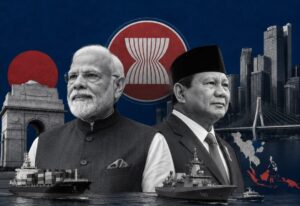
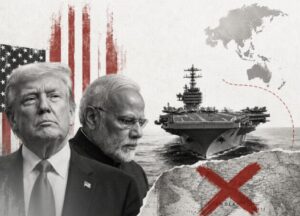
Similarly, in the case of President Trump’s tariff warnings and his criticism of India’s unfair trade practice, it became evident that there is no strategic leverage that India has with the United States. Despite being a key Indo-Pacific partner and a member of the Quad, India remained vulnerable to U.S. economic pressure, including criticism over its continued purchases of discounted Russian oil.
The Indian policy of neutrality was accepted by the Western countries, as they saw India as an important balance against China. But the inability of India to clearly define normative principles made its claims for global leadership doubtful. In subsequent years inactivity of Quad shows this global suspicion towards India.Global leadership implies not only striking balances but also forming international norms.
The foreign policy of India today faces contradictions stemming from the contradictions of India’s geopolitical goals, democratic nature, and principle of strategic autonomy.
Way Forward
This does not mean that the Indian nation faces irretrievable decay.
On the contrary.
While it holds many advantages in terms of demographics, technology, economic growth, geographical position, and diplomatic significance, the process of recovering its credibility involves discarding the idea of replacing statecraft with brand building.
Indian foreign policy must start with establishing trust among its neighbors by means of economic institutional integration rather than episodic diplomacy and assertiveness. It must fortify its democratic institutions which have always served as a cornerstone for its international reputation. Furthermore, it needs to outline its strategy in a way that will reflect its national interests balanced with consistent international principles. Finally, it has to understand that the source of soft power is always an example rather than a statement.
Experience has shown that true world leadership cannot claim itself in vain.
It is built through competence and predictable diplomacy with the inherent confidence of other countries in a state’s institutions and ideology.
Nevertheless, mere aspiration cannot lead to leadership.
If it wants to be recognized as not just a rising power but a respected world leader, India should move away from rhetorical exceptionalism and toward strategic consistency.Thus, the idea of Vishwaguru will be able to become reality rather than a political statement.





Leave a comment