






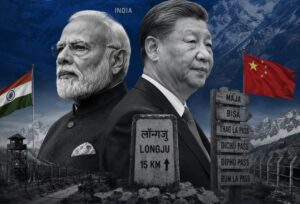
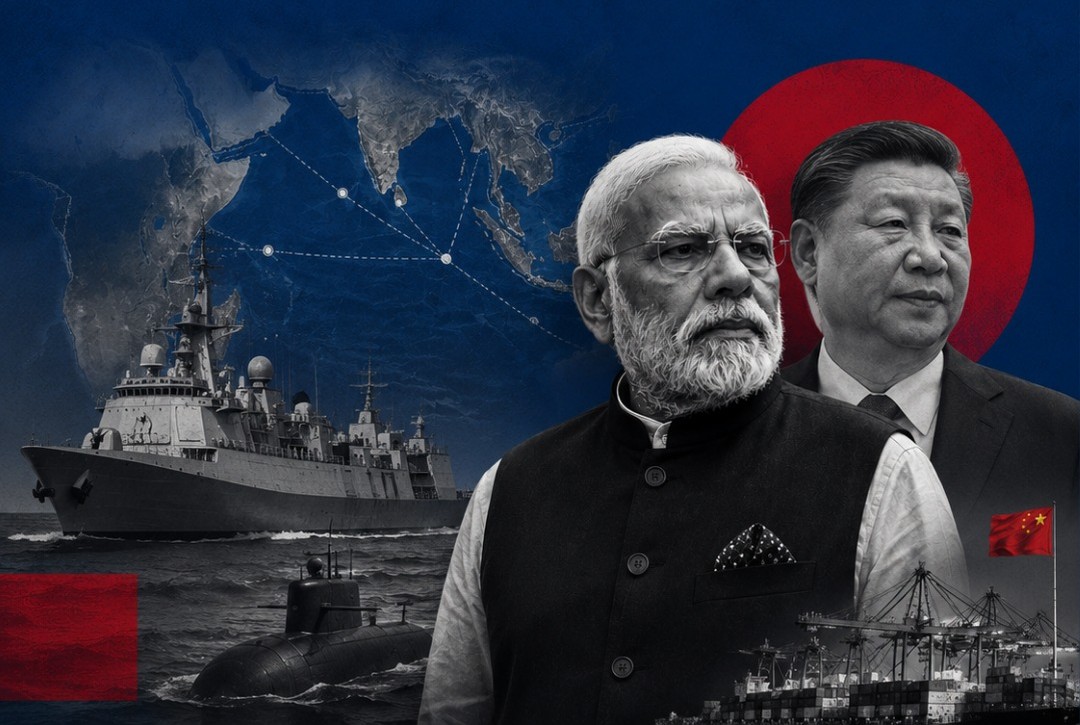
For 10 years, India has been looking northwards – at the snow-clad peaks of Ladakh, at the LAC on the map, at the memory of Galwan. This is understandable. Land borders leak and leak and leak-Here are a few that can be seen, counted and remembered for politics. In New Delhi, however, it has been the downtime when they’ve been looking at the mountains, and the uptime when Beijing has been learning the sea. This is not a recent provocation or response to India’s rise in the Indian Ocean; it is rooted in China’s longstanding presence in the region. China’s presence in the Indian Ocean dates back to a long time and is not a recent provocation or reaction to India’s rise. It’s a long-term effort that is decades in the making, one that has evolved from anti-piracy patrols into something far more significant: a fleet that is able to fight, maintain and sustain itself far from home. India’s Indo Pacific policy will be based on India’s Himalayan outlook if it’s based on yesterday’s threat, it will be in for today’s one, and miss tomorrows.
Power Projection In Indian Ocean
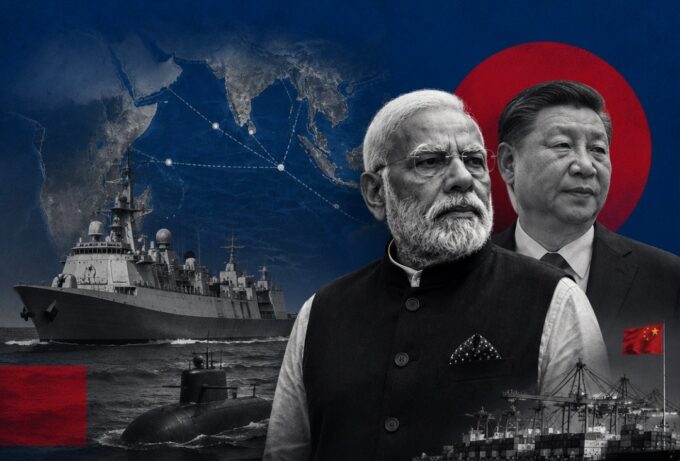
China’s Indian Ocean story started humbly – the deployment of anti-piracy patrols off the coast of the Horn of Africa in 2008, a defensive and indeed welcome, service to the global security of the sea. However, the course since has been clear-cut. Submarines followed in 2014. By 2017, Beijing had established its first foreign military base, in Djibouti, at the northwest gateway of the ocean, for the PLAN. What has come since has not been the occasional fight but a gradual building up of ability. The frequency and spatial extent of Chinese military exercises have increased significantly in the Indian Ocean region, from seven exercises from 2020–22, to fourteen in 2023 in the very familiar waters of the eastern Indian Ocean, the Arabian Sea, the Mozambique Channel and the Red Sea. These are not public displays of deployment. Many include anti-submarine warfare-equipped destroyers and frigates – the clear telltale signs of a navy preparing for war at sea, rather than just waving the white flag of peace.
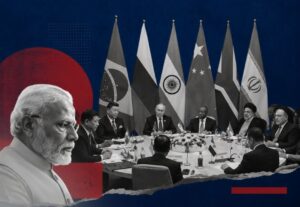
Beijing has recently held trilateral naval drills with Russia and Iran in the western Indian Ocean, an area quite distant from the home waters of all three countries, is in itself the most significant. It’s not by chance that the three powers that don’t have much natural presence in the region are exercising there together. It’s a declaration of China’s intentions to establish a security system with a multipolar structure and Chinese influence. One by one, China has now spread almost every part of a carrier strike group all over the Indian Ocean at different locations. The only thing that’s needed is the aircraft carrier. It is not a comforting omission, it’s a countdown.
Two Encirclement Strategy
The “two front encirclement strategy” of the Chinese is not new, Indian planners have been labeling it such for a long time, as the Chinese investments in Pakistan administered Kashmir are part of the Belt and Road, the port deals in Sri Lanka and the growing visibility of the Chinese navy in the Bay of Bengal and Arabian Sea. Others have disparaged this as “strategic anxiety as analysis. It does not follow from the exercise info.
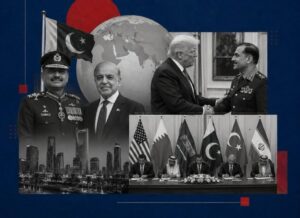
This is a navy that is looking to build up familiarity that it doesn’t have with operation in these waters compared with India and the United States, the two natural powers that have the deepest experience in these waters. Each bilateral exercise with Pakistan, every port call to Africa, every deployment near to the Malacca Strait is a little further in narrowing this gap. It is not just that China is there in the Indian Ocean, it is looking at the Indian Ocean, as a challenger would look at its opponent’s land before a battle which no one had yet determined to fight.
Significantly, the whole of this is independent of hostility towards India in particular. China’s interest in India is related to energy security, need to safeguard the sea lines of communication, which transport most of its trade with Europe, Africa and Middle East, and China’s aspiration to be seen as a global power rather than just regional. One’s intention and that one’s action are two different things. Whatever Beijing’s intention, the reality is that the Chinese navy is now capable of having a presence in India’s Indian Ocean backyard and a confidence to operate there, just where New Delhi has traditionally enjoyed a quasi-exclusive presence and the belief that it has the right to operate without China’s complaint.
The reform essential for India’s strategic progress.
This should change the approach of India towards its own Indo-Pacific strategy in three tangible ways. First, there needs to be a geographical component to resourcing. This land-centric approach to defence planning has been ingrained in India since the Partition and the constant Pakistan threat and has been further bolstered by the Chinese troops on the LAC since 2020. However, the Indian Ocean is the name given by the Indian people to it and giving up their familiarity in the Indian Ocean for granted would be a historic strategic mistake. There is a need to simultaneously invest in the modernisation of navy, undersea surveillance and forward logistics in the Andaman and Nicobar Islands which should be given the same urgency as given to the Himalayas in infrastructure development.
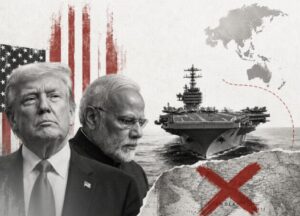
Secondly, there must be greater involvement of partners without becoming dependent of one another. India’s Quad cooperation with the United States, Japan and Australia has resulted in real capabilities enhancement-from joint drills to technology sharing and basic accords that bring inter-operability to a level closer to what was achieved in India’s entire post-independence history. But the fact that the Indian government is striving on the path of strategic autonomy, rejecting any formal alliance, and maintaining relations with Russia isn’t something to be embarrassed of. It is because of them that New Delhi is able to be constructing coalitions in the Indian Ocean region with France, Australia, Indonesia, Gulf nations and African countries on the coast – without being seen as a pawn in America’s Cold War containment policy. It is more likely to be a wide coalition of the willing, rather than a narrower alliance, that will make it more expensive for China to be assertive.
Thirdly, India cannot be defensive in the Indian Ocean, and it should do no such thing. The reason of China’s naval modernisation here is not only India, but also the concern of being vulnerable in Western Pacific on which the sea lines of communication would be vulnerable in any contingency involving Taiwan. That will enable India to have a real bargaining chip. A credible presence of the Indian naval forces that can make a role in the level of security of the SLOC in the event of a crisis is a deterrent which extends beyond the Indian Ocean and has direct relevance as to the risk calculation of the Chinese in the Taiwan Strait and the South China Sea.






Leave a comment