






Modi’s Big Announcement in Jakarta
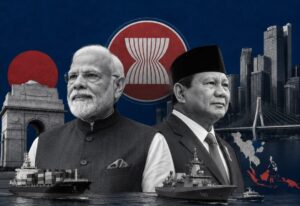
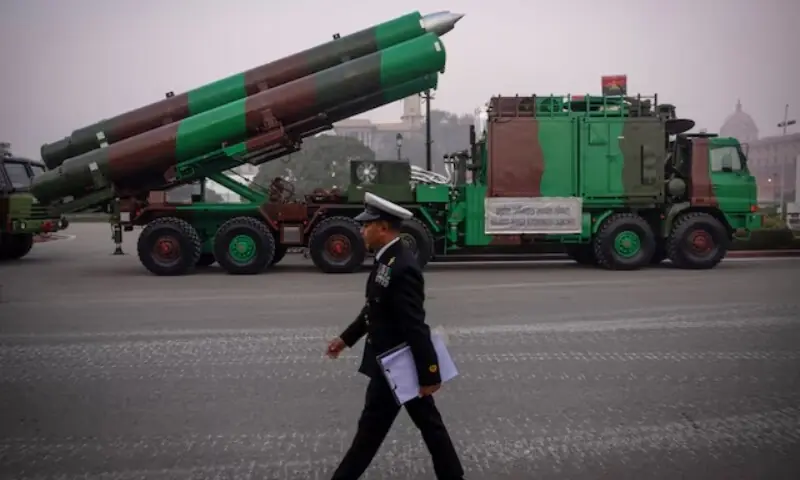
Prime Minister Narendra Modi used the word golden while standing in Jakarta on Tuesday. India will hand over Brahmos cruise missiles and Astra air to air missiles to Indonesia in a package pegged at roughly 630 million dollars, complete with training, maintenance support and a staggered rollout plan for Jakarta’s forces. “The growing trust between our countries is strengthening our defense, security, and maritime cooperation,” PM Modi remarked during what is now his fourth trip to Indonesia, and his first since the relationship was upgraded to a Comprehensive Strategic Partnership.
Read purely as diplomacy, this is a solid outcome. The export engine that Aatmanirbhar Bharat set in motion has already placed BrahMos units in the Philippines and Vietnam, with Indonesia next in line and the UAE reportedly in advanced talks for the same missile plus the Akashteer air defense platform. From a modest 686 crore rupees in 2014, India’s defense exports have climbed to close to 38,400 crore rupees this year. That is the version of events New Delhi is happy to broadcast.
Meanwhile, Our Own Sky Cover Is Thinning
Look at the Indian Air Force’s own numbers, though, and the mood shifts fast. The force tasked with guarding Indian airspace has just 29 to 31 fighter squadrons on hand against a sanctioned requirement of 42. Since a single squadron holds about 18 to 20 jets, that gap translates to something like 200 to 250 missing aircraft, and it is opening up precisely as China pushes past 300 J-20 stealth fighters in active service with newer designs already in flight testing. Defense analyst Ashley Tellis flagged back in 2016 that India would realistically need 60 squadrons to hold off a combined China Pakistan threat. Nearly a decade later, the country is still short of even half that figure.
Parliament Has Been Sounding This Alarm for Years
This is not a fresh discovery. The Standing Committee on Defense has already pointed out that the Army operates with just 15 percent modern equipment while 45 percent of its gear is outdated, and the committee has explicitly said that weapons and border infrastructure cannot keep taking a back seat to salary and pension outlays. That recommendation has been sitting in official reports for years, largely unheeded, even as fresh export contracts keep getting signed overseas.
Follow the Money and The Picture Gets Clearer
The budget math tells its own story. Out of the 7.85 lakh crore rupees set aside for defense in 2026-27, pensions alone swallow 1.71 lakh crore, leaving only 2.19 lakh crore for the capital spending that actually buys new jets, tanks and warships. Hindustan Aeronautics Limited, which is supposed to close the fighter gap through the Tejas Mk1A line, keeps falling behind schedule, not helped this year by General Electric missing its own deadline for engine deliveries. On top of that, a string of Su-30MKI incidents through 2026 has drawn attention to just how thin the margins have become for an air force juggling ageing aircraft and stretched maintenance capacity.
The Indonesia Agreement Isn’t the Real Issue
None of this makes the Jakarta agreement a bad idea. Indonesia is a serious partner, and the accompanying maritime cooperation, including the plan to jointly develop Sabang port overlooking the Strait of Malacca, addresses real concerns for both nations as Chinese activity in the South China Sea intensifies. Bilateral trade already stands at 28.15 billion dollars for 2024-25 and continues to expand. Strengthening this partnership makes sense.
What Actually Needs Questioning
The real issue is the distance between the confidence New Delhi projects overseas and the shortfalls it quietly tolerates back home. Telling Jakarta that Indian defense manufacturing has come of age is one message. Explaining to Indian citizens, who fund both the export drive and the modernization budget, why a quarter of their own air force’s squadrons are missing is an entirely different conversation. A country can export cutting edge missiles and still leave its own defenders short of aircraft, and glossing over that contradiction is unfair to the pilots and soldiers who have to work with whatever eventually shows up, not with what gets announced at a foreign press conference.
Conclusion
Selling Brahmos to Indonesia is a legitimate success for Indian defense manufacturing and a smart diplomatic play given how fast the Indo-Pacific balance is shifting. That part is not in dispute. But no nation can keep projecting strength abroad indefinitely while its own capability gaps go unaddressed. Real progress will show up only when squadron numbers actually approach that sanctioned figure of 42, when the Standing Committee’s repeated warnings stop gathering dust, and when capital spending on modernization starts outpacing the pension bill instead of trailing behind it. Until then, every export deal celebrated in the headlines will sit awkwardly next to reports of grounded fighters and delayed engines back home. Jakarta’s golden chapter should not double as New Delhi’s reason to stop looking at its own runway.







Leave a comment