




A Diplomatic Win New Delhi Was Quick to Celebrate
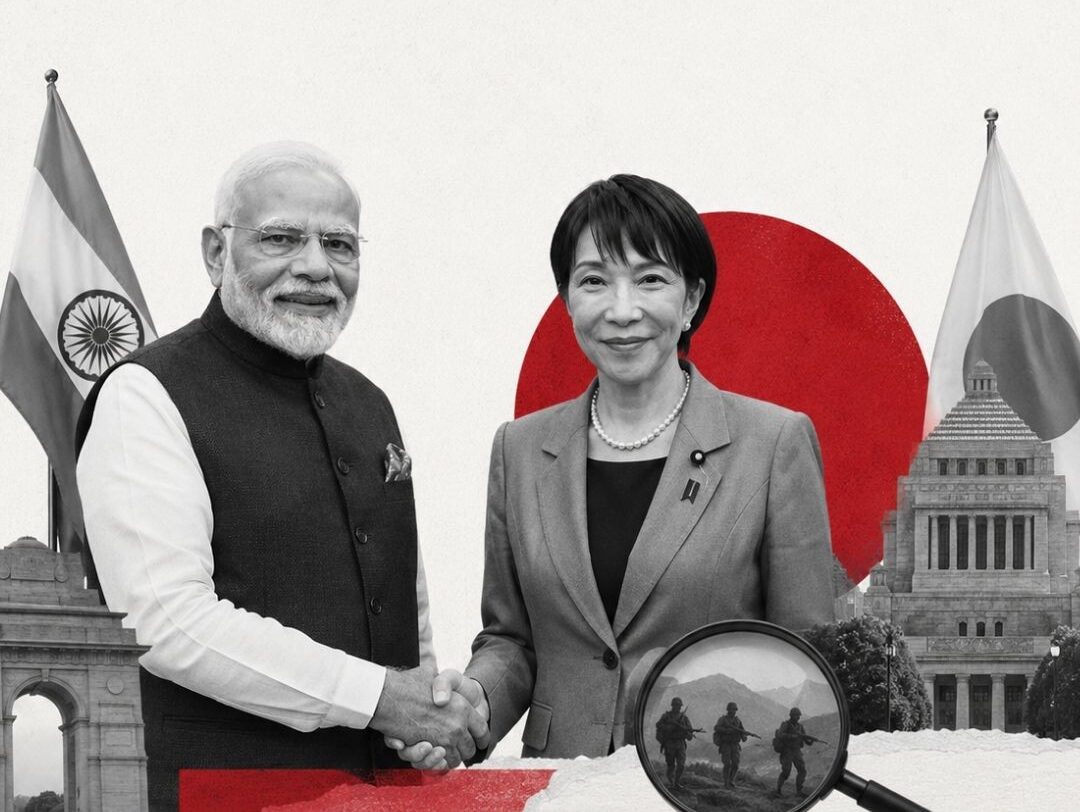
When Prime Minister Narendra Modi and his Japanese counterpart Sanae Takaichi sat down for the 16th India-Japan Annual Summit in Tokyo’s shadow this week, the resulting joint statement was celebrated across New Delhi’s foreign policy establishment as a coup. For the first time, Japan, a country that has historically preferred equidistance in South Asian disputes, agreed to language condemning “cross-border terrorism from Pakistan” in a formal bilateral document. Ministry of External Affairs officials wasted no time briefing reporters on the significance of the phrase, and pliant sections of the domestic press dutifully amplified the framing of a diplomatic triumph.
The Question That Went Unasked
What went almost entirely unexamined in that celebration is a question that has followed the Pahalgam massacre since the day it happened: where is the evidence?
What Happened at Pahalgam, and What Didn’t Follow
Twenty-six civilians, mostly tourists, were gunned down in the Baisaran meadow near Pahalgam on 22 April 2025. The government’s response was swift and, on the international stage, effective. Diplomatic missions were dispatched, briefings were held, and capital after capital was persuaded to at least gesture toward India’s version of events. Japan is only the latest addition to that list. But at home, the government has been far less forthcoming about the actual investigative trail connecting the attackers to the Pakistani state.
Voices From Within Question the Official Line
Former Union Home Minister P. Chidambaram, hardly a marginal voice, asked publicly why the National Investigation Agency had stayed silent for weeks about its findings, and pointedly questioned whether the identities and origins of the attackers had even been established. His challenge to the official narrative was blunt: officials, he suggested, could not rule out that the perpetrators were homegrown rather than infiltrators from across the border. Those are not the words of a foreign critic. They are the words of a man who once ran India’s internal security apparatus.
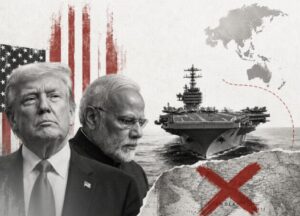
Congress leader Priyanka Gandhi Vadra raised a related discomfort in Parliament, noting that the ceasefire ending the brief military exchange with Pakistan was announced not from New Delhi but from Washington, by the American president. That single fact, largely absent from the government’s own telling of the episode, undercuts the narrative of unchallenged Indian primacy that the Pahalgam response was supposed to project both domestically and abroad.
A Record Built on Assertion, Not Inquiry
None of this is to relitigate Pakistan’s long and well-documented history of harboring groups like Lashkar-e-Taiba and Jaish-e-Mohammad, both named again in the Japan statement alongside Al Qaeda and ISIS. That record is real. But a foreign policy built on securing sympathetic language from Tokyo, Washington or Paris cannot substitute for a domestic accounting that Indian citizens, and Kashmiris in particular, are still owed. It took the government until a Parliament debate months later, and only after security forces said they had killed three militants in Operation Mahadev, for Home Minister Amit Shah to present anything resembling forensic evidence, an unusual admission that this was, in the NIA’s own telling, the first time a minister had gone public with material linking the attack to Pakistan.
Analysts at the Chatham House have separately noted that Pakistan’s offer of a joint, neutral investigation was dismissed by New Delhi as a delaying tactic, a decision that left India’s case resting on assertion rather than an internationally verifiable inquiry. Whatever one makes of Islamabad’s motives in making that offer, refusing it has made it easier for skeptics, at home and abroad, to asks whether India’s diplomatic campaign has been built on conviction or on convenience.
Messaging Is Not Proof
The India-Japan statement, in other words, is a victory for the government’s messaging operation. It is not proof of anything, and it does not settle the questions raised by its own former home minister. Diplomatic language, however carefully negotiated, cannot do the work that a transparent domestic investigation still has not done. Until it does, each new joint statement will keep answering a question the world is asking, while leaving the one Indians are asking unanswered.
Conclusion
Tokyo’s language on Pakistan will be read in every foreign ministry as a marker of where Japan now stands in the Indo-Pacific contest with China, and New Delhi is entitled to count that as a genuine diplomatic gain. But a joint statement is not a substitute for the domestic reckoning that the Pahalgam attack still demands. A government that can persuade Tokyo, Washington and Paris to echo its language on Pakistan ought to be equally capable of answering the far more basic questions raised by its own former home minister and by members of its own Parliament. Until the National Investigation Agency’s findings are placed before the public in full, and until the gap between what is said abroad and what is explained at home is closed, the achievement in Tokyo will remain exactly that: an achievement in messaging, not in truth-telling. Indian citizens, and especially the residents of Jammu and Kashmir who buried their own after Pahalgam, deserve better than a diplomatic press release standing in for an investigation.







Leave a comment