












General Upendra Dwivedi unveiled the Indian Army Strategic Guidelines 2047 on June 5, 2026. The document is ambitious, well-designed, and politically timed. It is also undermined by contradictions that its own authors cannot have missed.
On June 5, 2026, Chief of Army Staff General Upendra Dwivedi unveiled the Indian Army Strategic Guidelines 2047, the Indian Army’s vision for transforming itself into a future- ready force aligned with the aspirations of a developed India by the centenary of independence. The document sits within a broader architecture: Defence Minister Rajnath Singh had released the parent Defence Forces Vision 2047 on March 10, 2026, with jointness and inter-service synergy as its stated central pillar.
The timing is deliberate and worth noting. The guidelines were released in the immediate aftermath of Operation Sindoor, which the government has framed as vindication of its defence modernization approach. They align explicitly with the Prime Minister’s Viksit Bharat political programme. They arrive as India’s SIPRI ranking as the world’s fifth-largest defence spender was confirmed. The document is, in part, a strategic communication exercise as much as a military planning document.
None of this makes it unimportant. A twenty-one-year transformation framework for the world’s fourth-largest active military force deserves serious examination. What that examination reveals is a document with genuine value as a statement of intent and structural gaps that its own timeline will eventually expose.
What the Document Actually Says
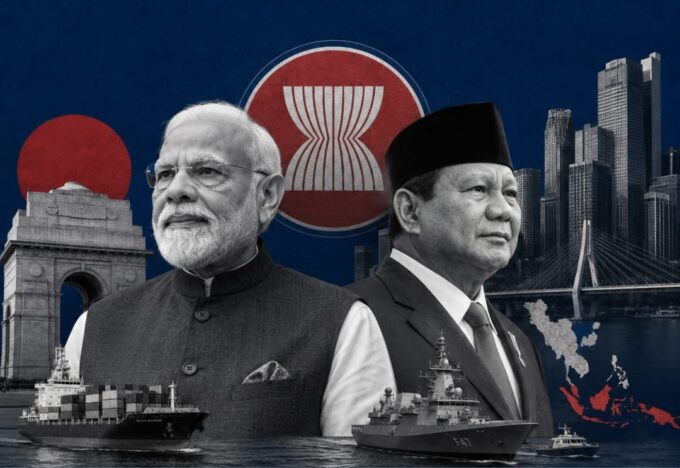
The Strategic Guidelines 2047 are organized around three planning horizons. The first, 2026 to 2030, focuses on foundational restructuring, including early theaterization progress, force modernization, and technology integration. The second, 2030 to 2040, envisions a joint, multi-domain capable force operating integrated theatre commands with advanced unmanned, cyber, and space-based capabilities. The third, 2040 to 2047, is described as the “era of excellence,” in which India’s military operates as a peer competitor to any regional adversary and as a credible global force projection instrument. The document calls for embracing artificial intelligence, autonomous systems, quantum communication, and space-based intelligence at scale. It envisions deep indigenous defence industrial capacity under the Aatmanirbhar framework, an end to the import dependency that has made India the world’s second-largest arms importer for years. It calls for cultural transformation within the services, shedding colonial institutional legacies and building genuine jointness in operations, planning, and logistics. It acknowledges India’s two-front security challenge and the requirement for integrated responses. It signals India’s aspiration for a larger role in the Indian Ocean Region and in broader Indo-Pacific security architecture.
Taken as a statement of where India’s military should be by 2047, this is a serious and in many ways correct diagnosis of what transformation requires. The problem is not the destination. The problem is the gap between the destination and the current starting point, a gap the document describes with considerably less clarity than the vision it projects.
The Missing Threat Assessment
Every credible military strategic document begins with an honest assessment of adversaries. NATO’s Strategic Concept names Russia as the most significant and direct threat and China as a systemic challenge. The United States National Defense Strategy identifies China as the pacing challenge and Russia as an acute threat. Australia’s Defence Strategic Review names the deteriorating Indo-Pacific strategic environment with explicit reference to China’s military buildup.
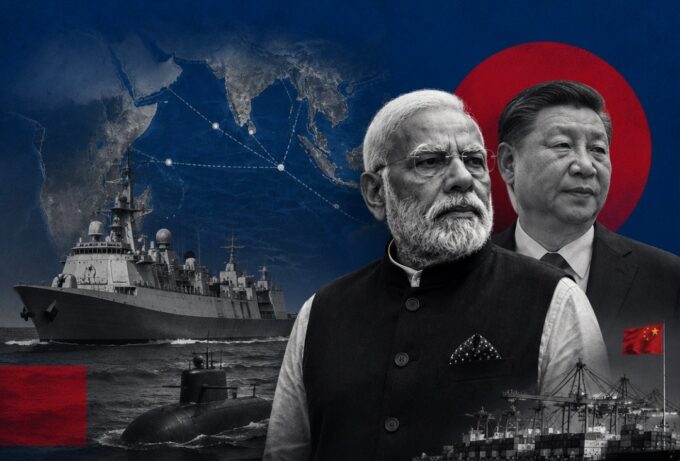
The Indian Army Strategic Guidelines 2047 contains no equivalent. It does not name China. It does not assess the PLA’s capabilities, trajectory, or intentions in the Himalayas. It does not examine Pakistan’s military modernization or the increasingly integrated China- Pakistan military axis. It does not analyze the Indian Ocean’s changing security dynamics, including China’s growing naval presence and the string of pearls infrastructure that has been documented since the early 2000s.
This is not an oversight. It is a political choice. Naming China as India’s primary adversary in an official strategic document would create diplomatic complications with a neighbor India is simultaneously trying to normalize relations with, as demonstrated by the FDI rule easings in March 2026. Naming Pakistan compounds the two-front problem by acknowledging publicly what military planners already know privately. The document therefore produces a modernization roadmap with no enemy, a transformation framework without a threat baseline against which transformation can be measured or justified.
A strategy without adversary analysis is not strategy. It is aspiration with a uniform attached.
Theaterization: Ten Years of Failure Promised for Two More
The Shekatkar Committee recommended integrated theatre commands in 2016. India’s first Chief of Defence Staff was appointed in January 2020, with theaterization as his explicit primary mandate. General Bipin Rawat died in December 2021 with no theatre command operational. General Anil Chauhan served until May 2026 with no theatre command operational. Lieutenant General NS Raja Subramani has just been appointed as the third CDS with theaterization as his inherited primary mandate.
Three CDSS. Ten years since the Shekatkar recommendation. Not one operational theatre command.
The reason is not administrative delay. It is a fundamental inter-service dispute over asset ownership that no amount of CDS authority has been sufficient to resolve. The Army, Navy, and Air Force each resist placing their assets under a unified theatre commander who comes from a different service. The Air Force has been particularly resistant, arguing that air power’s flexibility and indivisibility make it unsuitable for allocation to geographically defined theatre commands. These are not irrational institutional concerns. They are also a decade-old impasse that the 2047 document assumes away by projecting a fully joint, theatre-structured military as the baseline for its second planning horizon.
As recently as June 2025, the CDS described progress on jointness in terms of “camaraderie and consensus,” announcing the transition to “Jointness 2.0.” Camaraderie and consensus after a decade of attempting structural reform is not progress. It is the polite language institutions use when they have failed at the harder task. The 2047 document inherits this failure and projects resolution across the 2026 to 2030 horizon without specifying the mechanism that will succeed where the previous decade’s mechanisms failed.
Agnipath: The Manpower Policy Working Against the Vision
The 2047 document envisions a technologically sophisticated force capable of operating autonomous systems, cyber infrastructure, quantum communication networks, and multi- domain combat platforms. It requires deep institutional expertise, long service records, and the kind of unit cohesion that complex technical systems demand.
The government’s own manpower policy is structurally incompatible with this vision.
The Agnipath scheme, introduced in 2022, recruits soldiers on four-year contracts with a 25 percent retention rate. Seventy-five percent of every recruit cohort exits the military after four years. The first cohorts have now been serving long enough to generate internal assessments. Those assessments indicate that the four-year tenure is insufficient to master complex weapon systems, that the retention uncertainty creates documented personnel stress, and that the churning of 75 percent of technical recruits every four years is creating skill voids in the Navy and Air Force specifically, where the gap between entry-level competence and genuine operational effectiveness is widest.
Internal surveys cited in defence research suggest 72 percent of Agniveers report job stress due to uncertainty about their post-service future. A recruit spending his four years managing employment anxiety is not simultaneously building the deep technical mastery that operating a future autonomous combat system requires.
Agnipath was introduced primarily to address the defence budget’s manpower cost problem, which consumes over 70 percent of the revenue allocation and leaves inadequate capital for modernization. The number of defence pensioners increased by approximately one million in seven years. The pension burden is real and financially significant. But the attempt to solve a budget problem by introducing a high-turnover recruitment model directly contradicts a vision document calling for deep technological transformation. You cannot build a force with 2047-level capability on a manpower model optimized for 2022- level cost reduction.
Aatmanirbhar: The Engine Problem That Defines the Dependency
The 2047 document calls for strategic autonomy through indigenous defence production. India’s target of 70 percent indigenous procurement content has been repeatedly stated since 2020. The LCA Tejas programme is the symbolic centerpiece of this ambition.
The specifics are instructive. In 2021, HAL ordered 99 GE-F404 and F414 engines from the United States for approximately $716 million, with deliveries scheduled to begin in early 2024. The first engine arrived fourteen months late, in March 2025. By the end of 2025, six engines had been delivered. GE has reportedly declined to transfer hot section technologies, including single-crystal turbine blades, thermal barrier coatings, and advanced cooling systems that are essential for genuine engine capability and that India would need to produce these engines indigenously.
India’s most celebrated indigenous fighter programme is therefore flying on imported engines whose critical manufacturing technology is not being transferred, whose delivery schedule has slipped significantly, and whose supplier has demonstrated that technology transfer at the level India’s Aatmanirbhar ambitions require is not forthcoming at any price currently on offer. This is not a criticism of HAL’s engineering capability. It is a description of the political economy of advanced defence technology transfer, which no country with a strategic interest in maintaining technological advantage will willingly surrender.
As of 2026, India remains behind the United States, Russia, and China in indigenous production of sophisticated defence equipment. The gap is not primarily a funding gap. It is a technology, ecosystem, and industrial base gap that accumulated over decades of import dependency and the 2047 document’s ten and twenty-year horizons may be genuinely insufficient to close.
The Budget Arithmetic That Nobody Has Done
The 2047 document projects a transformed force across three planning horizons. It does not contain a credible funding model. This is the most consequential omission in a document full of significant omissions.
Over 70 percent of India’s defence budget goes to revenue expenditure, primarily personnel costs and operational maintenance. Approximately 30 percent is available for capital expenditure on modernization. The Agnipath scheme was intended to reduce the revenue burden by reducing long-term pension liabilities, but its first cohorts have not yet reached retirement age, so the budgetary relief remains years away and its scale uncertain. The transformation the 2047 document envisions, theatre commands, autonomous systems at scale, indigenous engine production, cyber and space capabilities, requires sustained capital investment at levels significantly above the current allocation. India’s defence capital budget in 2026-27 is Rs 2.19 lakh crore. The investments required to deliver genuine 2047 capability across all three services simultaneously would require capital allocations that the current fiscal position cannot sustain without either significant economic growth or major reallocation from other national priorities.
The document does not acknowledge this constraint. It projects ambition across a timeline long enough that no single government is accountable for the gap between the vision and the funding it would require.
The Accountability Gap That the Timeline Creates
The 2047 planning horizon is simultaneously the document’s strength and its most significant structural weakness. Twenty-one years is long enough to accommodate genuine transformation if the foundational decisions are made correctly and consistently. It is also long enough to ensure that no current decision-maker is accountable for the distance between the vision and the outcome.
Multiple Chiefs of Army Staff, multiple Chiefs of Defence Staff, five or six governments, and several different strategic environments will succeed the current one before 2047 arrives. Each transition point is an opportunity to revise, reframe, or quietly abandon the commitments made in June 2026. The three-horizon structure, with accountability deferred to 2030, 2040, and 2047, provides virtually no mechanism for intermediate course correction or genuine consequence for underperformance.
When 2047 arrives, the people who signed the document will not be in office. The people in office will have their own documents. This is the tradition of Indian defence
aspirationalism: ambitious in vision, unaccountable in execution, valuable as signal and unreliable as plan.
What This Document Is, and What It Isn’t
The Indian Army Strategic Guidelines 2047 is not a cynical exercise. General Dwivedi’s commitment to military transformation appears genuine. The identification of AI, autonomous systems, theaterization, indigenous production, and cultural change as the necessary transformations is analytically correct. A military that successfully executes this vision would be genuinely formidable.
The document is undermined not by bad intent but by structural contradictions it inherits from decisions already made. Agnipath contradicts the technical depth requirement. The absence of theatre commands after ten years contradicts the joint operations assumption. The engine dependency contradicts the Aatmanirbhar framework. The budget arithmetic doesn’t support the capital investment required. And the absence of any threat assessment means the entire transformation enterprise has no adversary against which its sufficiency can be evaluated.
India’s 2047 army will be shaped more by the decisions made in the next three years, on theaterization, on Agnipath retention rates, on engine technology transfer, and on defence capital budget allocation, than by the vision document released on June 5, 2026. Those decisions will be made in budget committees and service headquarters and procurement boards, not in strategic guidelines documents.
The document is a useful statement of where India’s army should go. The harder question is whether the institutional, fiscal, and political conditions for actually getting there exist. On that question, the 2047 Guidelines are less a roadmap than an aspiration wearing the clothes of a plan.











Leave a comment