







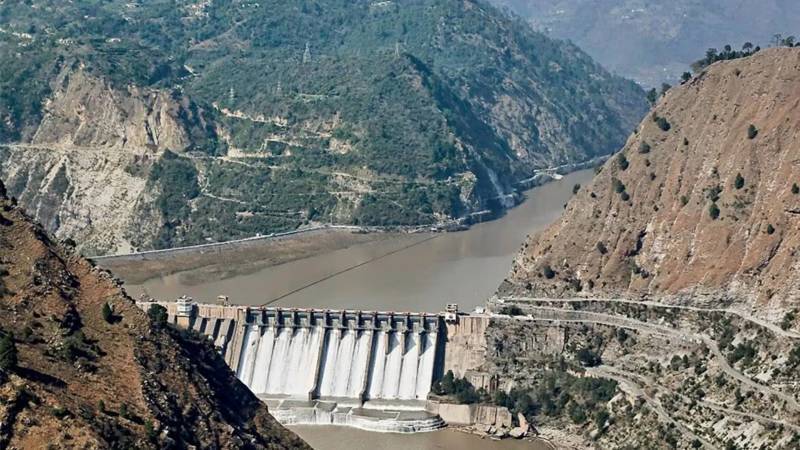
It has been over a year since India decided to suspend the Indus Waters Treaty (IWT) following the Pahalgam incident in April 2025. By unilaterally holding the 65-year-old treaty “in abeyance” and proposing to divert the western rivers to Rajasthan, India has not only endangered Pakistan’s water supply but also raised serious questions about adherence to international law.
The IWT: A Rare Success of Cooperation
The IWT, signed in 1960, has historically been a rare example of cooperation between India and Pakistan. It guarantees Pakistan control over the Indus, Jhelum, and Chenab rivers, which irrigate over 18 million hectares of farmland roughly 80% of Pakistan’s arable land and contribute about a quarter of its GDP. For a climate-vulnerable country with limited water storage, the uninterrupted flow of these rivers is critical to ensuring food security, economic stability, and livelihoods.
Legal Violations and International Law
India justified the suspension citing cross-border terrorism and a supposed “fundamental change of circumstances.” Yet, international legal frameworks, including the Vienna Convention on the Law of Treaties, clearly reject such unilateral suspension. The Permanent Court of Arbitration (PCA) ruled in June 2025 and again in February 2026 that the treaty remains binding and cannot be held in abeyance unilaterally. Article XII(4) of the IWT explicitly requires mutual consent for any amendment or termination. India’s decision thus raises concerns about compliance with the principle of pacta sunt servanda agreements must be kept.
Human Rights at Risk
India’s actions here demonstrate a clear disregard for basic human dignity. Intentionally withholding water for the basic sustenance of 240 million people is an attack on the right to food, health, and development. Under the principles of international law, countermeasures must be proportionate, reversible, and not harm human dignity. India’s suspension does not meet a single one of those. Wielding water for political domination is, at best, an indirect means of collective punishment.
The Kashmir Dimension
In addition, this suspension fuels the already burning fire of the Kashmir issue. Failing to address the political problems at the core and instead using water as a weapon will take a relatively manageable dispute and exacerbate it further. Pakistan has stated that it will consider the diversion of water to be an “act of war.” This shows just how serious a situation India is creating for itself.
Pattern of Non-Compliance
India’s practice of preference to unilateral projects and non-binding dispute settlement structures, while at the same time ignoring multilateral commitments (as shown in the case of her hydropower projects like Kishanganga and Ratle), is a trust deficit. India’s political preference after a year of suspension is clear. It has prioritized political variables at the expense of the law, humanitarian issues, and the stability of the region.
The Path Forward
The immediate way forward requires restoring dialogue, adhering to international rulings, and ensuring the IWT functions as intended. Water cannot become a tool of coercion, especially in a region facing climate stress. The IWT should remain a bridge for cooperation, not a source of conflict. One year later, India’s suspension highlights the risks of unilateral action in a shared ecosystem and the urgent need for renewed diplomacy and legal compliance.









Leave a comment