














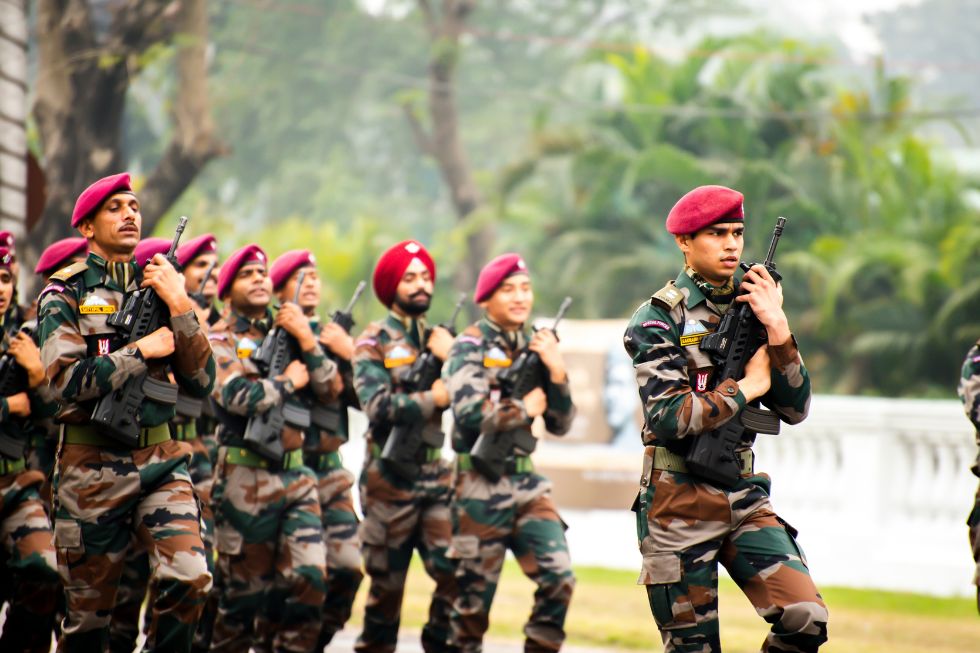
Recent events at INS Chilka, Odisha, where two Agniveer trainees tragically ended their lives within days of each other, have exposed a critical and largely ignored issue: the Indian Army is failing to protect the rights and welfare of its soldiers. These young men, recruited under the four-year Agniveer scheme, represent the next generation of the Indian Armed Forces. Yet, despite their dedication and sacrifice, many face mental, financial, and social insecurity, a stark contradiction to the promises of service.
The Agniveer Scheme: Promise vs Reality
The Agniveer recruitment model was introduced in 2022 for the purposes of updating the military and attracting younger recruits and saving money on lifelong pensions. Following 4 years of service, the trainees are left without jobs, with 75% of the recruits cut from service.
The model was aimed to cut costs and modernize the military, but it has left recruits in the lurch. Many of these recruits are young adults from low socioeconomic status and do not have any means to support themselves after serving. With a clear set of consequences, the Agniveers are left with no future and a deep lack of support, the question of the Army’s reason to be is infinitely justified.
The Military’s Mental Health Crisis
The Army has seen many mental health crises in recruits. The Army also has seen more of their recruits dying by suicide in the Army than their peers in other military programs. With all of the stressors of being in the military, especially for the Agniveers, they are losing the will to live and need more support.
Reports also include the many Agniveers that have died over the years of the program. The need for mental health support is dire and without it, these soldiers have no other option but to feel hopeless.
Financial Security and Uncertain Benefits
Financial and occupational security is a worker’s right wihtout exception, and this is no less true for soldiers. Agniveers standing for the Armed Forces lack a basic level of financial security during their service, after their service is completed, and after their retirement. And there is a gap in financial and social security for the Agniveers after their service is completed, and as they transition from a service life to a civilian life.
Young recruits typically leave the Armed Forces after their service with detrimentally low savings capacity, without advancement skills, and with no post service employment guarantees, which, not only obfuscates their purpose, but endangers their financial security, and indirectly, their economic rights.
Bureaucratic Inefficiency and Institutional Apathy
Bureaucratic inefficiency coupled with institutional apathy are perceived as two interrelated themes in the literature. Administrative delays are a constant for personnel and/or beneficiaries, be they soldiers’ families, or civil service employees, in processing the demise, retirement, or welfare claims, which delays processing time. Behind these administrative delays is the perception, whether justified or unjustified, that the right to request the Armed Forces of India has little social value. The right to guarantee that every recruit is informed of their full rights and the benefits they receive frustrates the recruits.
The Human and Social Costs
It is not a social problem when a military personnel’s or his/her family’s right to be financially sustained after their demise is socially and economically undeserved. It impacts the community, especially the families dependent on the military for social and economic stability.
The Indian Armed Forces run the risk of undermining the trust of the general public if they do not supply sufficient rights and protections during military operations. This trust is essential for sustaining the Armys morale and for enlisting persons. The repeated suicides of the Agniveers is a wake-up call. It illustrates that human welfare cannot be substituted for creativity in intervention.
Urgent Measures for Reform
Addressing this crisis requires immediate and sustained action. Key reforms should include:
- Clear post-discharge pathways: Ensuring meaningful employment opportunities or government support for discharged Agniveers.
- Robust mental health support: Accessible counseling services and continuous monitoring of psychological well-being.
- Timely financial benefits: Guaranteeing pensions, allowances, and resettlement packages without bureaucratic delays.
- Transparent welfare policies: Clear communication of rights and entitlements to all recruits.
- Awareness and education: Training recruits and their families about coping strategies, financial planning, and career options post-service.
- These measures are not just administrative necessities they are essential to safeguard the dignity, morale, and safety of soldiers who serve the nation.
Soldiers Deserve More Than Words
Tragedies like those that occurred at INS Chilka underscore the view that being a member of the Indian Army is a combination of serving the country with courage and the expectation that the organization is responsible to protect the personnel, their families, and their future. The Agniveer scheme, albeit well-intentioned, has laid bare the worries of rights, welfare, and support gaps that need to be addressed with great urgency.
The Indian Army has to ensure that the compromise of the rights of the soldiers is not a trade-off for policy novelties or budgetary austerity. The strength of a nation should not be seen to be just in terms of the weaponry and training, but more so in the compassion it shows to its citizens for the defense of its existence. The armed forces, to be at their best, should be able to honor and protect the rights of the citizens, and thereby, duty, honor, and service to the nation should prevail over the challenges to maintain public confidence and the morale of the forces.









Leave a comment