




The attack on April 22, 2025, killed 26 innocent people in broad daylight, one kilometre from an army base. A year later, India has launched military operations, held election rallies, and arrested over a thousand Muslim youth. It has not answered a single hard question.
A year ago today, armed militants walked into the meadows of Baisaran in Pahalgam and killed twenty-six people. Most were tourists. They were shot at close range after being asked to recite an Islamic verse, killed for their faith in a valley that India calls a crown jewel of its territory and a showcase of restored normalcy.
The government’s response was swift, confident, and total. Pakistan was blamed within minutes. Military operations were launched within weeks. The Prime Minister gave speeches. The defence minister gave press briefings. Nationalist television ran tributes and victory montages simultaneously. What the government did not do, in the twelve months since, is answer any of the questions that a functioning democracy would demand answers to. Not one.
Here, on the first anniversary of the Pahalgam attack, are the questions India is still waiting to have addressed.
Question One: How Did Armed Militants Walk Past an Army Base?
Baisaran meadow sits approximately one kilometre from an army installation. Pahalgam is one of the most security-saturated tourist destinations in Jammu and Kashmir, a region that has seen decades of militancy and therefore decades of layered security presence. Armed men, carrying weapons capable of executing twenty-six people, trekked into a popular tourist site in broad daylight, carried out a massacre, and disappeared into the mountains without being intercepted before, during, or immediately after the attack. The government has never explained how this was possible. No security audit has been made public. No official has described the intelligence picture in the days before the attack. No one has explained what the army base one kilometre away was doing between the time the firing began and the time the attackers vanished.
This is not a rhetorical question. It is a question about whether the security apparatus that absorbs enormous public expenditure in Kashmir and is presented to Indian citizens as the reason normalcy has been restored, actually provides the protection it is paid to provide.
Question Two: How Did Pakistan Get Blamed Before the Police Arrived?
The attack occurred at approximately 3 PM on April 22, 2025. According to documented timelines, within minutes of the attack, national television channels were reporting Pakistani involvement. An FIR naming The Resistance Front and its Pakistan links was filed before police units had reached the site.
This timeline is not disputed. It is simply not discussed in mainstream Indian media, which moved swiftly from the attack to the attribution to the military response without pausing to ask how a criminal investigation reached its conclusions before investigators had physically accessed the crime scene.
In any country with functioning journalistic institutions, the question of how attribution happened this fast would be considered legitimate and important. In India in 2025, asking it was treated as anti-national sympathy for terrorism. That treatment is itself an answer of sorts, though not the one the families of the twenty-six dead deserved.
Question Three: What Actually Happened with TRF’s Claim?
The Resistance Front claimed responsibility for the Pahalgam attack within hours. Days later, TRF issued a statement denying responsibility, alleging that the original claim had been planted through a cyber intrusion by Indian intelligence using digital fingerprints. This denial was either true or false. If false, it was a straightforward case of a terrorist organization trying to walk back an admission, and the government should have been able to demonstrate conclusively why it was false. If true, or even partially credible, it raised serious questions about the authenticity of the evidence chain on which India built its entire international case against Pakistan.
The government did neither. It did not rebut the denial with specific technical evidence. It did not acknowledge the denial publicly in any sustained way. It treated the TRF retraction as though it had not happened and continued to cite the original claim as established fact. A year later, the question of what actually happened with the TRF claim has received no official answer.
Question Four: Why Did the Security Lapse Admission Take 82 Days?
Eighty-two days after the attack, Indian authorities quietly acknowledged that Baisaran meadow had been opened to tourists earlier than normal in the 2025 season, and that security deployment at the time of the attack was inadequate for the number of visitors present.
This admission, which confirmed that the government’s own decisions created the conditions in which twenty-six people were killed, was not announced at a press conference. It was not accompanied by an accountability review. No official resigned. No explanation was given for why it took nearly three months to acknowledge what local security personnel and tourism operators had been saying since the day of the attack. The eighty-two-day delay is not a bureaucratic timeline. It is a political calculation: wait until the immediate outrage has converted into nationalist sentiment, until the military response has dominated the narrative, until admitting the lapse carries lower cost than it would have in the first week. That calculation worked exactly as intended. The admission landed quietly and disappeared from coverage within a news cycle.
Question Five: What Happened to the People Arrested Afterward?
The government’s post-Pahalgam crackdown in Jammu and Kashmir involved midnight raids, mass detentions, and over 1,100 Muslim youth arrested across the valley. In Gujarat, reports documented up to 6,500 detentions of Muslims, the overwhelming majority of whom were subsequently confirmed as Indian citizens. Homes were bulldozed. People were publicly branded as outsiders and infiltrators before any legal process had established their status.
More than ninety percent of those detained were confirmed Indian citizens. Most were released without charge. None of this was accompanied by an official acknowledgment that the crackdown had swept up innocent people, no apology, no compensation, no review of the criteria used to detain thousands of citizens in the aftermath of an attack they had nothing to do with.
The families of the twenty-six people killed in Pahalgam were promised compensation and justice. A year later, according to accounts from the valley, many are still waiting for both.
Question Six: Who Benefited from the Timing?
Bihar elections were approaching when the Pahalgam attack occurred. Within days of the attack, national security had become the dominant theme of the BJP’s election messaging. The Prime Minister’s rally speeches shifted to the language of revenge, strength, and the threat from across the border. Operation Sindoor, launched in the weeks following the attack, provided a military event timed with extraordinary convenience for a party preparing for a major electoral contest.
This is not an accusation of staging. It is an observation about political benefit and the absence of any mechanism in Indian public discourse that would permit this observation to be made without being immediately characterized as treasonous. In a healthy democracy, asking whether political actors benefited from a tragedy, and how that benefit shaped the response to it, is a legitimate exercise of accountability journalism. In India in 2025 and 2026, it is a question that cannot be asked on prime-time television.
What India Got Instead of Answers
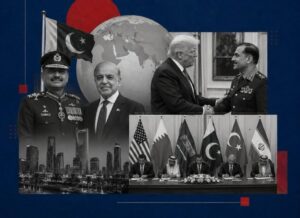
Operation Sindoor was launched and declared a success. Months later, a terrorist attack in the national capital killed thirteen people, demonstrating that the military action had not resolved the underlying security failure. India sought to isolate Pakistan internationally. Pakistan ended up brokering the Islamabad ceasefire accord in the Iran crisis, emerging as a global diplomatic actor while India watched from the outside. The government held rallies. It did not hold an inquiry.
The real measure of a democracy’s response to tragedy is not the speed of its military action or the volume of its nationalist rhetoric. It is whether the people responsible for the failures that made the tragedy possible are held to account. Whether the families of the dead receive the justice and compensation they were promised. Whether the citizens arrested in the crackdown and later confirmed innocent receive an acknowledgment of what was done to them. Whether the questions that remain unanswered are answered.
On every one of those measures, India has failed the twenty-six people who died in Baisaran meadow on April 22, 2025.
The meadow is open to tourists again. The questions are still open too.





Leave a comment