


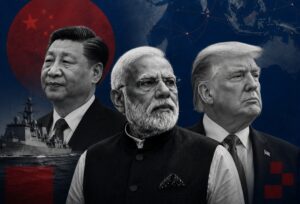
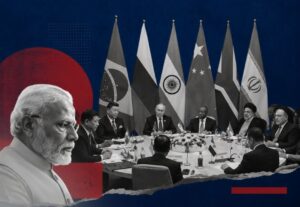

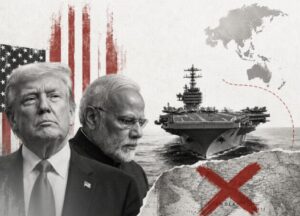

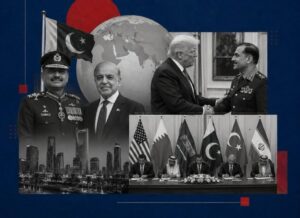
Five years after 20 soldiers died in Ladakh, New Delhi quietly rolls back every restriction it imposed on Beijing-and calls it economic reform
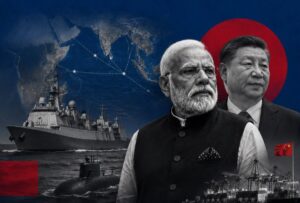
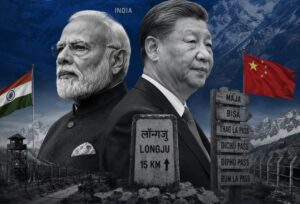
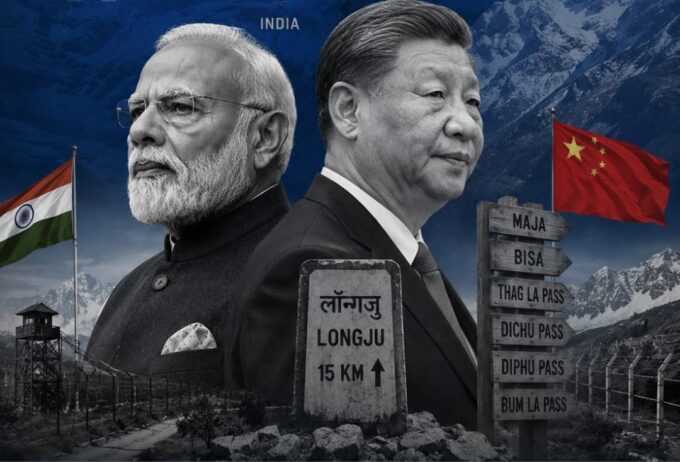
On the night of June 15, 2020, twenty Indian soldiers were killed in hand-to-hand combat in the Galwan Valley. No bullets. Rocks, iron rods, and sub-zero temperatures. The country mourned. The government promised consequences. Restrictions on Chinese investment followed. Chinese apps were banned. Chinese firms were barred from government contracts. The message from South Block was clear: there is a cost to crossing our borders.
Five years later, that message has been quietly erased.
On March 11, 2026, the Union Cabinet approved amendments to Press Note 3 of 2020, the very regulation that had placed mandatory government approval requirements on investments from land-border countries, read: China. The same week, India’s Finance Ministry moved to allow Chinese firms back into Indian government contract bidding. Visas for Chinese nationals are being eased. Direct passenger flights between the two countries, suspended for five years, have resumed.
The government calls this “streamlining FDI and improving ease of doing business.” What it actually is, is a climbdown. And one that has been made without receiving a single meaningful concession in return.
What Changed on the Ground? Absolutely Nothing.
This is the question that every Indian citizen, and especially the families of those twenty soldiers, deserves a straight answer to.
The territorial status quo of April 2020 in Ladakh has not been restored. The so-called “buffer zones” negotiated at multiple friction points sit almost entirely on territory that Indian patrols previously accessed. China moved forward, India stepped back, and the buffer was drawn where China stood. As former Northern Army Commander Lieutenant General D.S. Hooda stated in an interview to The Wire:
“The disengagement has happened, but the patrolling rights India has lost have not been restored. That is a strategic loss, and we should call it what it is.”
China continues to publish maps claiming Arunachal Pradesh as “South Tibet.” Chinese authorities have reportedly pressured residents of Arunachal to accept Chinese passports. Villages in Indian territory have been given Chinese names. Infrastructure construction has been documented in areas of Jammu and Kashmir. These are not historical grievances. They are ongoing, documented provocations happening while New Delhi signs investment facilitation agreements with Beijing.
The Numbers Tell the Real Story
Here is the figure the government does not want printed in bold: India’s trade deficit with China has crossed ₹8.5 lakh crore annually, exceeding India’s entire defence budget for 2024-25, which stood at approximately ₹6.21 lakh crore. India imports critical components, electronics, solar cells, pharmaceutical ingredients, and telecom hardware from China in volumes that make the word “decoupling,” used extensively by this government post-2020, look like nothing more than a press release.
According to DPIIT data, China accounts for just 0.32 per cent, or $2.51 billion, of total FDI equity inflow into India between April 2000 and December 2025. The new amendments allowing automatic FDI approval for non-controlling Chinese beneficial ownership up to 10 per cent, with a 60-day decision window, are designed to change that number. The sectors being opened include electronic components, capital goods, solar cells, and EV infrastructure.
Power grids. Electric vehicle networks. Electronic supply chains. These are not commodity industries. These are infrastructure categories that, if compromised, function as what strategic analysts call “kill switches.” A country that controls your EV charging grid or your lory power distribution software does not need missiles. It needs a software update at the wrong moment.
The Pattern of Quiet Surrender
Former diplomat and strategic affairs analyst Kanwal Sibal, writing in The Tribune, observed: “India is normalising ties with China on Beijing’s terms, not on the basis of any reciprocal movement on the boundary question.”
That sentence should be read carefully by every person who watched the prime minister stand in Leh in July 2020 and declare that the era of expansionism was over. Either the statement was made in error, or the policy that followed it was.
The 2020 restrictions were not arbitrary. They were a calibrated response to military aggression, economic opportunism during the pandemic, and a documented attempt by Chinese entities to acquire stakes in Indian companies at distressed valuations. Lifting those restrictions, without any restoration of patrolling rights, without any
acknowledgment from Beijing on the border dispute, and without any public parliamentary debate, is not pragmatic economics. It is the laundering of a strategic retreat through the language of business reform.
The Question That Must Be Asked
India’s foreign policy establishment is not staffed by naive people. They understand precisely what these decisions signal to Beijing, to smaller neighbors watching the India- China relationship, and to strategic partners like the United States who have been told repeatedly that India is a serious counterweight to Chinese influence in Asia.
The real question is not whether India needs Chinese investment or whether economic realities require some pragmatism. They do, and they may. The real question is this: at what point does pragmatism become appeasement, and who in this government is accountable for the gap between what was promised to the nation after Galwan and what has actually been delivered?
Twenty soldiers died. Their families were told their sacrifice mattered. The country was told a price would be paid.
The only price being paid now is listed in a DPIIT amendment circular, measured in FDI percentage points, and stamped with a 60-day processing guarantee.







Leave a comment