




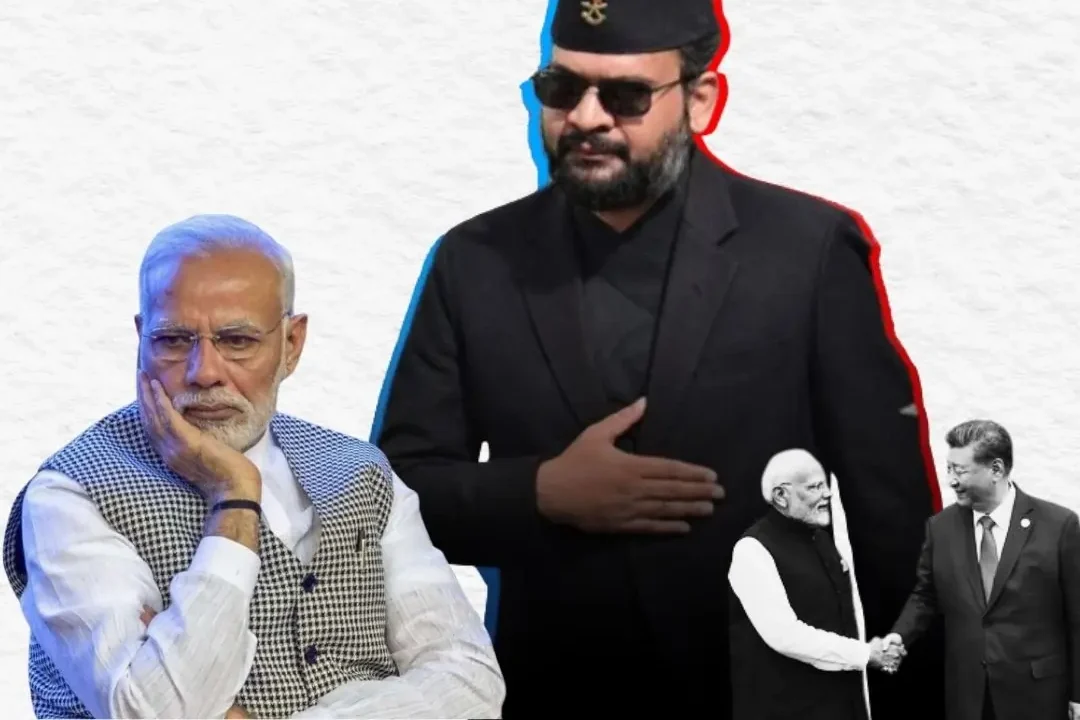
The 2026 House of Representatives election in Nepal has produced one of the most dramatic political shifts in the country’s recent history. Held on 5 March 2026, following the Gen-Z-led protests of 2025, the snap election has reshaped Nepal’s political landscape and delivered a decisive mandate to a new political force. The biggest winner of the election is the Rastriya Swatantra Party (RSP) led by Balendra “Balen” Shah, while the biggest loser appears to be the traditional political establishment-and arguably India’s current political leadership.
Nepal’s parliament consists of 275 seats, with 165 elected directly through the First-Past-The-Post (FPTP) system and 110 through proportional representation (PR). As of 9 March 2026, the counting process is in its final phase. Early results show a historic landslide victory for the RSP, which has already secured around 124 FPTP seats and is leading in one more. In the proportional vote, the party is also performing strongly with over 51 percent of the vote share, putting its projected total at 160-180 seats-far above the 138 seats required to form a government. This means the RSP is likely to form Nepal’s first single-party majority government in decades.
The Landslide That Nobody Saw Coming
The scale of the victory is remarkable given that the RSP was only founded around 2022. Balen Shah, 35, defeated four-time former Prime Minister KP Sharma Oli by a margin of approximately 50,000 votes in the Jhapa-5 constituency. That number alone tells the story. This was not a narrow win driven by coalition arithmetic. It was a generational demolition. The RSP achieved a clean sweep of all 10 constituencies in Kathmandu district, and legacy parties simply failed to convince voters for whom the major issues were fighting corruption, ending nepotism, and bringing generational change to the country’s leadership.
Nepal has seen 14 governments and nine prime ministers since becoming a republic in 2008. This revolving door of leadership, combined with rampant corruption and economic stagnation, is precisely what fueled the September revolt. When a country’s youth takes to the streets and 70 people die in the resulting crackdown, the political reckoning that follows is never gentle.
And Modi’s favoured horse in this race? The monarchist Hindutva outfit RPP, which the BJP’s ideological network quietly backed, won exactly one seat.
Who Is Balen Shah, And Why Should India Pay Attention
Balen Shah is not a conventional politician, and that is precisely the point. Known as just Balen Shah, he was the first independent candidate to become mayor of Kathmandu, and the youth of Nepal turned to this former rapper to lead the country after the Gen Z protests.
But India’s strategic establishment has reason to look beyond the biography. During his tenure as Mayor of Kathmandu, Shah displayed a map of ‘Greater Nepal’ in his office, showing several Indian regions, including Uttar Pradesh, Bihar and West Bengal, as part of Nepal. This move was widely seen as a response to a mural in India’s new Parliament building depicting an ‘Akhand Bharat.’ He also banned Indian films in Kathmandu cinemas, a decision later overturned by Nepal’s Supreme Court.
In a midnight Facebook post in November 2025, as reported by Al Jazeera, Shah lashed out: “F*** America, F*** India, F*** China” – venting against nations with close ties to Nepal before deleting the post within half an hour. Impulsive? Perhaps. But also, a window into where his instincts sit.
The RSP’s Foreign Policy: Sovereignty First
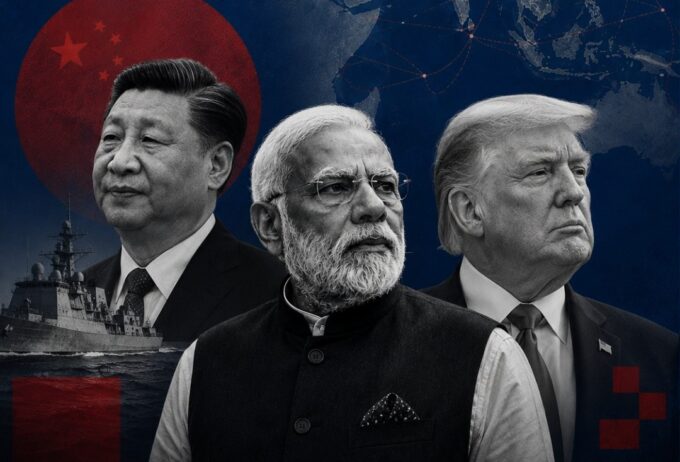
The RSP abandons traditional pro-India or pro-China alignments in favour of what it calls strategic autonomy, recasting Nepal as a bridge to unlock trilateral economic benefits, while pushing to renegotiate the 1950 Treaty of Peace and Friendship, which many in Nepal view as lopsided.
If his party secures a large parliamentary majority, Balen could push for a tougher stance on sensitive issues such as the 1950 Treaty and border disputes involving Kalapani and
Lipulekh. Such positions could create diplomatic tension with India in the short term.
As Business Standard reported, Nepal foreign policy expert Pant summed it up precisely: “He must prove that he is not a puppet of any external power, western or otherwise. Nepal’s leadership must carefully balance relations with all global actors and pursue an independent foreign policy that prioritises national interest.”
India’s Neighbourhood First Policy: Another Quiet Failure
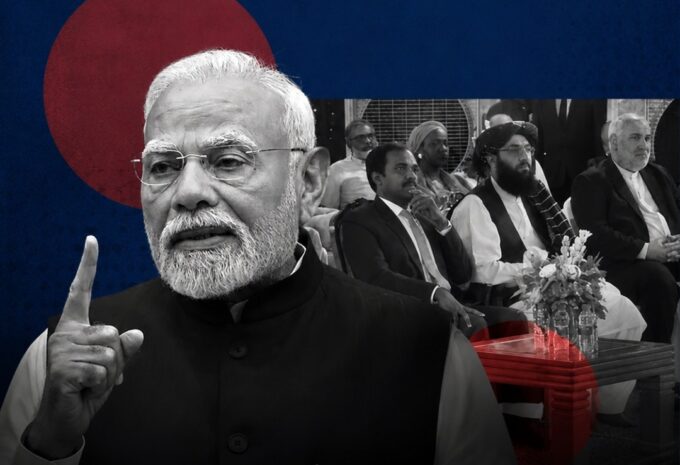
The BJP government has for years marketed the “Neighbourhood First” doctrine as a cornerstone of its foreign policy. The results across the region tell a different story. Bangladesh saw a regime change hostile to Indian interests. Maldives elected a government that asked Indian troops to leave. Sri Lanka navigated its debt crisis with significant Chinese assistance. And now Nepal has handed power to a nationalist youth movement with explicit reservations about Indian influence.
The Kalapani-Lipulekh-Limpiyadhura boundary dispute continues to strain relations, the 2015 economic blockade has never been forgotten in Nepal, and periodic anti-India sentiment reflects deep political mistrust that has accumulated over years. India remains Nepal’s largest trade partner, accounting for roughly 64 percent of Nepal’s total trade, with bilateral trade touching approximately $7.8 billion in FY 2023-24. That economic interdependence gives New Delhi leverage, but leverage poorly used becomes resentment, and resentment eventually becomes election results like this one.
Nepal’s verdict is a message written in plain language. A young, assertive, India-sceptic nationalist has just won the biggest mandate in his country’s recent democratic history, and the party that New Delhi’s ideological allies backed came home with one seat. If the Modi government had any real reading of the Nepali street, this outcome would not have surprised it. The fact that it clearly did is itself the problem. Neighbourhood First is a slogan. What Nepal needed was genuine respect, and what it got was interference. The bill for that has now come due.






Leave a comment