

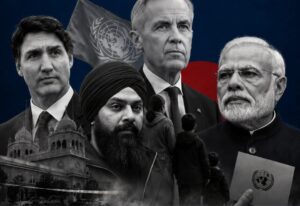




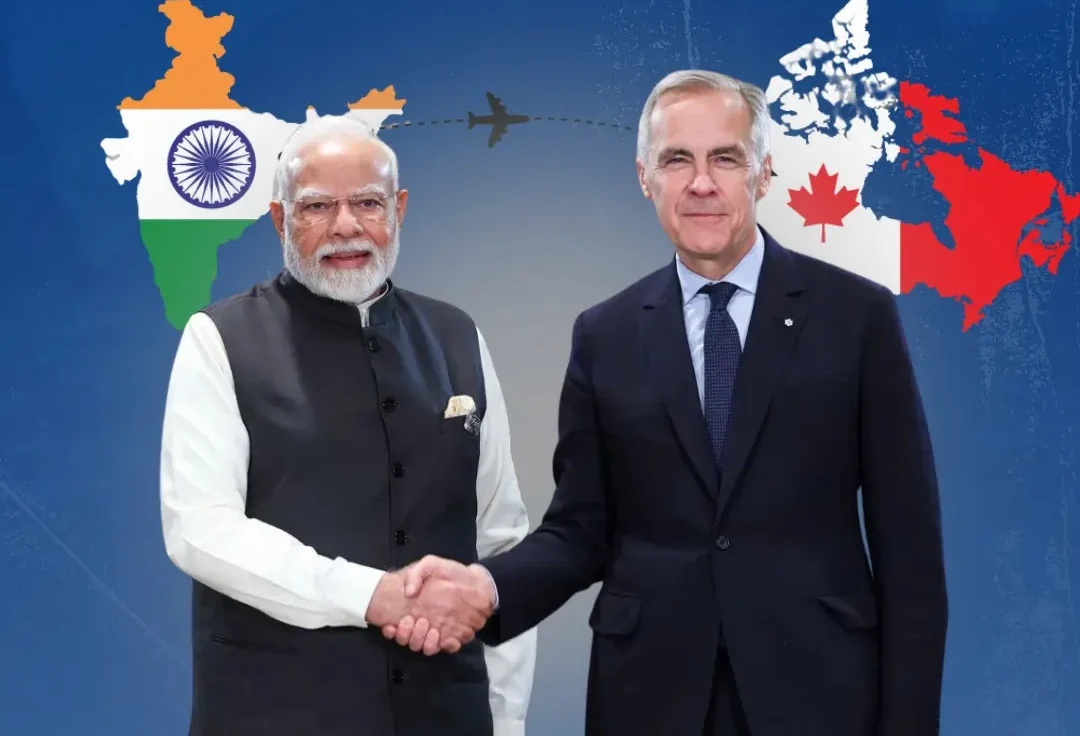
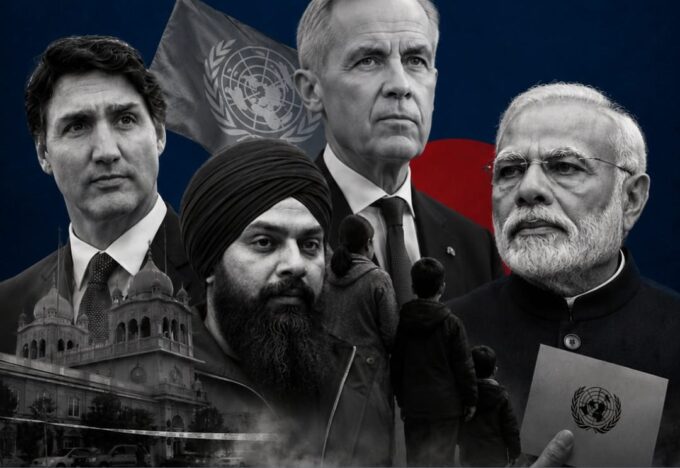
The visit of Canadian PM Mark Carney to India marks a watershed moment in Indo-Canadian relations. For the first time since the diplomatic deep freeze began in 2023, the leaders of the two nations are meeting on friendly terms to reconstruct a partnership that was once defined by mutual suspicion. Mark Carney, who assumed office in early 2025, has made “pragmatic diversification” the cornerstone of his foreign policy, seeking to reduce Canada’s economic reliance on a volatile United States under Donald Trump. By meeting Narendra Modi, Carney is indicating that megaphone diplomacy is finished, and that there is now a calculated approach to engagements centered on interests in energy, technology, and trade.
Restoring Order in the Carney Visit to India
The Carney visit to India is primarily centered on stabilizing the diplomatic channels that were on the brink of collapse during the previous government. At the base of relations in October 2024, Canada expelled India’s High Commissioner, as well as five other diplomats, citing them as “persons of interest” in a campaign of violent transnational repression. However, as Carney was landing in Mumbai, a senior Canadian official seemed to express this with a markedly positive outlook, stating that the government was now “confident” that the threats coming from India had come to an end.
This pivot enables a return to negotiations for both countries. The centerpiece of this diplomatic rehabilitation is the official reactivation of negotiations for the Comprehensive Economic Partnership Agreement (CEPA). For Carney, this visit is completing the promise of securing Canada’s participation in the world’s fastest growing major economy, as well as doubling trade with non-US partners.
The visit of Canadian PM Mark Carney to India marks a watershed moment in Indo‑Canadian relations and signals a fresh attempt to reset ties and expand trade prospects (see Thaw in Sight: Canadian PM Carney Set to Visit India to Reset Ties and Chase $70B Trade Dream).
Intelligence Reports and RAW Involvement in Canada
While looking friendly and positive, there is a shadow of India’s external intelligence agency, Research and Analysis Wing (RAW) which is a sensitive topic of discussion. Previous intelligence reports by the Canadian Security Intelligence Service (CSIS) have directly included RAW as a player in Canada, particularly with surveillance and the targeting of Sikh activists including the assassination of Hardeep Singh Nijjar.
While the Carney government seems to want to lay these allegations to rest, the issue of “transnational repression” remains. Just prior to the trip, there were new reports of death threats to prominent Sikh activists in Canada. The new Canadian government seems to be adopting an approach of ‘security cooperation’ as opposed to sticking to public confrontations. In Ottawa, the national security advisors of the two countries met to establish a roadmap for cooperation on the exchange of intelligence related to organized crime, cyber-crime, and violent extremism.
By presenting the topic as a mutual concern over transnational organized crime, both leaders are attempting to address the security issues that have been the cause of a major rift in the relationship. The Carney visit was anticipated to yield outcomes related to the intersection of “atoms and artificial intelligence.” However, the most concrete outcome, regardless of the intersection of “atoms and artificial intelligence,” is likely to be the signing of the 10-year, $2.8 billion uranium supply deal with India, which is set to happen soon.
Canadian uranium from Saskatchewan is a strategic supply as India aims to increase its nuclear power production by a factor of three by 2032. There is also an “Innovation and Talent Strategy” focused on Artificial Intelligence and Quantum Computing, which is projected to yield positive results, given the strong capabilities of both countries in these sectors.
Adding fresh tension, a report published by The Globe and Mail on March 1, 2026, cited anonymous sources said that Indian consular staff in Vancouver were directly involved in the Nijjar case. The report suggested that staff at the consulate provided specific information that assisted in the assassination.
These claims have not been publicly adjudicated in court, but their emergence coincided with Carney’s arrival in India complicating what was intended to be a reset visit.
Meanwhile, Canadian law enforcement actions signal ongoing concern. On February 22, 2026, Vancouver Police issued a formal “duty to warn” notice to Moninder Singh, a prominent Sikh leader and associate of Nijjar, citing a credible threat to him and his family. Singh has publicly alleged that the threat originates from the Indian government due to his advocacy.
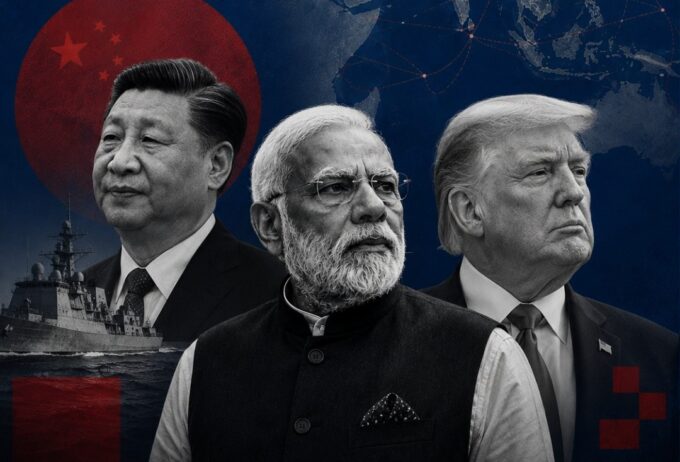
Furthermore, the visit has significant political repercussions, particularly for the ‘Middle Power’ geopolitics, where both Canada and India have faced ‘bullying’ and trade uncertainty from the Trump administration during his presidency. By strengthening their bilateral relations, Canada and India function as a ‘Middle Power’ buffer against the unpredictable trade body of India and the United States. As Carney travels from New Delhi to Australia and Japan, it signals the point of departure from the attitude of Canada being solely an appendage of the United States to being an Indo-Pacific player.





Leave a comment