











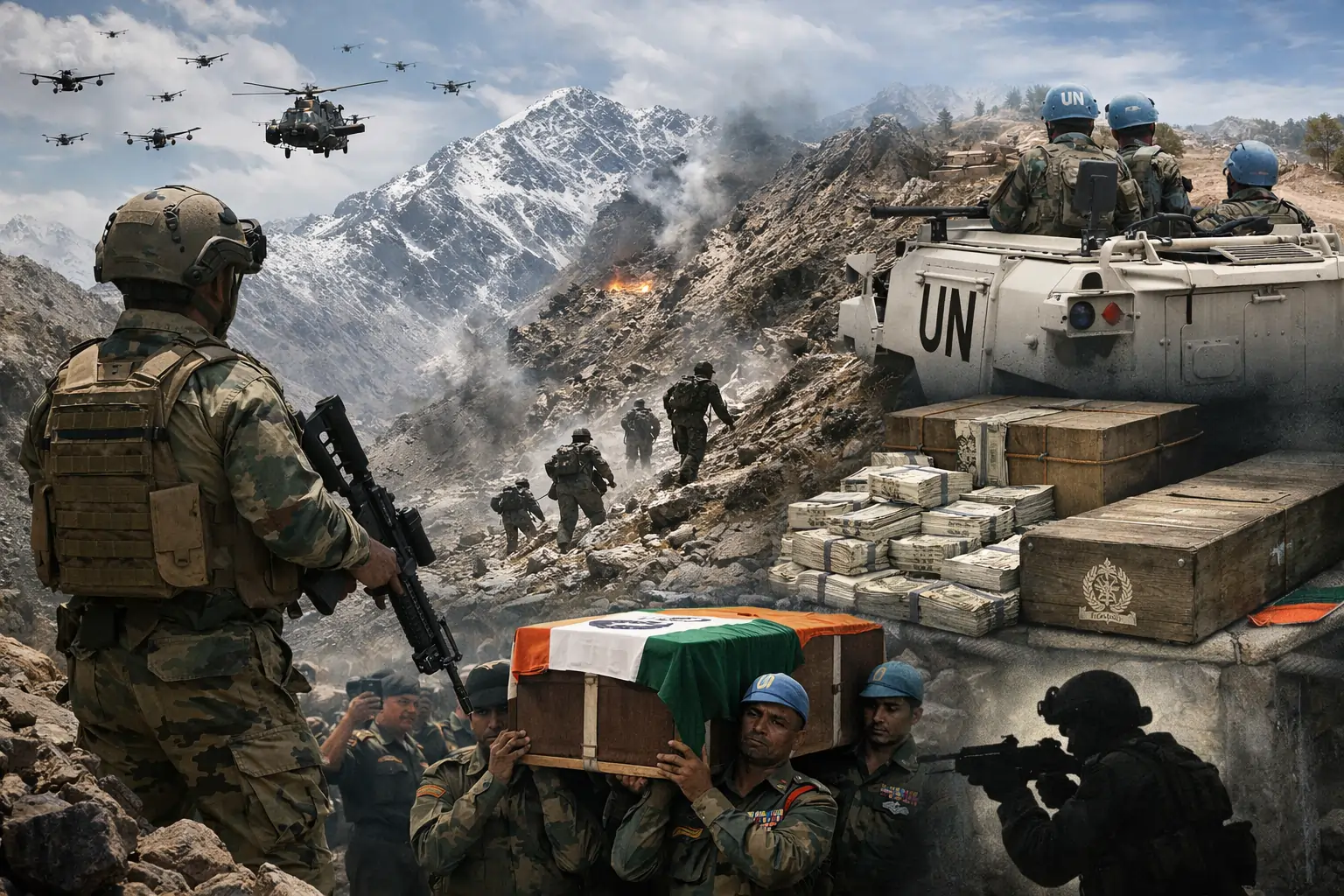
The Indian Army in 2026 is a 1.2-million-strong, fully volunteer and apolitical force responsible for defending a 15,000-kilometer land border and the volatile Line of Control. Since 1947, it has evolved from a colonial auxiliary into a central pillar of the Indian state. Its recent modernization drive, declared as the “Year of Networking & Data Centricity” reflects a shift towards AI-enabled, real-time, and data-driven command structures.
This transformation includes the large-scale induction of indigenous drone swarms, precision-guided systems, and digital integration across all levels of command. The Army is internationally respected for its mountain warfare specialization, expanded deterrence through advanced surveillance, and infrastructure development via the Border Roads Organization, which has built over 2,500 kilometers of strategic roads and tunnels such as Shinkun La improving both military mobility and civilian connectivity in Ladakh and Arunachal Pradesh. Globally, India maintains more than 5,000 troops in UN peacekeeping missions in South Sudan and the Congo, while also pioneering gender inclusion through all-female engagement teams, strengthening its diplomatic and humanitarian profile.
Strategic Setbacks and Institutional Challenges
At the same time, a neutral evaluation reveals enduring weaknesses. The Army’s history includes major intelligence and strategic setbacks most notably the territorial losses of 1962, buffer-zone shifts in Eastern Ladakh since 2020, and the heavy casualties incurred during the 1999 Kargil War highlighting a recurring gap between tactical courage and strategic preparedness. Long-standing logistical deficiencies and procurement delays have often left soldiers with outdated equipment, only recently being addressed through indigenous production, which now supplies 91% of ammunition, along with the induction of Apache helicopters and thousands of RPAs.
Humanitarian Role and Overall Assessment
Beyond the battlefield, while the Army is widely regarded as India’s “first responder” during disasters conducting mass evacuations and relief in operations such as Surya Hope (2013) and Rahat (2025) its reputation has periodically been marred by corruption scandals like Bofors and Adarsh Housing, as well as credibility concerns over unverifiable casualty claims in recent retaliatory operations. Overall, the Indian Army in 2026 stands as a technologically advancing, globally engaged, and humanitarian institution, but its achievements must be weighed against historical intelligence failures, governance challenges, and the continuing need for institutional reform.
Major Operational Setbacks and Casualties
A neutral audit of the Army’s history reveals several instances where the cost of tactical engagement or strategic hesitation resulted in high casualty figures and the loss of territory.
- The 1962 Sino-Indian War: This remains the Army’s most significant territorial loss. India lost approximately 38,000 square kilometers in the Aksai Chin region. The conflict resulted in 1,383 Indian soldiers killed, 1,696 missing, and nearly 4,000 captured. Incompetent higher command and a lack of basic winter gear contributed to these figures.
- The 1965 Conflict: Despite tactical advances, the Tashkent Agreement required the Army to return strategic gains, including the Haji Pir Pass. The Army suffered approximately 3,000 battlefield deaths and lost over 150 tanks during this engagement.
- Operation Pawan (Sri Lanka, 1987-1990): Often cited as a strategic failure, the intervention against the LTTE resulted in 1,157 Indian soldiers killed and over 3,000 wounded. The mission ended in a withdrawal without achieving its primary political objectives.
- Kargil Intelligence Failure (1999): An intelligence lapse allowed nearly 2,000 infiltrators to occupy heights across a 160-km front. Reclaiming this territory cost 527 Indian lives and left 1,363 wounded, a high price for land that was previously under Indian control.
- Eastern Ladakh (2020–Present): Following the Galwan Valley clash (20 fatalities), satellite data and military reports indicate that India has lost patrolling access to approximately 26 out of 65 patrolling points along the Line of Actual Control (LAC).
Operation Sindoor (2025) and the Evidence Controversy
In May 2025, the Army launched Operation Sindoor following a terror attack in Pahalgam. While the official narrative claimed a “clinical” success, the operation has faced internal and external scrutiny:
The Evidence Gap: The Army reported neutralizing over 100 terrorists and destroying 9 training camps. However, unlike historical conflicts, there was a documented lack of visual or satellite evidence provided to verify these figures. Independent observers have noted that the “body count” remained a matter of official assertion rather than verifiable fact.
Logistical Friction: Subsequent skirmishes in 2025 revealed a critical ammunition shortage. A 2025 audit showed that the Army faced deficiencies in “War Wastage Reserves,” requiring an emergency 5-fold increase in the production of propellants and fuses to maintain readiness.
This analysis aligns with Army Chief Gen. Upendra Dwivedi’s 2026 briefing, which outlines the Indian Army’s shift toward network-centric, data-driven warfare, indigenous modernization, and organizational restructuring to meet future conflict scenarios. Read more
Corruption and Systemic Failures
Systemic corruption in procurement has historically compromised soldier safety and delayed modernization:
- The Jeep Scandal (1948): The first major post-independence scandal involved overpaying for substandard vehicles, setting a precedent for procurement irregularities.
- Bofors Scandal (1980s): Kickbacks of ₹640 million led to a 25-year freeze on artillery procurement. This left the Army without new heavy guns for over two decades, impacting its fire-power during multiple border skirmishes.
- Kargil Coffin Scam (1999): A CAG report revealed that 500 caskets were purchased at 13 times the market rate ($2,500 each) during the war. While some officials were later cleared, the audit remains a permanent record of wartime profiteering.
- Adarsh Housing Scam (2010): A 31-story building in Mumbai meant for war widows and veterans was illegally occupied by senior military officers and politicians.
- Recruitment Corruption: In 2021, the CBI discovered a bribery scam involving 17 officers who accepted money to sway recruitment decisions, undermining the meritocratic foundation of the force.
The Summary of Losses
The Indian Army has lost over 26,000 soldiers in various conflicts since independence. Beyond the human cost, the “loss” includes:
- Territorial Cession: Significant buffer zones in Ladakh and Aksai Chin remain under foreign control.
- Technological Stagnation: Corruption-induced delays have left infantry units with “night blindness” (lack of NVDs) and outdated rifles for decades.
- Institutional Accountability: The continued use of the AFSPA provides virtual immunity from prosecution, with over 1,000 allegations of human rights violations recorded since 1994, very few of which have resulted in civilian trials.
The Indian Army’s balance sheet from 1947 to 2026 shows a force that has gained immense internal prestige and regional deterrence but has lost thousands of lives to intelligence failures and billions of dollars to procurement corruption. The recurring theme is a soldier who is “tactically superior” but often “strategically underserved” by a sluggish bureaucracy and a lack of transparent accountability in operations like Sindoor.
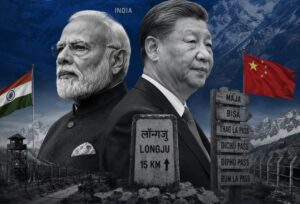
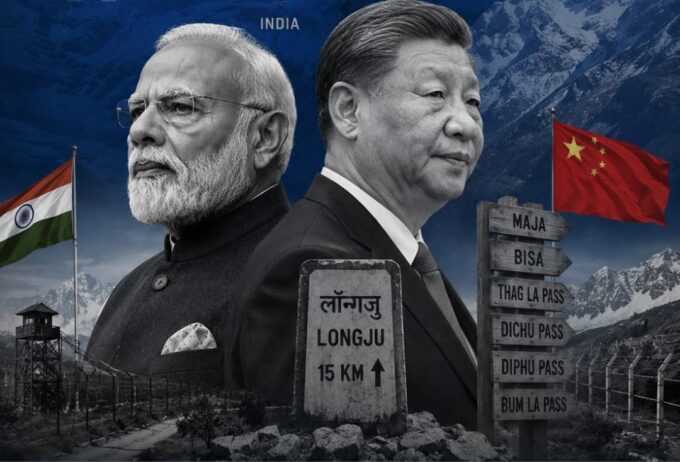
This recent development reflects heightened India–China tensions over the Shaksgam Valley, a strategically significant tract currently under Chinese administration but claimed by India as part of Jammu & Kashmir. Beijing has reaffirmed its territorial claim and justified ongoing infrastructure work there, while New Delhi has rejected both China’s stance and the 1963 China-Pakistan agreement ceding the area, calling it illegal and maintaining that Shaksgam is Indian territory. Read More









Leave a comment