

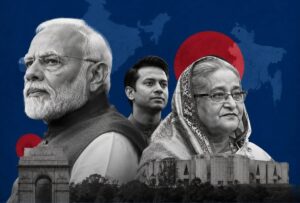


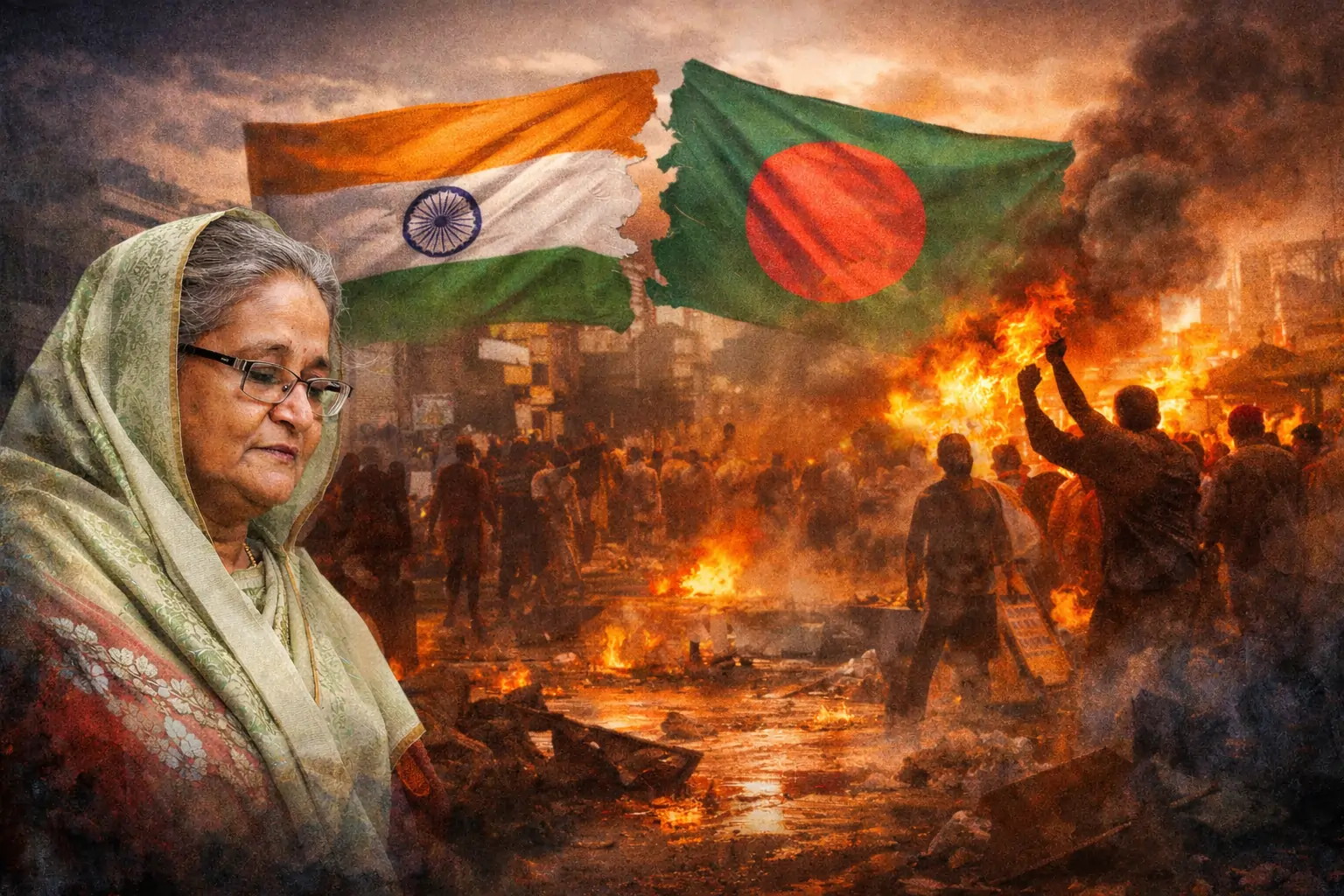
The sudden resignation of Sheikh Hasina on August 5, 2024, after 15 years as head of government, marked a pivotal event signifying the end of India’s “Hasina Doctrine.” For nearly 15 years, New Delhi’s strategy for relations with its neighbors was based on the belief that stability around India’s 4,096-kilometer eastern border and the “Seven Eastern States” depended on India’s political role. Even after the July Revolution, India faces the consequences of a “universal strategy” that failed to anticipate current developments.
To restore and normalize bilateral relations with Bangladesh, India had to abandon its patronage policy and embrace a “strategic reality,” a diplomacy that prioritizes institutional over personal ties.
The Negative Consequences of a Universal Strategy
The “golden chapter” of India-Bangladesh relations was an unprecedented success for New Delhi’s security agency. Under Hasina’s leadership, we saw a surge of anti-Indian sentiment in Bangladesh. This resulted in threats, arrests, and the extradition of high-ranking ULFA and NSCN officials back to Bangladesh. India has shipping lanes within 450 kilometers of the country’s northeast coast, with the right to transport and transfer ships to extend the route beyond 1,600 kilometers.
However, this cooperation comes at the cost of India’s support of a lack of democracy. New Delhi has legitimized the Awamee League’s authoritarian regime by supporting fraudulent elections in 2014, 2018, and January 2024, where voter turnout was only 27%, while the opposition boycotted the elections. For Bangladesh’s 170 million people, Indian support is a key factor in sustaining the regime’s systematic attacks on the civil service, the courts, the Election Commission, and democracy.
Data from the World Bank shows that under Hasina’s presidency, Bangladesh’s GDP grew, but the majority of the benefits were concentrated in the hands of loyal elites. In July 2024, when students took to the streets, they were not just protesting the quota system. But the protests are also against the system New Delhi maintains through billions of dollars in loans ($8 billion since 2010) and energy promises, including the Adani project.
The Lies of Dominating Extremists
The most worrying assumption in Indian politics is that the August uprising could be interpreted as an “Islamist coup.” While the conspiracy between Jamaat-e-Islami and the associated extremists is certainly concerning, calling the widespread violence that killed over a thousand people, mostly students and members of civil society, a “religious conspiracy” is a clear misjudgment.
Educational statistics show that nearly 30 million people in Bangladesh are between 15 and 24, most of whom are focused on transparency and employment rather than religious extremism. New Delhi’s labeling of Muhammad Yunus’s Nobel laureate interim government as extremist exploits the extremism of political discourse, which is dangerous for the large Bangladeshi population that dominates the political arena. Viewing 170 million people as… “Security threats,” instead of addressing sovereign citizens and treating them without diplomatic engagement, transform legitimate differences into hostility.
Economic and humanitarian needs:
Bangladesh and India have built a close enough relationship to avoid protracted diplomatic tensions. India is currently Bangladesh’s largest trading partner, with total trade projected to reach US$13 billion by 2023-2024. India is Bangladesh’s second-largest import trading partner.
However, fundamental social and economic realities are neglected for political gain.
Border management: Border conflicts persist despite a “no-condemnation” policy. Human rights organizations such as Odhikar have reported hundreds of deaths.
Sheikh Hasina’s sudden resignation in August 2024 ended India’s “Hasina Doctrine,” exposing the limits of leader-focused diplomacy. India must now adopt strategic realism, prioritize institutional ties, and restore normal visa operations to maintain strong Bangladesh relations. Read More
A realistic framework should include the following:
De-escalation of personal roles in diplomacy: a shift from “leader-to-leader” relationships to “state-to-state” and “people-to-people” models.
Mutual stability: the interim government must understand that India will defend its southern borders against anti-Indian insurgency and, reciprocally, that it will not allow its territory to be used as a base for counter-revolutionary violence against the previous regime.
Restoration of the normal visa system: the suspension of visa services penalizes the very populations India seeks to win over. With 1.5 million visas issued to Bangladeshis for tourism and medical purposes in 2023, this suspension will have a particularly severe impact on those most in need of India’s assistance.
India and Bangladesh maintain close relations. The two countries share a common history and geography. The 1971 Bangladesh War of Independence could be described as a “river war” for India, as it was fought along the banks of 54 shared waterways, as well as the many other rivers that encircle the rest of the subcontinent. However, the 1971 war must not be used as a permanent obstacle to the democratic aspirations to be realized by 2024.
“Strategic realism” must dictate India’s coexistence with an unstructured, democratic, and fully sovereign Bangladesh. If New Delhi, instead of viewing Dhaka as a “subordinate,” sees it as a “partner,” it can transform the Bangladeshi crisis into an opportunity for a strong and lasting bilateral relationship. The road to 2026 will be fraught with challenges, but it is crucial to ensure that this golden age of bilateral relations does not end abruptly.