




There is a particular kind of defeat that stings the most. Not the kind that happens on a battlefield, but the kind that unfolds in conference rooms, over signed agreements and handshakes your rival photographs for the front page. That is precisely what happened to India between May 2025 and June 2026. And the political establishment in Delhi has chosen, quite deliberately, to look away.
Operation Sindoor: A Military Action That Handed Pakistan a Diplomatic Victory
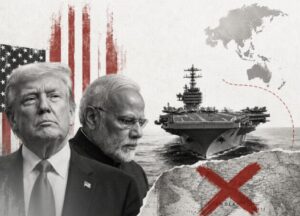
India launched Operation Sindoor in May 2025 following the Pahalgam terror attack. The strikes were framed domestically as decisive and firm. What followed was neither. Pakistan’s military, domestically weakened before the strikes, emerged from the episode with renewed legitimacy at home and a dramatically improved standing abroad. The ceasefire that ended the confrontation was brokered by Washington. India’s official position insisted it was a bilateral outcome. The world, including the United States, told a different story, and the world’s version was the one that got traction.
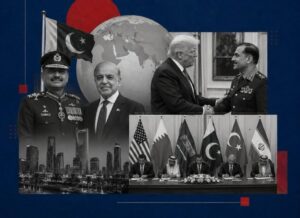
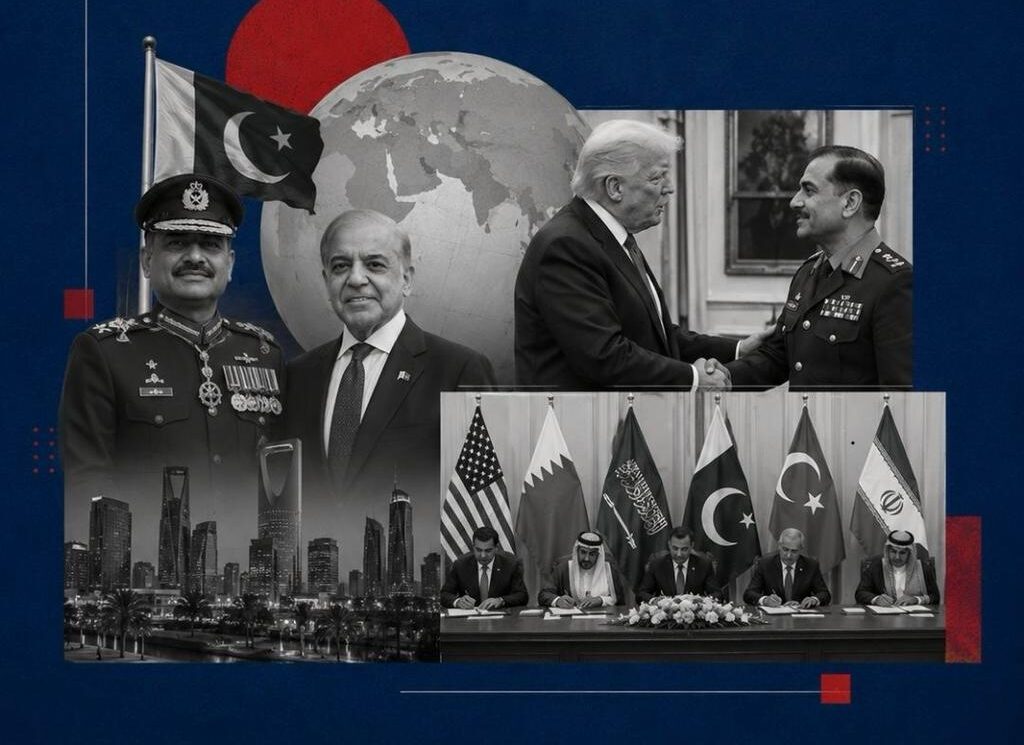
On June 18, 2025, Pakistan’s Army Chief Field Marshal Asim Munir sat down for a two- hour private lunch at the White House with Secretary of State Rubio. President Trump called Prime Minister Sharif a “great leader.” India had spent years trying to consolidate itself as America’s preferred South Asian partner. One lunch in Washington shifted that calculus.
Riyadh Chose Islamabad, Not Delhi
On September 17, 2025, Pakistan and Saudi Arabia signed the Strategic Mutual Defence Agreement, committing both states to treat any attack on one as an attack on both and formalising a long-standing security partnership.
India’s response was to note that New Delhi had been aware of the pact’s formalization and would “study its implications for national security and regional stability,” while the Ministry of External Affairs urged parties to “keep in mind mutual interest and sensitivities.”
Study its implications. That was the official response of the world’s fifth-largest economy to a defence pact that directly complicated its strategic position in the region.
Former diplomat and foreign policy analyst M.K. Bhadrakumar wrote at the time that “India’s silence on the Saudi-Pakistan pact is not strategic restraint, it is strategic paralysis.” He was not wrong.
Prime Minister Modi had invested years of personal diplomacy in the Saudi relationship. Crown Prince Mohammed bin Salman had been received with great fanfare in Delhi. That entire chapter was rewritten in one afternoon in Riyadh, and India’s response was a press
statement.
The Peace Deal That Put Pakistan’s Name in History
When the US and Israel struck Iran in February 2026, India issued carefully worded statements and chose neutrality. Meanwhile, Pakistan made a decision that will be studied in foreign policy schools for generations: it chose to lead. It immediately condemned violence on all sides, proposed Islamabad as a neutral venue for talks, and began building a bridge between two nations that had not sat across a table from each other in decades.
The resulting agreement, called the Islamabad Memorandum, is a memorandum of understanding between the United States and Iran aimed at ending the 2026 Iran war, primarily brokered by Pakistan, with Qatar, Saudi Arabia and Turkey also facilitating negotiations.
“If this journey had not continued,” PM Sharif said, “the dream of peace would have been shattered.”
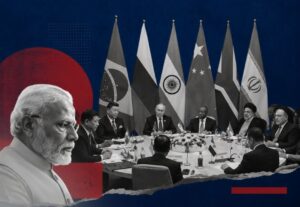
Pakistan’s name is literally written into the title of the agreement that ended the biggest war of 2026. India’s name appears nowhere in that document, that process, or that moment. India held the BRICS presidency in 2026. It’s own multilateral stage. The organisation failed to issue a joint statement on the Iran war, exposing precisely how thin India’s consensus- building capacity had become. Pakistan, which is not even a BRICS member, brokered the deal that ended the very conflict BRICS could not agree to address.
The Question Delhi Refuses to Answer
India’s foreign policy establishment will point to trade figures, bilateral visits, and investment summits. Those are real. But diplomacy, at its core, is about presence in rooms where history is made. Between Washington, Riyadh, Tehran, and Geneva, Pakistan was in every one of those rooms in the past 18 months. India was not.
This is not a failure of intelligence or capacity. India has both in abundance. It is a failure of strategic vision and political courage, the willingness to take positions that carry risk, to back mediations that might fail, to show up even when the outcome is uncertain.
Pakistan did not defeat India in a war. It defeated India in every room that mattered. Conclusion
The Indian government will continue to describe Operation Sindoor as a triumph, the ceasefire as bilateral, and its foreign policy as assertive. None of that changes the ground reality. A country that spent much of the last decade in economic turmoil and domestic political crisis has, in 18 months, reshaped its global standing more decisively than India has in five years of summit diplomacy. The question India must ask itself is not how Pakistan managed this. The question is why India let it happen. And why, even now, no one in the ruling establishment is willing to answer it.





Leave a comment