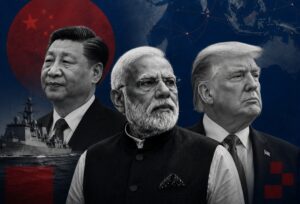

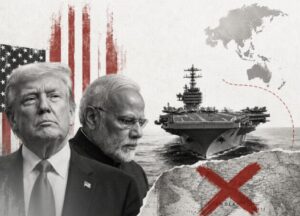

Washington/New Delhi, April 20, 2026 – Indian and American negotiators began crucial three-day in- person talks in Washington on Monday to advance the first phase of a proposed bilateral trade agreement (BTA), marking their first face-to-face meeting in nearly four months.
A high-level Indian delegation of about a dozen officials, led by chief negotiator Darpan Jain, Additional Secretary in the Department of Commerce, arrived in the US capital for discussions scheduled from April 20 to 22. The team includes representatives from the customs department and the Ministry of External Affairs.
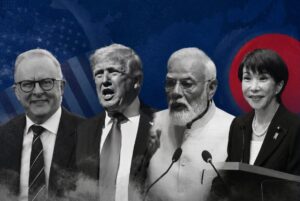
The talks aim to finalize a legally binding framework following a joint statement released on February 7, 2026, which outlined an interim agreement on reciprocal trade. That framework, announced after high- level engagements between President Donald Trump and Prime Minister Narendra Modi, committed both nations to reducing tariffs on a range of goods, expanding market access, and building resilient supply chains. India had proposed eliminating or significantly lowering tariffs on US industrial goods as well as agricultural products such as dried distillers’ grains, sorghum, tree nuts, fruits, soybean oil, wine, and spirits. ndtvprofit.com
However, recent shifts in the US tariff landscape, including a new 10% import tariff applied across trading partners, have necessitated a recalibration of the deal. Virtual engagements continued in the interim, but the postponement of earlier in-person meetings highlighted the need to align priorities amid evolving global trade dynamics and potential supply chain disruptions.
Commerce Secretary Rajesh Agarwal noted that the negotiating teams had remained engaged virtually and described the upcoming discussions as a logical next step toward formalizing the agreement. US Ambassador to India Sergio Gor had earlier welcomed the Indian delegation, emphasizing productive preliminary meetings with the US Trade Representative.
Analysts view these talks as significant for strengthening the strategic partnership between the world’s two largest democracies. A successful outcome could boost bilateral trade, benefit American exporters while opening opportunities for Indian businesses, and serve as a step toward a comprehensive BTA. Outcomes from the three-day negotiations remain uncertain, as both sides seek mutually beneficial adjustments in a complex global environment. Progress on tariff alignments, market access commitments, and legal text is expected to shape the trajectory of India-US economic ties in the coming months.


Latest News
 IndiaDecodeApril 20, 20261 Mins read60
India, US Kick Off First In-Person Trade Talks in Four Months Amid Tariff Recalibration
 IndiaDecodeApril 20, 20261 Mins read60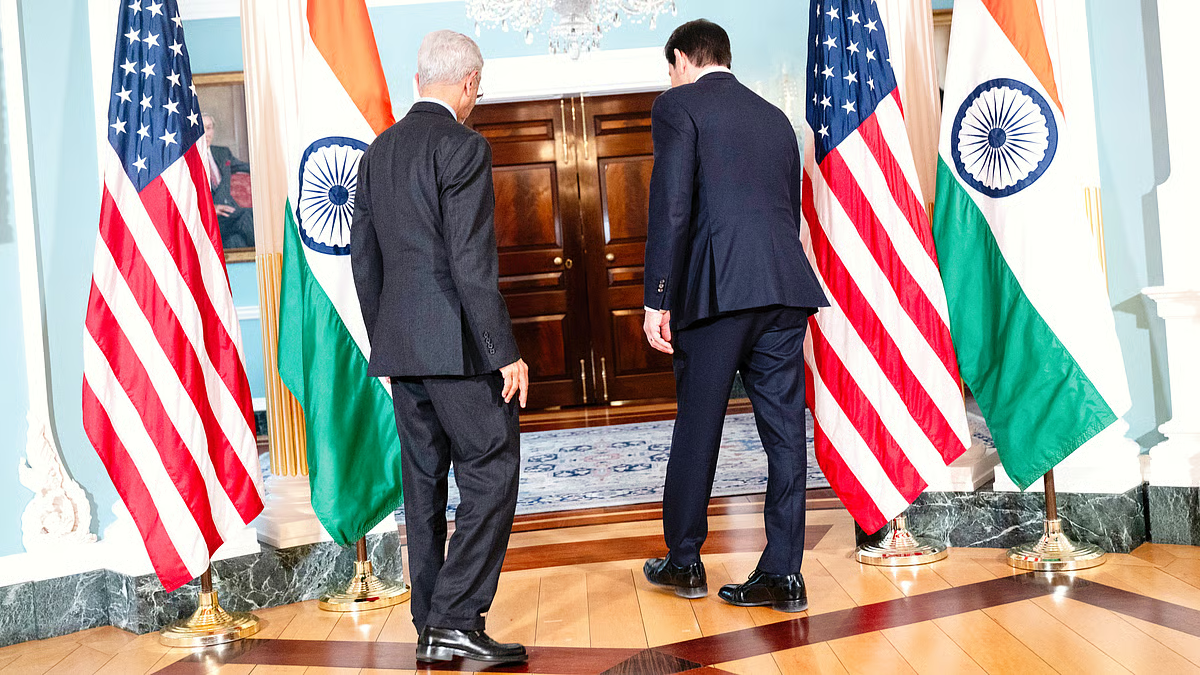
Share

Related Articles
Latest NewsIndiaDecode1 Mins read
Breaking News Live: Top Stories, Current Affairs, and Updates
Delhi Police Enforce Restrictions, Urge Residents Against Planned Protest Police officials visited...
IndiaDecode1 Mins read
LatestIndiaLatest NewsPoliticsRegionIndiaDecode5 Mins read
New Delhi’s Illusions of A Partnership with Washington
The history of the US-India relationship for three decades had been on...
IndiaDecode5 Mins read

Latest NewsArticlesIndiaIndiaDecode4 Mins read
Spirals of Silence: Why Bollywood’s Remains Silent on Youth Protests?
Whenever India blows up - on the issue of NEET paper leaks,...
IndiaDecode4 Mins read
Latest NewsArticlesIndiaDecode3 Mins read
From Dhaka’s Streets to Delhi’s Jantar Mantar: A Warning Modi Cannot Afford To Ignore
Two Capitals, One Familiar Story Sheikh Hasina ruled Bangladesh for fifteen straight...
IndiaDecode3 Mins read




Leave a comment