




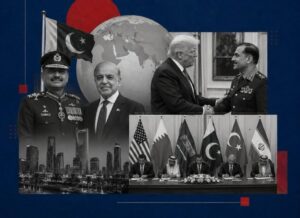

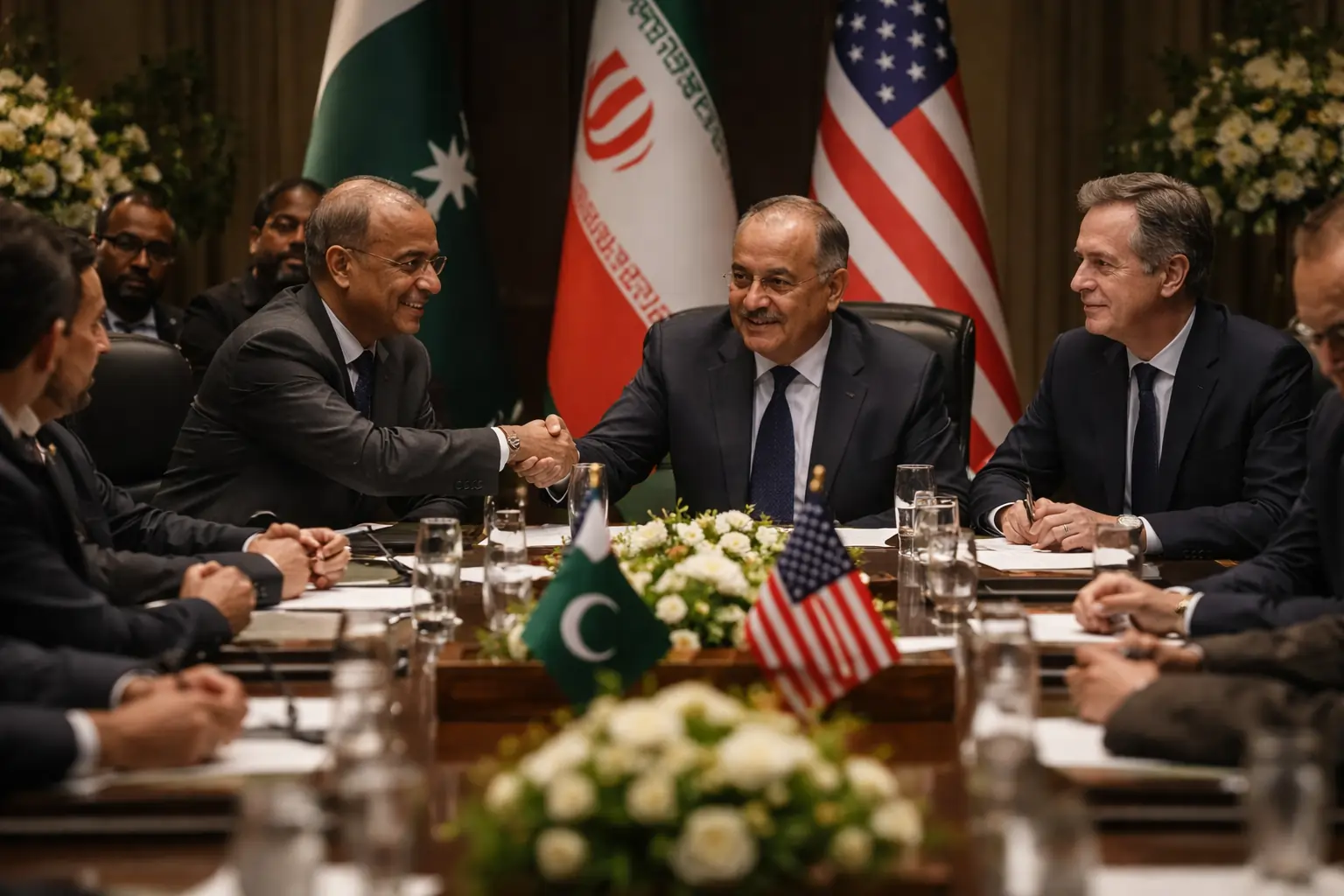
The announcement of an immediate ceasefire between Iran and the United States, facilitated by Pakistan, represents a historic moment in Middle East diplomacy. With high-stakes talks scheduled in Islamabad on April 10, 2026, Pakistan has stepped into the global spotlight, demonstrating its growing role as a regional peacemaker. This intervention followed escalating tensions, including a stark tweet by US President Donald Trump on April 7, warning of devastating military action against Iran. Pakistan’s timely diplomatic engagement successfully prevented further escalation and created a framework for negotiations between two nuclear-capable nations.
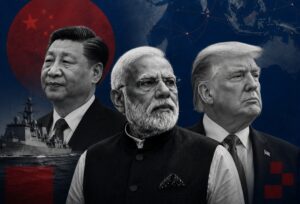
While Pakistan’s decisive action has been widely acknowledged, India’s absence in this process has raised questions about the effectiveness of its regional policy. Despite being a major power with substantial economic and strategic interests in the Gulf, New Delhi’s failure to engage in the dialogue contrasts sharply with Pakistan’s proactive mediation.
Strategic Diplomacy of Pakistan
In order to defuse the dangerous situation, PM Shehbaz Sharif of Pakistan, together with his country’s leadership, responded swiftly by proposing the United States to temporarily halt attacks against Iran for two weeks in exchange for reopening the Strait of Hormuz, which would then allow for two-way traffic between the US and Iran. As a consequence, Iran also agreed to stop their defense operations within two weeks.
Pakistan proved to be an effective mediator in this case due to its long-term positive relationship with both Washington and Tehran. While Pakistan could hardly be considered as unbiased in this conflict, its position allowed it to use its diplomatic skills to facilitate negotiations and help both sides reach a mutual agreement.
Pakistan’s decision to take part in the dispute was dictated by the need to ensure stable functioning of regional energy markets. Approximately 20% of the world’s oil transportation passes through the Strait of Hormuz, making it a critical point in terms of global economic stability and, thus, regional peace.
Events Triggering Pakistan’s Intervention
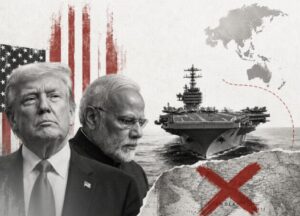
The crisis escalated on 7th April 2026 when the then US President, Donald Trump, warned through his social media accounts that an entire civilization could collapse that night if Iran failed to succumb to US pressure and reopen the Strait of Hormuz. This message sent shockwaves throughout the global economy, with oil prices skyrocketing overnight.
On the Iran–USA conflict, Prime Minister Shehbaz Sharif initiated diplomatic and public intervention appeals to both parties. He posted on social media requesting the US to extend the deadline, and asked Iran for a gesture of goodwill and safe passage to the Strait of Hormuz for two weeks. Timely intervention from Pakistan alleviated a potential disaster and showcased a new form of pragmatic diplomacy under pressure.
These actions prompted US President Trump’s announcement on his social media platform, Truth Social, stating US attacks would be suspended if Iran complied. Iran, through its Supreme National Security Council and Minister of Foreign Affairs, Abbas Araghchi, responded by ceasing defensive actions and arranging safe passage.
Ceasefire Agreement Summary
- The ceasefire agreement, based on Pakistan’s mediation, comprised the following key elements:
- The United States, for two weeks, agreed to cease all offensive military operations and bombing in Iran.
- Iran undertakes to suspend defensive military operations.
- There shall be unimpeded and safe passage through the Strait of Hormuz, in accordance with the instructions of the Iranian Armed Forces.
- Both sides shall refrain from undertaking military operations during the negotiations.
- The United States has accepted the general principles of Iran’s 10-point proposal, which include not attacking, Iranian control of the Strait of Hormuz, the lifting of sanctions, and cessation of hostilities in Lebanon and other fronts.
- Regarding the Two-Week Agreement, Both Sides Have Reached Agreement Regarding Sanctions, Regional Security, and Reconstruction Initiatives: Commitment to Long-Term Peace. The Two-Week Agreement Sanctions, Regional Security, and Reconstruction Initiatives
- These actions will both prevent further escalation and provide the groundwork for subsequent negotiations that will transform the Middle East’s security architecture.
India’s Policy Failure
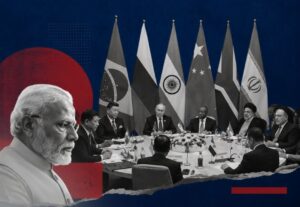
India has not been a participant in the ceasefire negotiations, and it shows glaring weaknesses in its foreign policy towards the Gulf. Given the heavy dependence on the Middle East for oil, participation in trade networks, and increasing geopolitical interests, India has opted not to visibly involve itself in managing the conflict. This is a result of several reasons.
Missed Opportunity in Energy Security: India is heavily reliant on the Gulf for crude oil, and in particular, imports a large portion of it from Iran. Bypassing the mediation process is a compromise of one of the most crucial factors in securing energy, and consequently, economically, post-conflict arrangements.
Diminished Regional Status: India is deemed to be a regional power; however, the failure to take part in a historic ceasefire negotiation demonstrates an illusory conduct of power. In contrast, Pakistan has been alive to the regional dynamics, whereas India has been content to remain on the periphery. This has been the case with a number of regional initiatives, with Pakistan being one of the most active in mediation.
Risk of Diplomatic Marginalization: India runs the risk of being politically irrelevant in the Middle East peace and post-war reconstruction process. Initiatives on the control of conflicts, security regions, and trade concerning them will be the domain of Pakistan and others, who have been active in the negotiations.
Contradiction With Strategic Ambitions: India most boastfully shows itself as a responsible regional power, even able to shape outcomes in Asia and the Middle East. However, examining its recent inactiveness during a major diplomatic window, one could wonder if the country even has a functional foreign policy machine.
On the other hand, the recent diplomatic activity of Pakistan has shown febrile diplomatic maturity as well as a pragmatic understanding of Pakistan’s own strategic situation. By using its historical relations with the belligerent parties and making decisions, Pakistan has shown India what the more responsive, responsible and constructive regional power in the present global system looks like.
Geopolitical Implications
Pakistan has strengthened its own position and, in a sense, created a mechanism for the management of future clashes in regions where the situation is unstable. The recent talks in Islamabad have shown that smaller regional actors and their diplomacy are able to manage issues that have been exclusive to the great powers.
Inactivity, on the other hand, is going to cost India. By losing opportunities to exert its influence, New Delhi is going to be excluded from the post-conflict order, including the arrangements for sanctions, trade, energy, and security in the regions. India’s absence is going to be known and will have great significance with respect to the energy crisis and the geopolitical situation.
Lessons From Pakistan’s Intervention
Timeliness of action: Before given enough time for further escalation (especially after the US tweet warning to Iran on April 7), action was taken to diplomatically engage with the parties.
Pakistan’s role as neutral mediator: Pakistan’s success was in its ability to remain neutral and its relations with Iran and the US.
COMMUNICATION SHAPES PERCEPTION: By constructing their communications with an emphasis on social media, communications became tools that demonstrated the capability of Pakistan to project its image as a constructive and believable mediator.
The ceasefire relations between Iran and the US is an exemplarily rare diplomatic success. Pakistan has, with the most recent communication, prevented any further aggravation of hostilities. The communication of the US on April 7 with the threat of ‘devastating attacks’ illustrates the rapid escalation of tensions. Pakistan’s diplomatic communication, in this case, stopped the war.
From this, it can be concluded that the other major regional player, India, has demonstrated a distinct lack of policy, strategic foresight, and regional responsibility. It is evident that India has self-restraint because otherwise, it would have taken aggressive actions. This is an evident loss to India in influencing the negotiations that would be of direct impact on India’s economic and security interests.
With the negotiations taking place in Islamabad on April 10, Pakistan’s ability to shape the regional dynamics in the Middle East will be further solidified for the foreseeable future. India will still be given the opportunity to watch on as Pakistan engages in a pivotal moment. This demonstrates the impact that a lack of action within the sphere of international relations can create.
The success of Pakistan demonstrates the value of regional collaboration, active mediation and, when necessary, timely intervention. This exemplifies the level of diplomacy Pakistan is willing to undertake in an increasingly unpredictable world. The relationship of India to the ceasefire demonstrates the lesson in diplomacy the country has so desperately needed. It reinforces the need for India to effectively integrate its strategic aspirations and operational realities.







Leave a comment