





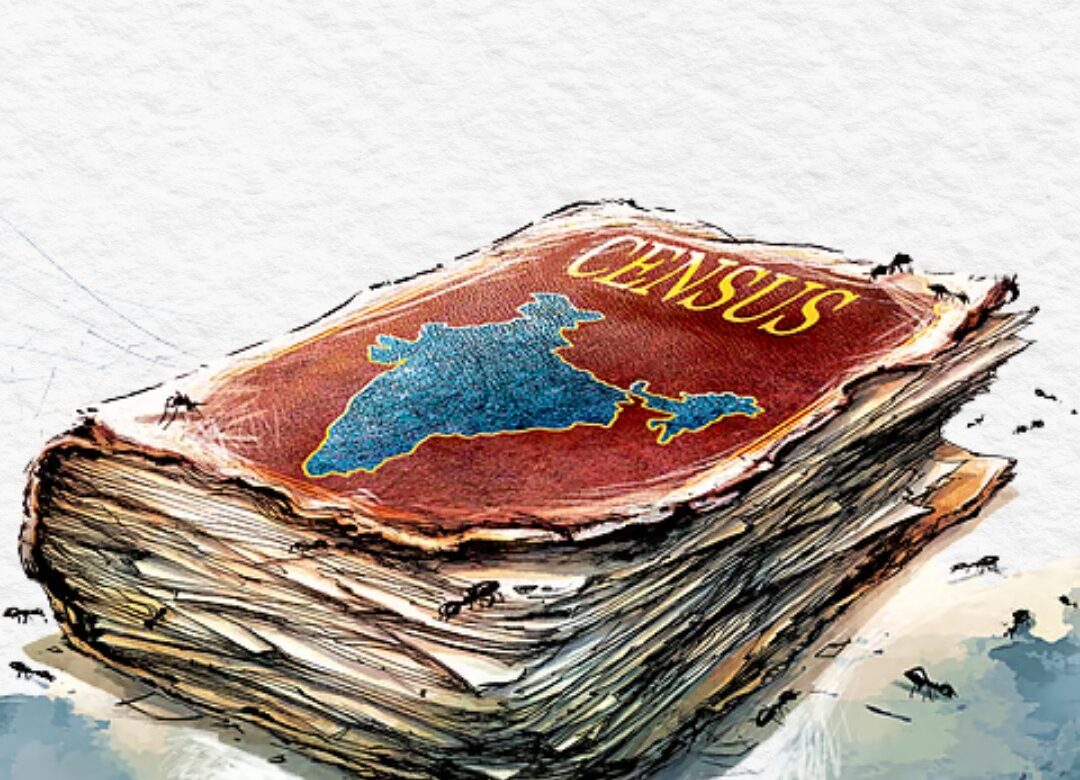
On April 1, 2026, India launched its census. The date, which the government did not appear to register as ironic, marked the beginning of a $1.24 billion, year-long exercise involving over three million officials counting 1.4 billion people. It will be the first population count in fifteen years. It will include caste data for the first time since 1931. And it arrives after a delay so long and so consequential that no press release or digital innovation can paper over what it actually represents: fifteen years of governing a country of 1.4 billion people in the dark.
The last census was conducted in 2011. The next one was due in 2021. COVID-19 provided the initial justification for the delay. What followed COVID-19 was five additional years of administrative procrastination, electoral scheduling conflicts, and political calculation around the caste enumeration question, none of which had anything to do with a pandemic. During those fifteen years, India conducted five general elections, launched dozens of flagship welfare schemes worth hundreds of thousands of crores of rupees, redrew urban boundaries, witnessed the largest internal migration in its post-independence history, and declared itself the world’s most populous nation. All of it was done using population data collected when Manmohan Singh was prime minister, the iPhone 4 had just been released, and Jio did not exist.
The Policy Cost Nobody Is Calculating
The gap between 2011 data and 2026 reality is not a technical inconvenience. As Ashwini Deshpande, an economist at Ashoka University, told Al Jazeera: “With India’s last census now well over a decade old, every major survey conducted in this period is working off a frame that no longer reflects the population it is meant to represent. That is not a minor technical inconvenience. It introduces systematic errors into the data that policymakers, researchers, and planners depend on.”
Consider what that means in practice. The National Food Security Act distributes subsidized grain to beneficiaries identified using outdated population baselines. The Mahatma Gandhi National Rural Employment Guarantee Act allocates funds based on which areas qualify as “rural,” a classification that still rests on 2011 data, even though urbanization has transformed hundreds of districts beyond recognition in the intervening years. Urban migrants, millions of them living in informal housing and working in the unorganized sector, remain poorly captured in policy design because the map of where people actually live has not been officially updated.
India added approximately 170 to 180 million people between 2011 and today. That is a population larger than Russia, added on top of an already groaning welfare infrastructure, without a single official count of where those people are, what they need, or whether existing schemes are reaching them.
The Caste Question: Politics Masquerading as Principle
The most consequential and contentious element of the 2026 census is caste enumeration. Comprehensive caste data has not been collected since 1931. India stopped the caste census in 1951 under the stated rationale of preventing social divisions. What it actually produced was ninety-five years of policymaking without knowing how resources, opportunities, and deprivations are actually distributed across the caste hierarchy.
As economist Dipa Sinha put it plainly: “Without granular caste data, we are essentially flying blind.”
Prime Minister Modi’s BJP historically opposed caste enumeration. In 2024, Modi himself called those demanding a caste census people who thought like “urban Naxals.” By May 2025, under sustained pressure from opposition parties, caste groups, and the political reality of Bihar and UP election arithmetic, the government reversed course and announced caste enumeration would be included.
This reversal, achieved not through principled reconsideration but through electoral pressure, tells its own story. The BJP opposed caste data collection for years not because it would divide society but because it would make visible exactly how unequal that society remains, and how unevenly the benefits of a decade of “sabka vikas” have been distributed across the caste hierarchy.
As an independent researcher, Yashwant Zagade observed: “The government has
institutionally made marginalized communities in India invisible. We do not know the kind of privileges enjoyed by upper castes compared to marginalized communities. This is why caste enumeration matters.”
The NRC Shadow
The 2026 census arrives under a cloud that previous censuses did not carry. The BJP government has committed to implementing a nationwide National Register of Citizens, already implemented in Assam where nearly two million people, including Hindus and Muslims, were left off the citizenship list in 2019. The Citizenship Amendment Act, implemented in 2024, fast-tracks citizenship for non-Muslims from neighboring countries. As KS James, an Indian demographer at Princeton University, noted: “Although the census has nothing to do with citizenship, this can create anxiety, prompting some families to over- report or list absent migrant members during the census to avoid any perceived exclusion.” That anxiety is not irrational. When a government has deployed administrative instruments against specific communities, documented in court records and human rights reports, asking those communities to voluntarily provide detailed household data to the same government requires a level of institutional trust that has not been earned. The census will ask 33 questions. In Muslim households across Assam, UP, and Bengal, at least some of those questions will be answered with fear rather than confidence.
The Delimitation Dimension
Beyond welfare and caste politics, the census carries a third layer of political consequence that could reshape Indian democracy for the next twenty-five years. The government has committed to a delimitation exercise, redrawing parliamentary constituency boundaries based on the new population data.
Southern states, where family planning worked and population growth slowed, face losing parliamentary seats to northern states where population grew faster. Tamil Nadu, Kerala, Karnataka, Andhra Pradesh, and Telangana could collectively lose significant representation in the Lok Sabha, transferring political power to UP, Bihar, MP, and
Rajasthan. This north-south tension is not abstract. It is a structural conflict between states that followed government policy on population control and are now being penalized for doing so.
Conclusion
The 2026 census is, as Deshpande says, the definitive snapshot of India. But a snapshot taken fifteen years later does not capture a moment. It documents a failure of governance that played out across those fifteen years in misdirected subsidies, undercounted migrants, invisible caste inequalities, and welfare programs calibrated to a population that no longer exists as it was counted.
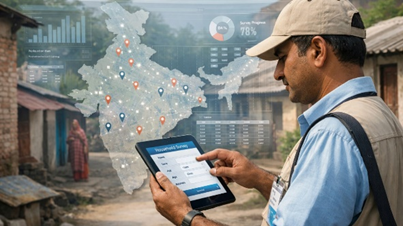
The government has announced that the census will be conducted digitally, with self- enumeration portals in sixteen languages and a unique digital ID for every counted individual. These are genuine innovations. They do not answer the question of why the count is fifteen years late, who made that decision, and which communities bore the cost of governing India without knowing who or where they actually were.
India is counting its people. It should have done so in 2021. The people who paid for that delay were the ones who needed accurate data the most.







Leave a comment