


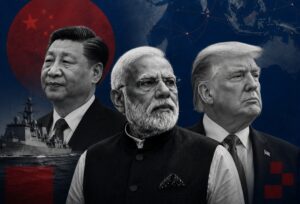
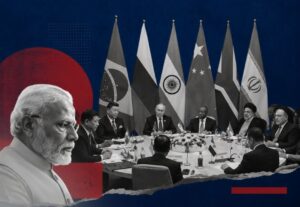

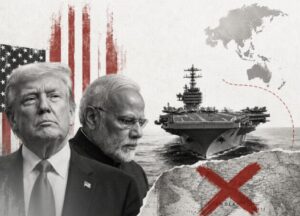

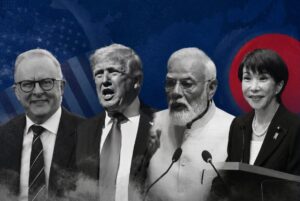

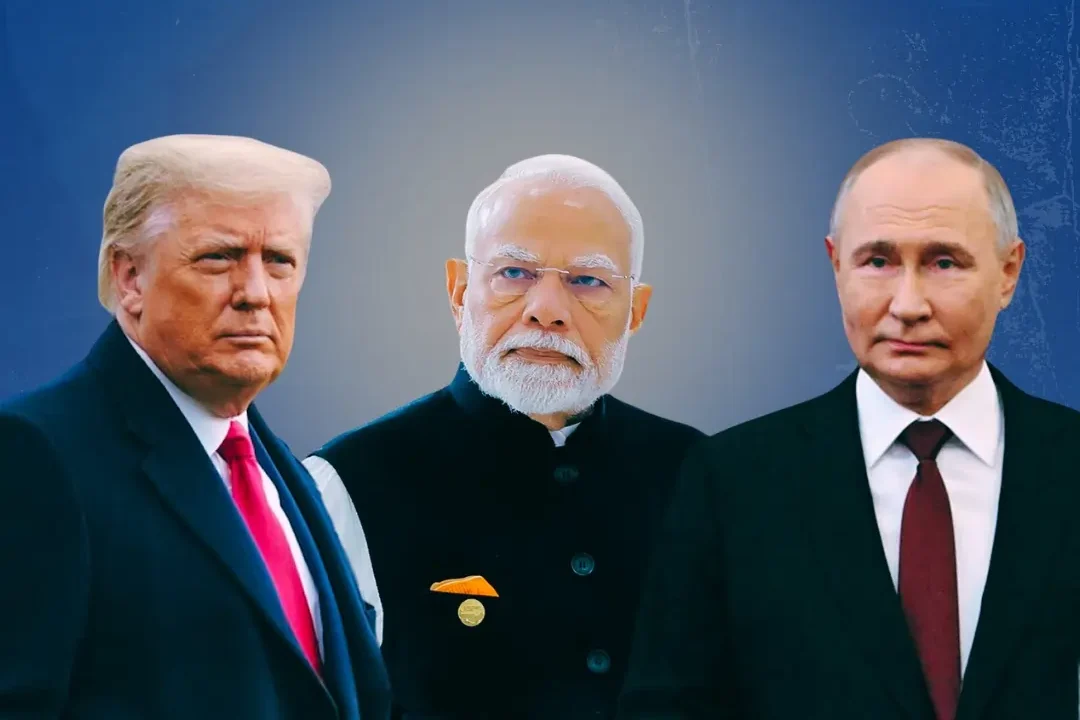
For ten years, the government in New Delhi has meticulously built the image of “Vishwaguru,” a global teacher who leads a free and independent India. But behind the saffron-colored talk of national pride is a harsh truth: we are politically subservient. The recent admissions by incoming US Treasury Secretary Scott Bessent and Energy Secretary Chris Wright have taken off the mask: India’s much-touted “independent” purchase of Russian oil was not an act of defiance, but a deal made and approved by Washington to help American inflation.
The “Lion” of the Make in India campaign has, in practice, become a subaltern partner in the American enterprise, exchanging long-term economic sovereignty for short-term political optics.
The False Idea of Oil Sovereignty
The Modi government says it stood up to Western pressure to get inexpensive electricity for its people, but that’s only half true. It hides a deeper shame. The US turned India into a huge “laundry” for Russian oil by letting India buy Russian Urals. India then refined the oil and sold it back to the West to keep prices consistent around the world and keep India tied to the US-led financial system.
The numbers convey the tale of a client state:
- The pricing Cap Compliance: Even though there has been a lot of talk about it, Indian banks and shipping companies have mostly followed the G7 pricing restrictions to avoid secondary sanctions. This means that the US Treasury can essentially set the limit on Indian commerce.
- The Dollar Trap: Even though BRICS conferences are full of discussion about “de-dollarization,” 86% of India’s trade is still done in USD. The much-hyped Rupee-Rouble commerce system has mostly fallen apart. India now has a lot of Rupees that it can’t spend and is completely dependent on the SWIFT system, which is run by the “Yankee Imperialists” that India says it wants to avoid.
The Trumpian Shadow: Making the Economy a Vassal of Policy
The “America First” 2.0 policy of the Trump administration threatens to destroy what little independence Indian businesses still have. The presidential orders and policy suggestions coming out of Washington, which are called “cooperation,” are really ultimatums.
The US still sees India as a market to be exploited, not as a partner.
- Trade Deficits and Tariffs: The Modi government rolls out the red carpet for American tech companies, but the US keeps India on its “Priority Watch List” for intellectual property and has taken away India’s Generalized System of Preferences (GSP) status in the past, which hurt Indian exports by more than $6 billion.
- Technological Embargoes: India is being forced into an ecosystem that keeps its defense and AI industries “interoperable” with American hardware and proprietary code in the guise of “iCET” (Initiative on Critical and Emerging Technology). This is not a transfer of technology; it is a lease of power.
The “Holy Cow” is a hypocrite.
The most obvious contradiction is in the home, where Hindutva forces use the “Mother Cow” to divide people while also making a lot of money out of it.
- The Beef Export Paradox: India is still one of the world’s biggest exporters of beef (carabeef). The Department of Commerce says that buffalo meat exports have often gone beyond $3 billion a year since Modi became Prime Minister.
- Crony Funding: The irony is even stronger by the fact that electoral bond data indicated that major beef-exporting companies like the Allana Group gave a lot of money to political campaigns. It seems that the “Sanatan” worldview is open to negotiation if the price is right. For the masses, the “cow” is a holy symbol that they can fight over, but for the BJP’s corporate donors, it’s a good business opportunity.
Crony Capitalism: The New East India Company
The rise of a small minority of Indian oligarchs is closely tied to the submission to Yankee Imperialism. The “Modi-fication” of the Indian economy has led to an unbelievable amount of wealth being concentrated:
- Wealth Inequality: The richest 1% of Indians currently own 40% of the country’s wealth, which is more than during the British Raj.
- Resource Capture: The “crony” infrastructure in the US is being created to work perfectly with Western finance, from ports to airports to green energy. The free trade agreements (FTAs) that are currently being worked out with the UK and the EU are meant to help these big companies. They will be able to act as middlemen for Western MNCs, but the Indian MSME (Micro, Small, and Medium Enterprises) sector, which is the backbone of Indian employment, will be left to die.
The Cowardice of the Reactionary
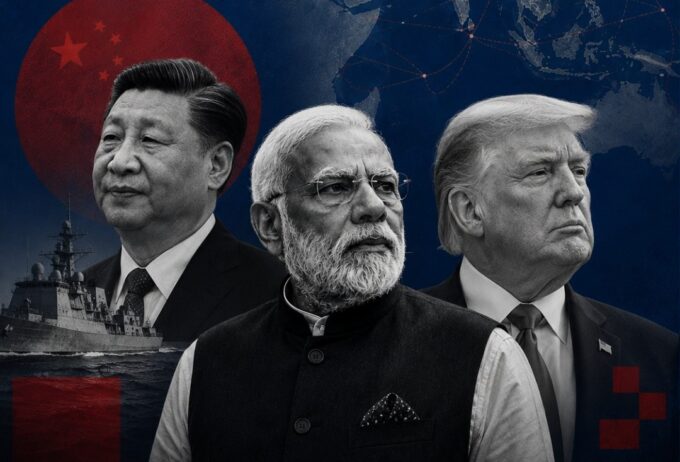
Hindutva is not a movement of decolonization; it is the final step of colonial mental servitude. It has used the “Master’s” tools, such surveillance, divisive identity politics, and neoliberal exploitation, to control its own people. The current leaders have made India a regional police force for Washington’s interests in the Indo-Pacific by siding with the more greedy parts of American imperialism.
History will not remember this time as the “New India,” but as the time of the Great Kneeling, when the hopes of a billion people were traded for the survival of a certain ideological system and the wealth of a few billionaires. Not only is it politically necessary to fight against this unholy alliance, it is also a fight for the soul and survival of a really free India.





Leave a comment