






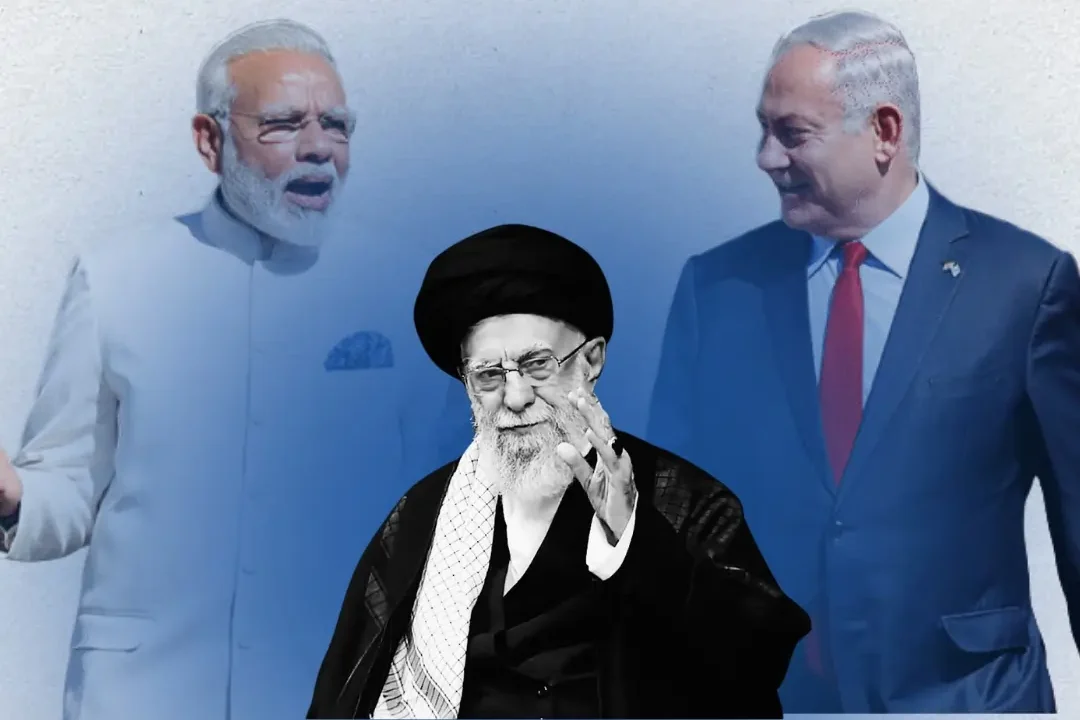
In May 2016, Narendra Modi stood in Tehran declaring: “Our friendship is not new, it is as old as history. We are connected through art, traditions and culture.” That same day, India signed the historic Chabahar Port pact, committing $500 million to develop Iran’s strategic gateway-a project meant to symbolize centuries of India-Iran civilizational ties and counter Chinese influence in Pakistan’s Gwadar. Fast forward to February 2026: Modi visits Israel days before coordinated US-Israel strikes on Iran, India’s budget allocates zero rupees for Chabahar, and New Delhi has transferred its entire $120 million commitment to Tehran while informing the US Treasury it will “wind down all activities” at the port. The message is clear: when America issues ultimatums, Modi abandons decades-old partners without hesitation.
Former Indian Ambassador K.C. Singh spoke bluntly about Modi’s Israel visit: “PM Modi’s visit to Israel was wrongly timed and has completely ripped India off our neutrality on the subject. We are seen in the Israeli corner.” The Congress party called it “ill-timed” and described the government’s stance as a “betrayal of India’s values.” But the timing wasn’t accidental-it was symbolic. As US-Israeli military assets massed for strikes on Iranian nuclear facilities, Modi chose to deepen defense cooperation with Netanyahu, announcing $8.6 billion in new arms deals while Iran faced existential threats. This wasn’t just poor optics. This was India signaling it has chosen sides in the US-Israel-Iran confrontation, and Iran is expendable.
The Chabahar Surrender: $500 Million Promise to Zero Budget
The trajectory of India’s Chabahar commitment tells the story of Modi’s Iran betrayal in stark numbers. In May 2016, India pledged $500 million to develop Chabahar Port and associated infrastructure linking India with Afghanistan and Central Asia via Iran. By 2024, India Ports Global Limited had signed a 10-year contract to operate the Shahid Beheshti Terminal. The 2025-26 budget allocated ₹400 crore ($48 million) for Chabahar development. Then came Donald Trump’s January 2026 ultimatum: any country doing business with Iran faces 25% tariffs on all US trade.
Modi’s response was immediate capitulation. According to The Economic Times investigation published in January 2026, India transferred its entire $120 million financial commitment to Iran before US sanctions kicked in and informed the US Treasury’s Office of Foreign Assets Control (OFAC) that it intended to “wind down all activities” at Chabahar. The 2026-27 budget, presented in February, allocated zero rupees for Chabahar -the first time in nearly a decade. As P. Manoj, Editor of ET Infra, noted: “What was surprising to me was that India paid the entire amount committed to Iran for the port project before the sanctions kicked in. That was a great piece of information shared with me by a government source dealing with the project.”
The Historical Pattern: Modi Always Abandons Iran Under US Pressure
This isn’t Modi’s first Iran betrayal, it’s the latest in a pattern stretching back decades. In 2018, when Trump withdrew from the Iran nuclear deal and reimposed sanctions, India was one of Iran’s top three crude oil suppliers, importing approximately 560,000 barrels per day. Despite India’s “strategic autonomy” rhetoric, Modi stopped all Iranian oil imports by 2019 to avoid US secondary sanctions. China, facing the same sanctions, ignored American threats and became Iran’s largest crude buyer, securing long-term contracts at fire-sale prices while India lost access to cheap energy and strategic leverage.
India-Iran bilateral trade collapsed from $17 billion in 2018-19 to $1.68 billion by October 2025-a 90% decline driven entirely by India’s capitulation to US pressure. Exports to Iran fell from $3.5 billion to $1.2 billion. Imports from Iran dropped from $13.5 billion (mostly crude oil) to $400 million. As The Diplomat noted in January 2026: “The Trumpian shock in 2019 compelled New Delhi to make a strategic choice by ending its oil imports from Iran; these restrictions led to a sharp decline in India’s trade with Iran.”
The Chabahar project itself has been repeatedly delayed due to India’s fear of US sanctions. India signed the initial memorandum of understanding in 2015, took over operations in December 2018, and signed a 10-year contract in May 2024-yet even before Trump’s 2026 tariff threats, only 10% of Chabahar’s 8.5 million-ton capacity was utilized in 2019 because “following the re-imposition of sanctions against Iran, foreign companies became reluctant to participate in the port’s expansion,” according to Wikipedia data. India itself was among those reluctant companies, holding back investments despite receiving multiple US sanctions waivers.
Modi’s Tehran Promises vs. Tel Aviv Reality
The contrast between Modi’s 2016 Tehran visit and his 2026 Tel Aviv trip exposes the hypocrisy. In 2016 India and Iran signed 12 agreements including the Chabahar Port pact, a $2 billion credit line for infrastructure, and cooperation on Afghanistan, terrorism, and energy.
In February 2026, Modi visits Israel, embraces Netanyahu, announces $8.6 billion in defense deals, and participates in joint counter-terrorism initiatives, days before coordinated US-Israel strikes on Iranian nuclear facilities.
Modi speaks with Israeli and UAE leaders, calls for halting hostilities, condemns attacks in the UAE, but “stopped short of directly addressing developments inside Iran,” according to analysts. The message to Tehran is unmistakable: India’s civilizational friendship rhetoric was meaningless. When forced to choose between Iran and the US-Israel axis, Modi chose the latter without hesitation.
Former Ambassador K.C. Singh’s assessment is damning: “We are seen in the Israeli corner.” This matters because India traditionally maintained balanced relations in the Middle East, strong ties with Israel for defense technology, strong ties with Gulf Arab states for energy and expatriate workers, and cooperative relations with Iran for Afghanistan access and Central Asian connectivity. Modi has abandoned that balance for visible alignment with the US-Israel axis at precisely the moment when Iran faces US military threats and Israeli attacks on its nuclear program.
The timing could not be worse. According to The Diplomat: “Trump’s announcement comes against the backdrop of a violent crackdown by Iranian authorities on anti- government demonstrations, which, according to U.S.-based Human Rights Activists News Agency, have resulted in at least 2,615 deaths.” Iran is domestically unstable, facing protests over economic conditions, and vulnerable to foreign military pressure. This is when Modi chose to visit Israel, deepen defense cooperation, and signal India’s strategic shift-maximizing Iran’s humiliation while minimizing India’s diplomatic leverage.
The Strategic Consequences: What India Lost
Chabahar isn’t just a port-it’s India’s only viable route to Afghanistan and Central Asia that bypasses Pakistan. According to Foreign Policy analysis, the port “is meant to enable India to reach, via Afghanistan, Central Asia, a region rich with natural gas and critical minerals. New Delhi has sought to deepen engagement in the region in recent years but lacks direct land access because Pakistan doesn’t grant India transit rights. Chabahar offers the next best option.”
India’s exit from Chabahar creates immediate strategic losses. First, India loses access to Afghanistan and Central Asian markets. The Taliban government, which has developed surprisingly cooperative ties with India, announced a $35 million investment in Chabahar in February 2024, signaling its intention to reduce dependence on Pakistan. India’s withdrawal undermines this alternative connectivity and strengthens Pakistan’s geographical stranglehold.
Second, China fills the vacuum.
Chabahar is part of the International North-South Transport Corridor (INSTC), a 7,200-kilometer trade route connecting India with Central Asia, Russia, and Europe. Estimates suggest INSTC could cut transit times by 40% and reduce logistics costs by 30%. With India exiting, China-which already invested $62 billion in Pakistan’s Gwadar port just 76 nautical miles from Chabahar-can expand into Iranian infrastructure. China’s 2021 $400 billion strategic partnership with Iran gives Beijing the capital and sanctions-immunity India lacks.
Third, India’s credibility as a reliable long-term partner collapses. As WION noted: “Walking away from Chabahar would damage India’s credibility as a long-term partner.” India committed $500 million in 2016, spent less than $150 million over nine years, and is now abandoning the project under US pressure. Why would any country trust India’s strategic commitments when Washington can veto them with tariff threats?
Fourth, India’s energy security and Gulf relations suffer. The Strait of Hormuz connects the Persian Gulf to the Arabian Sea, and nearly 40% of India’s crude oil imports and half its gas imports pass through it. Antagonizing Iran-which can disrupt Strait passage- while deepening Israeli ties creates vulnerabilities. Iran has historically cooperated with India on energy security and Afghanistan stability. That cooperation is now endangered by Modi’s visible tilt toward Israel.








Leave a comment