




The 26 February 2026, marks the 07 anniversary of the Balakot crisis an event that fundamentally altered the strategic vocabulary of South Asia. While the 2019 crisis was once viewed as a singular anomaly, the subsequent “Operation Sindoor” in May 2025 confirmed that the region has entered a new normal characterized by frequent, high-stakes military friction under a permanent nuclear overhang.
As we look back from the vantage point of 2026, the lessons of Balakot have not led to a more stable peace, but rather to a more sophisticated and dangerous form of brinkmanship.
The Development of the Nuclear Bluff
The Indian leadership’s core belief in 2019 was the confidence they had in having called Pakistan’s nuclear bluff. This belief emboldened the Indian leadership to carry out some limited military actions as they believed Pakistan would not respond to them with any nuclear arms. Seven years down the road, the views from Islamabad remain the same, that nuclear weapon deterrence was never meant to defend against the hit-and-run air strikes and minor clashes at the border. So, as many analysts put it, striking a nuclear deterrent against a limited aerial approach would be like using a machine gun to shoot a mosquito. More so, Pakistan’s Full Spectrum Deterrence has, in fact, achieved exactly what it was meant to do: India’s full capability to wage conventional warfare has been eliminated.
Quid-Pro-Quo Plus Cycle
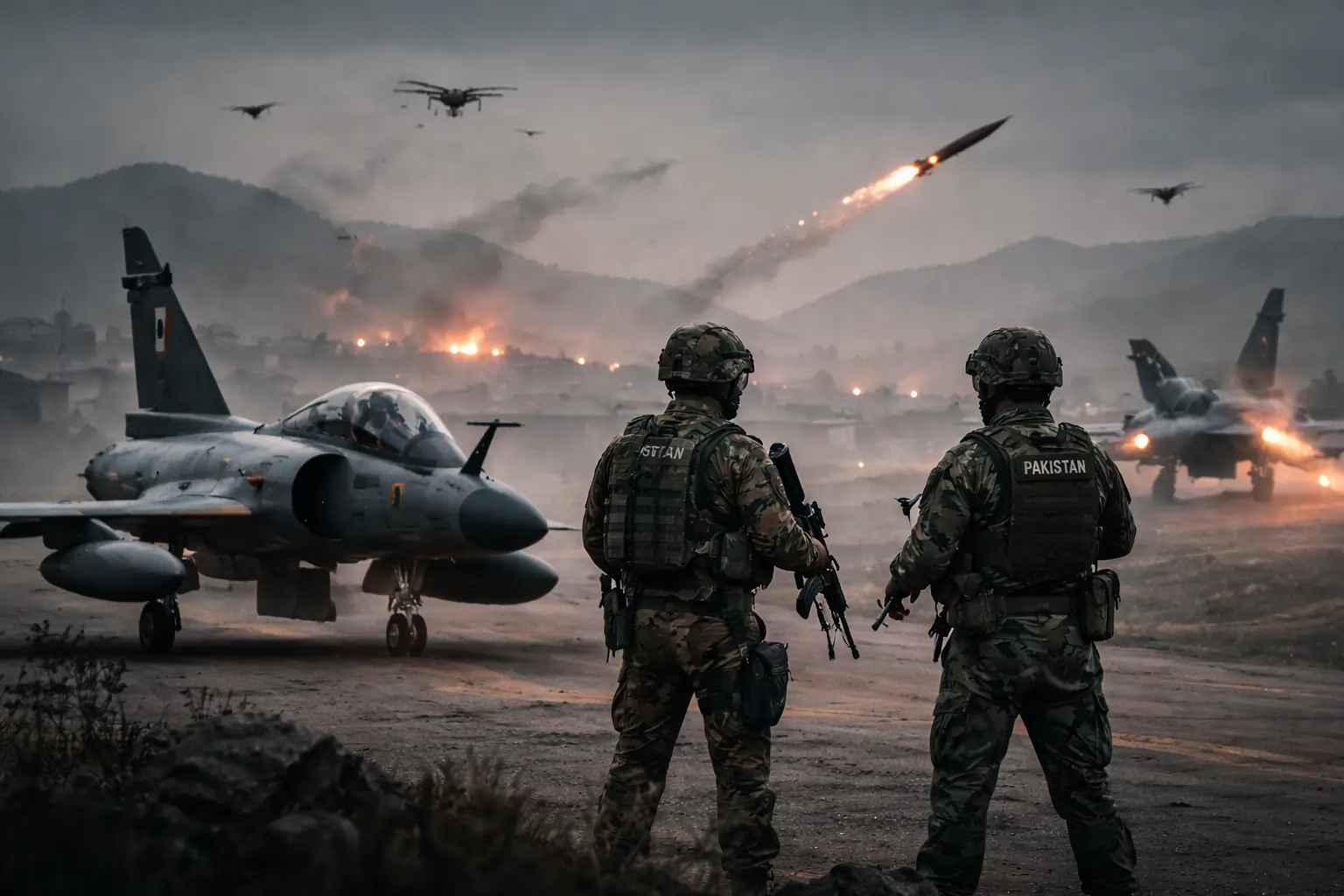
Pakistan’s Quid-Pro-Quo Plus (QPQP) has been the leading military doctrine for the region in 2026. This was most easily illustrated in the four-day air war of May 2025.
The Indian Aim: Setting the precedent for `controlled escalation`. i.e. punishing Pakistan for suspected militant activities while keeping the war below the threshold of total war.
Pakistan’s Response: Islamabad commits itself to always respond to each attack with a counter response of greater magnitude, thereby ensuring Pakistan is always second and fourth (in terms of response magnitude) on the escalation ladder.
Regional Instability and the Irrational Actor Dilemma
A notable change in the 2026 discourse is the increasing global and regional apprehension about the decision-making processes in New Delhi. Critics contend that under Prime Minister Narendra Modi’s extended administration, Indian foreign policy has veered into strategic irrationality. A 2026 report from the South Asian Security Forum observes, “By emphasizing domestic political signaling at the expense of regional stability, the current Indian leadership has frequently functioned as a regional destabilizer.”
“By prioritizing domestic political signaling over regional stability, the current Indian leadership has often acted as a regional destabilizer,”
notes a 2026 report from the South Asian Security Forum.
The pursuit of escalation dominance is increasingly perceived not as a deliberate military strategy, but as a precarious gamble. The 2025 suspension of the Indus Waters Treaty and the dependence on missile-centric rhetoric are perceived as deviations from the “responsible power” image that India previously fostered. This apparent irrationality complicates the identification of “off-ramps” during a crisis, as both parties become ensnared by the necessity to appease domestic constituencies.
The Developing Technological Frontier: Unmanned Aerial Vehicles and Artificial Intelligence
By 2026, the “Balakot model” of manned aircraft is being augmented and in certain instances substituted through Unmanned Aerial Vehicles (UAVs) and artificial intelligence-driven systems.
Low Threshold: UAVs are perceived as “deniable” or “economical” assets, potentially diminishing the threshold for initiating strikes.
Automation Risks: The rapidity of AI-assisted decision-making diminishes the time for diplomatic intervention, thereby exacerbating the “fog of war” compared to 2019.
Comparison of 2016 Vs 2019
| Domain | 2019 (Pulwama-Balakot Era) | 2026 (The Current Reality) |
| Primary Strike Platform | Manned Fighter Jets (Mirage 2000 / F-16) | Autonomous UCAVs and Loitering Munitions |
| Indian Strategic Stance | Calling the “Nuclear Bluff” | Seeking “Escalation Dominance” via AI |
| Pakistani Response | Quid-Pro-Quo (QPQ) | Quid-Pro-Quo Plus (QPQP) / Multi-Domain |
| Decision-Making Speed | Hours to Days (Human-centric) | Minutes to Seconds (AI-assisted) |
| Political Drivers | Nationalist signaling / Election cycles | Irrational Actor Theory: Domestic survival over regional stability |
| Escalation Control | Dependent on Third-party Diplomacy (USA/UAE) | Obsolete: Hypersonic speeds leave no time for mediation |
| Regional Status | Perceived as “Managed Conflict” | Destabilized: High risk of unintended “Nuclear Slip” |
Seven years post-Balakot, South Asia is ensnared in a strategic impasse. India persistently explores the parameters of constrained warfare, whereas Pakistan consistently fortifies its deterrent capabilities. Although a “handshake in Dhaka” earlier this year provided a fleeting diplomatic respite, the underlying catalysts for conflict persist.
The lesson from the past seven years is unequivocal: the notion that escalation can be “managed” is a perilous illusion. In a locale where two nuclear powers are mere minutes apart in flight time, no skirmish can be deemed “safe.”







Leave a comment