



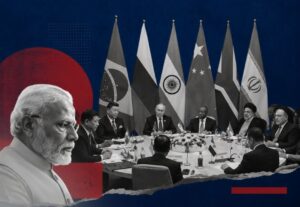


While Piyush Goyal celebrates opening “70% of global trade” through free trade agreements, India’s customs revenue forgone under these FTAs is set to cross 1 trillion in 2026-27-a staggering price Indian taxpayers are paying for trade deals that have delivered far more imports than exports. According to Budget documents reviewed by Business Standard, customs duty forgone reached 98,569 crore in FY26, exceeding the budget estimate of ₹94,172 crore. The projected ₹1,01,453 crore for FY27 represents a 2.9% increase and trade economists warn this is likely an underestimation given India has concluded nine trade agreements involving 38 countries in the last five years, many set to take effect during the current financial year.
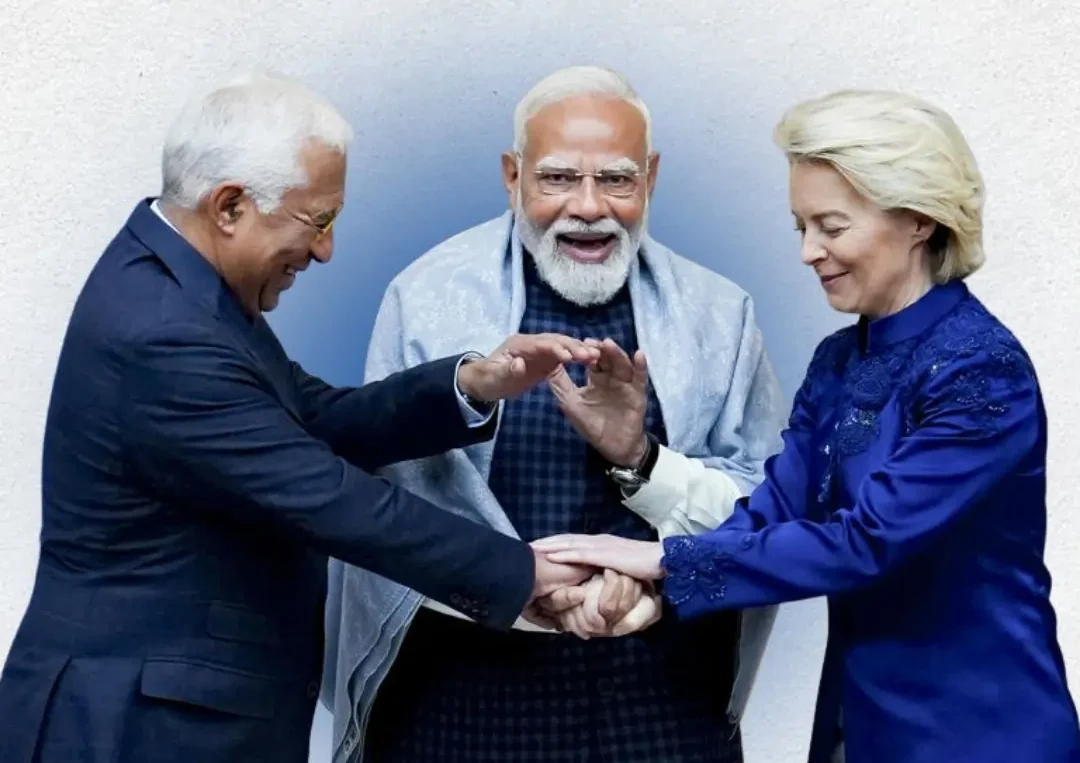
This isn’t just accounting-it’s a transfer of wealth from Indian coffers to foreign exporters while domestic manufacturers watch their market share evaporate under cheaper imports. As Congress leader Jairam Ramesh noted about the India-EU FTA, it represents “the biggest trade opening India has given to any trade partner (tariff reduction or relief on over 96% of EU exports to India)” and is expected to double India’s imports from the EU. When questioned about FTA Japan and Korea deals signed under Congress, Goyal himself admitted their failure: “That FTA was so bad that our exports to those countries haven’t increased. The products on which they gave us duty concessions are not even reaching those markets, while their imports into India have doubled.” Yet Modi’s government is repeating the exact same mistake-at record scale.
The ₹1 Trillion Question: Who Pays for FTAS?
Let’s break down where India’s customs revenue is disappearing. According to Budget documents, the Association of Southeast Asian Nations (ASEAN) accounts for the highest revenue impact at €40,833 crore in FY27-up from 40,731 crore in FY26. India has repeatedly flagged the need for urgent review of the ASEAN trade agreement since imports from ASEAN nations have grown far faster than exports from India. In August 2023, both sides agreed to complete the review by 2025. They missed the deadline, and India has expressed “unhappiness over the tardy pace of the review process.” Translation: ASEAN is bleeding India dry while refusing to renegotiate terms.
Japan accounts for ₹11,365 crore in customs duty forgone, South Korea ₹10,872 crore, and Australia ₹5,107 crore. The India-UAE trade deal, which came into force in May 2022, contributes ₹9,267 crore to customs revenue forgone in FY27. These aren’t trivial amounts. For context, India’s total customs duty collections are projected at ₹2.7 trillion in FY27—a mere 5% increase from FY26 despite 10% growth the previous year. As one trade economist told Business Standard on condition of anonymity, “The actual fiscal impact depends on utilisation rates by importers, trade diversion effects and changes in sourcing patterns.” In plain language: as importers discover these tariff loopholes, revenue losses accelerate beyond government projections.
The Modi government has signed FTAS with the European Free Trade Association (EFTA), UK, Oman, New Zealand, European Union, and an interim deal with the United States-all in rapid succession. Commerce Minister Piyush Goyal recently boasted that “India has now preferential market access to almost 70% of global trade through FTAs.” What he doesn’t mention is the price: over 1 lakh crore in annual customs revenue forgone, rising trade deficits with FTA partners, and domestic industries facing import surges they can’t compete against.
Revenue department officials have long argued that deep tariff reductions constrain customs collections, which account for roughly 6-7% of the Centre’s gross tax revenue in recent years. Trade policymakers counter that customs duties aren’t designed as revenue- raising instruments but as trade policy tools, and that lower input tariffs can improve competitiveness, integrate India into global value chains, and expand the tax base through higher economic activity. But here’s the problem: India’s applied most-favoured-nation (MFN) tariffs remain higher than those of many major economies, particularly in sectors like agriculture, automobiles, and consumer goods. FTA negotiations thus require New Delhi to undertake substantial tariff cuts to offer “commercially meaningful market access.” Over time, as more tariff lines become eligible for preferential treatment and import volumes expand, the notional revenue impact increases exponentially.
The ASEAN Disaster: 40,833 Crore and Rising
The ASEAN FTA exemplifies everything wrong with India’s trade deal approach. According to official data, India’s customs duty forgone for ASEAN jumped from ₹37,875 crore in BE FY26 to 40,731 crore in actuals, and is budgeted at ₹40,833 crore for FY27. This represents the single largest revenue drain from any FTA partner. Meanwhile, India’s trade deficit with ASEAN has ballooned. In 2024-25, India’s exports to ASEAN stood at approximately $43 billion while imports reached $87 billion-a deficit of $44 billion, according to data from India’s Ministry of Commerce.
India signed the ASEAN-India Free Trade Agreement in August 2009, promising mutual benefits and expanded market access. Seventeen years later, the promise remains unfulfilled while ASEAN exporters flood Indian markets with preferential access. The products benefiting most from tariff reductions include electronics, machinery, palm oil, chemicals, and textiles-sectors where domestic Indian producers face immense competitive pressure. India requested an urgent review, both sides agreed to complete it by 2025, and then ASEAN simply…ignored the deadline. Because why negotiate when you’re winning?
India’s unhappiness is well-documented. In multiple trade forums, Indian officials have raised concerns about “utilization rates”-the percentage of eligible imports actually claiming preferential tariffs. For ASEAN, utilization rates are high, meaning exporters are aggressively exploiting the tariff concessions India granted. When utilization rates exceed projections, revenue losses accelerate beyond budget estimates-exactly what’s happening with ASEAN’s 40,833 crore impact.
Yet Modi’s government continues signing more FTAS without learning from ASEAN’s failure. The India-EU FTA, which Goyal hails as the “mother of all deals,” grants tariff reduction or relief on over 96% of EU exports to India. If ASEAN with far fewer concessions costs ₹40,833 crore annually, what will EU’s 96% tariff relief cost five years from now? The Budget documents don’t project that far, but the trajectory is clear: accelerating revenue losses with minimal export gains.
Japan, Korea, UAE: A Pattern of Failure
Piyush Goyal’s own admission about the Japan-Korea FTAs is damning: “That FTA was so bad that our exports to those countries haven’t increased. The products on which they gave us duty concessions are not even reaching those markets, while their imports into India have doubled.” Yet the budget documents show India is still paying for these failures: *11,365 crore for Japan and ₹10,872 crore for South Korea in FY27.
India signed the Comprehensive Economic Partnership Agreement with Japan in August 2011 and with South Korea in January 2010. Fifteen years later, the results speak for themselves. India’s merchandise trade deficit with Japan stood at $7.8 billion in 2024, with imports at $15.7 billion and exports at $7.9 billion. With South Korea, the deficit reached $14.7 billion-imports at $20.8 billion versus exports of $6.1 billion. These aren’t partnerships-they’re one-way supply channels where India provides tariff-free market access while receiving minimal reciprocal benefits.
The India-UAE Comprehensive Economic Partnership Agreement, which took effect in May 2022, costs India ₹9,267 crore in customs duty forgone for FY27. While bilateral trade has increased, so has India’s trade deficit. According to Commerce Ministry data, India’s exports to UAE reached $35.6 billion in 2024-25 while imports stood at $60.3 billion-a deficit of $24.7 billion. Key import categories include crude oil, gold, pearls, precious stones, and electronics. Much of this flows through Dubai’s re-export hub, meaning Indian customs revenue disappears while third-country products enter via UAE’s preferential access.
The Australia FTA, signed in April 2022, costs ₹5,107 crore in forgone revenue for FY27. India’s deficit with Australia reached $15.1 billion in 2024, driven by coal, gold, and education services imports. Trade economists warned during negotiations that Australia’s strong resource base and advanced services sector would create asymmetric outcomes- India provides manufacturing market access while Australia exports commodities and premium services. The revenue loss confirms those warnings.
The Real Cost: Jobs, Not Just Revenue
Customs revenue forgone is measurable and appears in budget documents. Job losses are harder to quantify but equally devastating. When cheaper imports flood Indian markets under FTA concessions, domestic manufacturers face impossible competition. Indian firms can’t match ASEAN electronics prices, Japanese auto component costs, Korean steel margins, or EU luxury goods while maintaining Indian wages, environmental standards, and tax compliance. The result: factory closures, layoffs, and industrial decline in sectors where India previously held competitive advantages.
The textile sector exemplifies this dynamic. India’s exports to EU include significant textile and apparel volumes, but the FTA’s 96% tariff relief on EU exports opens India to premium European textiles, fast fashion brands, and synthetic fibers produced at industrial scale with automated processes. Indian textile hubs in Tirupur, Surat, and Ludhiana-employing millions-already face pressure from Bangladesh’s zero-duty access to US markets. Adding EU import competition under preferential tariffs compounds the crisis. As Mallikarjun Kharge observed regarding the US-Bangladesh deal, tariff concessions to competitors deliver “a lethal double whammy” to Indian manufacturers.
The pharmaceutical sector faces similar pressures. India’s generic drug industry thrived by producing affordable medicines at scale, supplying both domestic markets and global demand. But the India-EU FTA’s intellectual property commitments potentially exceed TRIPS standards, according to Jairam Ramesh’s analysis. If EU pharmaceutical giants secure stronger patent protections or data exclusivity terms, Indian generic manufacturers lose the ability to produce affordable alternatives-raising drug prices domestically while reducing export competitiveness.
Steel and aluminium face the CBAM trap. India’s exports to EU have already fallen from $7 billion to $5 billion. CBAM expansion will hit other industrial exports including cement, chemicals, and fertilizers. These are high-employment sectors concentrated in states like Odisha, Chhattisgarh, Jharkhand, and Gujarat. Job losses in these industries ripple through entire regional economies, devastating communities dependent on industrial wages.






Leave a comment