




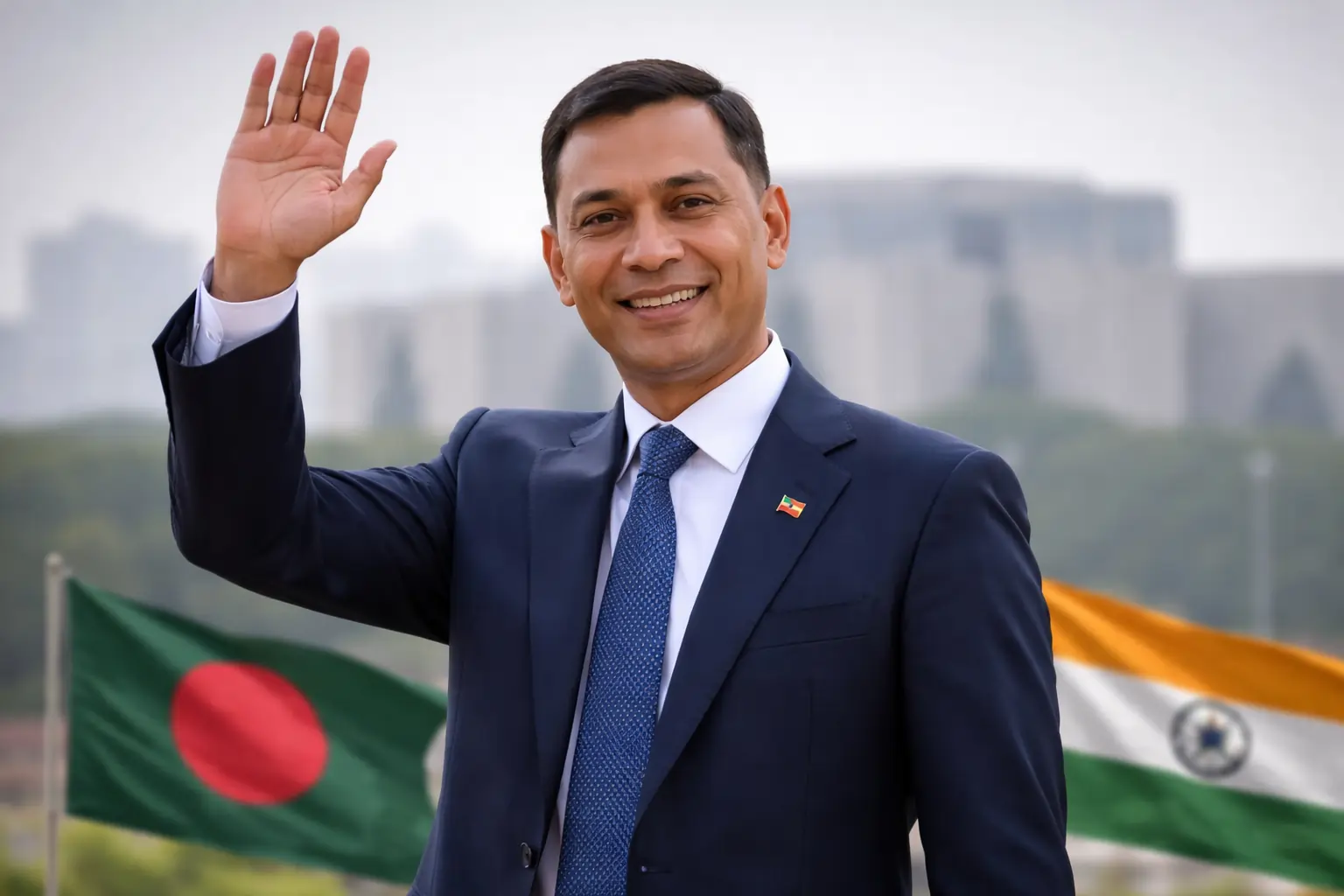
Tarique Rahman, Bangladesh’s new political leader, has spent 17 years in expatriate, but his recent return on Christmas Day has already stirred significant political shifts within the country. As Bangladesh heads into its first general election since the ouster of former Prime Minister Sheikh Hasina in August 2024, Rahman, the leader of the Bangladesh Nationalist Party (BNP), looks poised to take the country’s top office.
Polling data indicates that Rahman’s BNP is likely to secure an outright majority in the upcoming election, clinching approximately 185 seats out of the 300-member legislature. If these predictions hold true, Bangladesh is set for a major political transformation. But what does this mean for India, South Asia, and the world at large?
Resetting Relations with India and the US
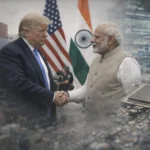
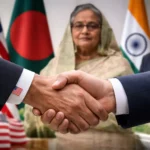
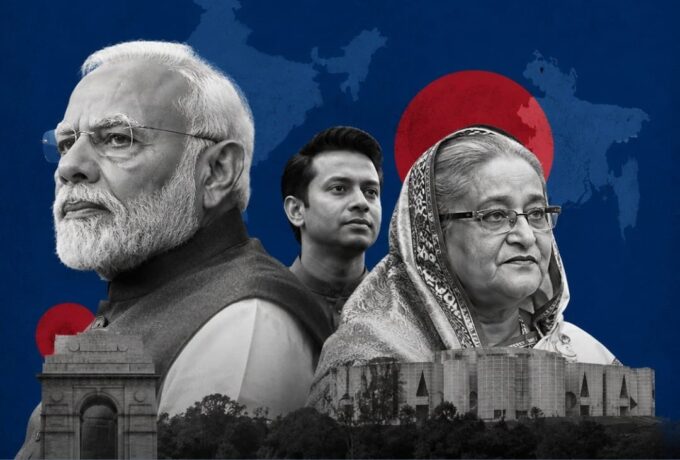
One of the most serious aspects of Rahman’s agenda is improving relations with both India and the United States. Bangladesh’s strategic location and economic importance make it crucial for both regional and global powers. During Hasina’s tenure, relations with India were largely positive, especially on issues like the Teesta River, where cooperation on water-sharing was a key diplomatic concern. However, under Hasina’s government, ties with India soured towards the end of her rule, especially in light of controversial decisions such as the abrupt cancellation of Bangladeshi cricketer Mustafizur Rahman’s IPL contract by India. Rahman’s return to power signals a potential shift in policy towards India. Although relations between the two nations have been strained, Rahman has met with Indian officials, including External Affairs Minister S. Jaishankar, in an effort to reset diplomatic ties. His desire to revisit water-sharing treaties, such as the Teesta River agreement, signals a new approach that may offer a more balanced and equitable solution for both sides. These negotiations could have a significant impact on regional cooperation, particularly on issues such as trade, water-sharing, and border security.
At the same time, Rahman must also address the challenges posed by the United States. During Hasina’s tenure, Bangladesh saw tensions with the US, particularly over trade tariffs. Rahman, however, seems intent on negotiating better terms with the US through mutual economic interests. A potential deal involving US trade and investment could alleviate Bangladesh’s trade deficit and secure more favorable tariffs, particularly in key sectors like textiles and energy. For India, Rahman’s approach to diplomacy could either stabilize or complicate bilateral relations. A more balanced diplomatic approach with india might ease regional tensions, but any misstep could reignite old grievances, especially concerning border security and water-sharing
A Path to National Healing
Rahman faces the legacy of enormous human costs of the violence that preceded Hasina’s exit, and then Hasina’s rolling of the dozens of revolutionary movements, which kept her and her supporters on their toes, that saw a loss of over 1,400 lives and more than 3,500 disappearances.
Rahman starts his journey with scars of violence and loss from both the streets and the state. Rahman speaks of the challenge of the disadvantage of the concentrated actors who will be the first to be available on the other side of the polarized and traumatized nation. Healing the polarized and the traumatized will be the first of all his challenges.
“Simple revenge will not get anything back to us,” Rahman noted in an exclusive interview with TIME. “Taking revenge will give us nothing. What we define as revenge is a state of being, and if we can control it and keep everyone sticking together, it will give us something positive.”
As per Rahman’s statements, he may have had an impact on Hasina’s successor’s constituent political violence and an unavoidable chain of political violence as one of the politically “correct” policies. The first step in Bangladesh’s new approach to politics is to remove the politically “correct” policies that were ingrained in the government’s structure and the institutions of power, particularly the military, the judiciary, and the civil service.
It will be the most consequences of a “modern” Bangladesh at its inception. In that connection, Rahman’s statements would show the least of control that Rahman may not have on our services.”
Rahman’s focus on unity could be possibly viewed as a positive signal for India and the region as a whole. A unified Bangladesh has the potential to bring greater stability to a region characterized by a history of external conflicts, internal tensions, and violence. However, he will be able to mend these divides only if he succeeds in implementing the right policies and manages to hold all the competing political groups in Bangladesh together.
Opportunities and Challenges
The GDP of Bangladesh has grown from USD 71 billion in 2006 to USD 460 billion in 2022, making the country one of the fastest growing economies in Asia. However, the pace of growth has not translated into economic benefits for all. High cost of living, youth unemployment, and widespread poverty, especially among the people below the age of 30, has led to Rahman making economic reforms one of his priorities. With more than 40 million people in Bangladesh living in extreme poverty, he has his work cut out for him.
Rahman had suggested economic policies such as allocating money to women and the jobless via “Family Cards”. However, questions about how the government will pay for this initiative have also arisen. In addressing the 13.5% youth unemployment rate, Rahman emphasizes the importance of improving infrastructure, promoting digital entrepreneurship, and providing additional training to migrant workers, who are, of course, positioned overseas. Though all these ideas have merit, they are likely to remain unimplemented without a politically calm and well-governed state, a condition that has historically been unattainable.
In relation to South Asia, Rahman’s focus on economic rejuvenation may offer the potential for greater regional collaboration involving South Asia. However, the economic revival of Bangladesh is also contingent upon the country’s relationship with its neighbors, India and the United States. The potential for greater regional economic collaboration hinges on Rahman’s ability to unleash the potential of Bangladesh’s digital economy and regional trade, creating a situation of economic interdependence with India, Bangladesh’s largest trade partner. The Challenges of Islamism’s Growing Influence in Bangladesh
One of Rahman’s greatest challenges is the growing Islamism that is infusing, and becoming regularized, in Bangladesh’s political system. Jamaat e-Islami, Bangladesh’s largest Islamist political party, has gained considerable traction since Hasina was removed. While the party has, to some extent, moderated its discourse, it is still perceived to be lacking in its commitment to democratic processes, especially given the controversial statements made by Shafiqur Rahman, the party leader, on issues such as marital rape.
Coalition with Jamaat Islamist party Rahman also raises concerns among Bangladesh women’s rights activists and other minority groups. This is especially with regard to the potential of the coalition to reverse advances made in the protection of human rights. Rahman has set for himself the goal of unifying the entire political spectrum around democratic principles, stating the need for all constituents, irrespective of their political or religious affiliations, to have their views taken into account. This sentiment will be especially tested as Islamism rises.
With reference to the region, Rahman’s approach to Islamism will also impact India and South Asia. Rahman’s approach to Islamism will also impact India and South Asia. In contrast to the prevailing threat of Islamic extremism in South Asia, a strong, stable, democratically governed Bangladesh could help to balance out the threat. If Rahman’s rivals continue to dominate the political extremism of the Jamaat, the prospects of political cohesion in Bangladesh and a stable relationship with India will not improve.
The Student Movement and Its Prospects
Due to the recent political turbulence in Bangladesh, a lot of political contenders and other participants have had their positions altered. With the students’ revolt targeting Hasina, each of the participants induced the autocrat to revise her plans. The political revolt began with deregulated political and economic systems, which allowed political nepotism and favoritism to be extended to all sectors. Based on the level of repression targeting dissenters, this revolt grew to almost all sectors of state repression. Many of these students, however, some of the most significant actors in this process, feel neglected.
The level of hostility is especially notable among women, young people and minorities who played a role in the 2024 revolution and caused great disruption to the political order. The ability of Rahman to channel the alterative energy of the students is essential to political stability. Rahman’s respect for the legacy of the participants will be tested in this context.
When it comes to Bangladesh’s future political prospects, India views the potential involvement of students as extremely important. The youth can play a proactive role in Bangladesh’s political engagement, and it can have a stabilizing effect in Bangladesh and the surrounding areas.
The significance of Tarique Rahman’s potential return to politics from a Bangladesh perspective is extremely important. The success of his commitment to national reconciliation, economic revitalization, and international relations is dependent on how well he is able to confront the divisisve challenges of consolidating a divided country, maintaining responsible relations with major powers in the world, and countering the risks of increasing Islamist radicalism.
Rahman’s potential governance is of paramount consideration for India and its neighbors. A politically stable Bangladesh, with Rahman at the helm of the leadership, will give a boost to economic development and trade in all the neighboring countries. On the other hand, if Rahman is unable to bring about a stable political environment in Bangladesh, it can certainly cause political upheaval for the subcontinent and the world.
Rahman’s leadership will be judged on the politically unified Bangladesh, improved economic conditions, and a politically stable Bangladesh. The world is watching with great expectation as Bangladesh enters a new phase with Rahman in command.






Leave a comment