




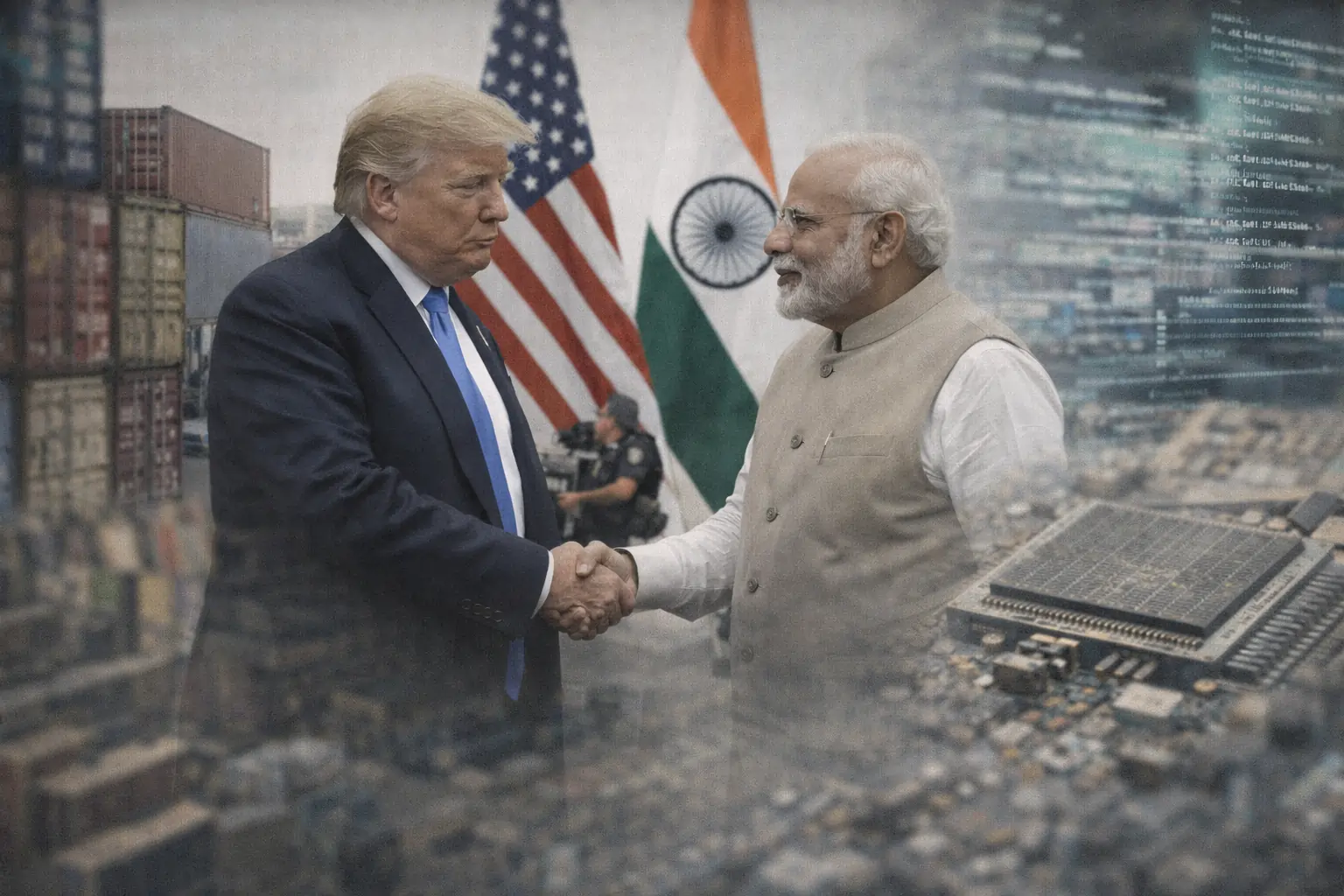
The trade talks between the United States and India have reached a crucial juncture as both nations continue negotiations on unresolved tariff and non-tariff barriers. Days after President Donald Trump revealed a trade deal with India, the White House has emphasized that talks will persist to address trade challenges, including tariffs, technical barriers, customs facilitation, and trade-distorting practices. This renewed focus on trade comes after the two leaders, Trump and Indian Prime Minister Narendra Modi, made commitments to work on an interim agreement aimed at enhancing bilateral trade relations.
Major Trade Framework Components
The White House issued a fact sheet last week detailing the agreement’s features, both immediate and long-term measures. The framework sets the stage for mutual trade between the US and India on the elimination of tariffs on a wide array of goods, increased purchases from the US, and eliminates non-tariff barriers that have long dogged trade. The agreement paves the way toward a more balanced and sustainable economic partnership between the two countries.
A key feature of the deal was the elimination of the extra 25 percent tariff on Indian imports, sealed by the President Trump via an executive order. This is in response to India’s agreement to stop buying oil from Russia, which is consistent with US foreign policy objectives. The US, in turn, reducing its retaliatory tariff against India from 25% to 18%, in what could be termed a good development toward fair-trade relations and an acknowledgment of India’s commitment to redressing trade imbalances.
Tariff Obligations and Increased Imports
India’s commitment to reduce tariffs on US goods has been an important factor in this agreement. As revealed by the fact sheet, India agreed to eliminate or reduce tariffs on American industrial products, as well as American agricultural and food products. Such products include dried distiller’s grains, red sorghum, tree nuts, fresh and processed fruits, pulses, soybean oil, wine, among others. This move is likely to generate new opportunities for exporters of these items from the United States. In particular, there are opportunities in the agriculture sector.
Additional commitment that India has made with regards to increasing its purchases from the United States, as India is pledging to procure well over $500 billion worth of goods and services from different sectors like energy, information technology, agriculture, and coal, thereby increasing trade and providing new opportunities for business expansion for companies based in the US.
Digital Trade and Regulatory Commitments
The deal has something about digital trade which is really relevant and important to the new and evolving world economy. India has digital services taxes that the US and India have had issues with, and now India has to eliminate them and also agree to create a set of rules/barriers for bilateral digital trade that will eliminate discrimination, and reduce trade barriers, and no customs duties on electronic transmissions. This is really good for both the US and India as it promotes a lot of better, and clearer digital commerce.
In addition, India has promised to resolve non-tariff barriers affecting bilateral trade in priority areas, including regulatory issues and delays in customs clearance. The two sides have also agreed to address negotiating origin rules to ensure that the impacts of the agreement are positive to both sides. These commitments are likely to reduce barriers for businesses to trade in either market, increasing trade and investment.
Under the draft agreement, technological cooperation is also focused. The Fact Sheet outlines that both sides are expected to trade more in technology and grow bilateral cooperation in that field. This is especially important to both countries as they are trying to lead in emerging sectors like AI, telecommunications, and renewable energy. The draft agreement also emphasizes the need to address and align economic security issues, improved supply chain resilience, and non-market third country policies that distort trade.
The two countries, as part of their commitments, will work together on reviews of investments and export controls to avoid legal breaches, as regards to economic safety. For both countries, ideologically strengthening cooperation on economic safety will help protect their economies from possible subsidized and manipulated foreign competition.
India has the most concerns regarding the significant trade imbalances, especially in relation to the US’s protective tariffs on Indian goods. There is a protectionist trade policy that concerns trade imbalances, and this is evident as India has a 100% trading policy, and a 37% trade policy in regards to foreign competition in regards to the majority of traded commodities.
The fact both sides put this commitment in the agreement demonstrates that both sides want to address the imbalances in a structured manner. The US and India are trying to improve the fairness of trade by reducing tariffs and addressing regulatory inconsistencies. However, India’s reluctance to unrestrictedly open its markets to foreign competitors remains a concern. While India has done some good here, the playing field still has a long way to go in terms of easements for American companies who want to do business in India.
There has been a lot of progress in the US-India trade talks, but it’s apparent that we have a long way to go. The interim agreement has laid out a lot of guiding principles for US-India trade, but the issues of tariffs, regulatory measures, and market access will need to continue to be worked on. The agreement is a step in the right direction for trade, and India’s long-standing protectionist policies will need to be addressed in order to create a meaningful trade relationship. While negotiations are ongoing, it is clear India is not ready to commit to a trade deal that requires more openness from India. Agreements on Trade of Digital Goods and Digital Trade Facilitation are a step forward, but both India and Australia need to work on their Trade Policy Frameworks that are likely to work against them. The most likely outcome of this deal is that both countries commit to a trade agreement that requires them to give up some of their short-term economically self-protective policies.







Leave a comment