


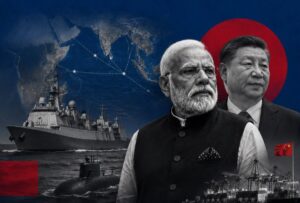
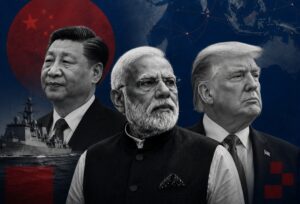
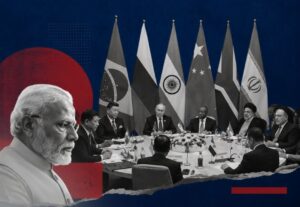

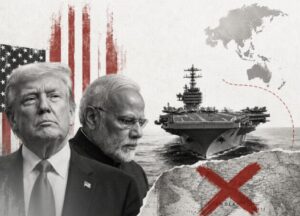

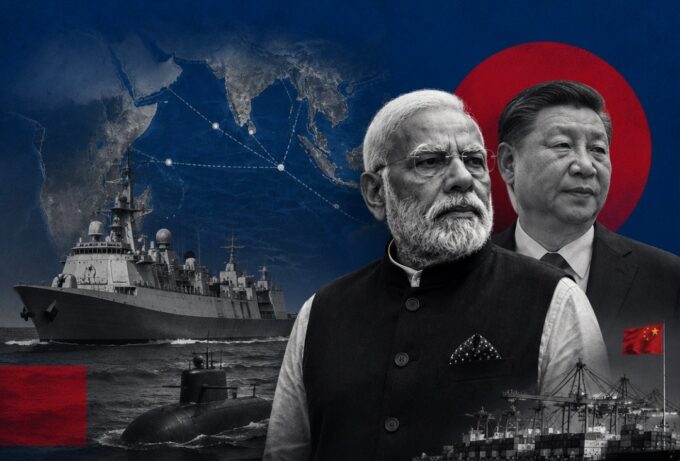
The numbers expose what Modi’s government won’t admit-India just handed China the energy deal of the decade. In January 2026, Russia transported a record 1.86 million barrels per day of seaborne crude to China, a staggering 46% increase from the previous year. For the first time since November 2024, 100% of Russia’s top ESPO crude flowed exclusively to China. Russia overtook Saudi Arabia as China’s number one oil supplier. Meanwhile, India’s Russian crude imports collapsed by 44% from June 2025’s peak of 2.09 million barrels per day to just 1.16 million barrels per day in January 2026, according to Kpler analytics.
This wasn’t market forces at work. This was political capitulation. As India trimmed Russian barrels under Donald Trump’s pressure, those barrels didn’t disappear-they went to one buyer. And that buyer is now sitting on the most advantageous energy position in Asia, secured at India’s expense while Modi celebrated a “historic” trade deal that Congress leader Pawan Khera called a “humiliating failure” and “total surrender.”
The Record-Breaking Shift to Beijing
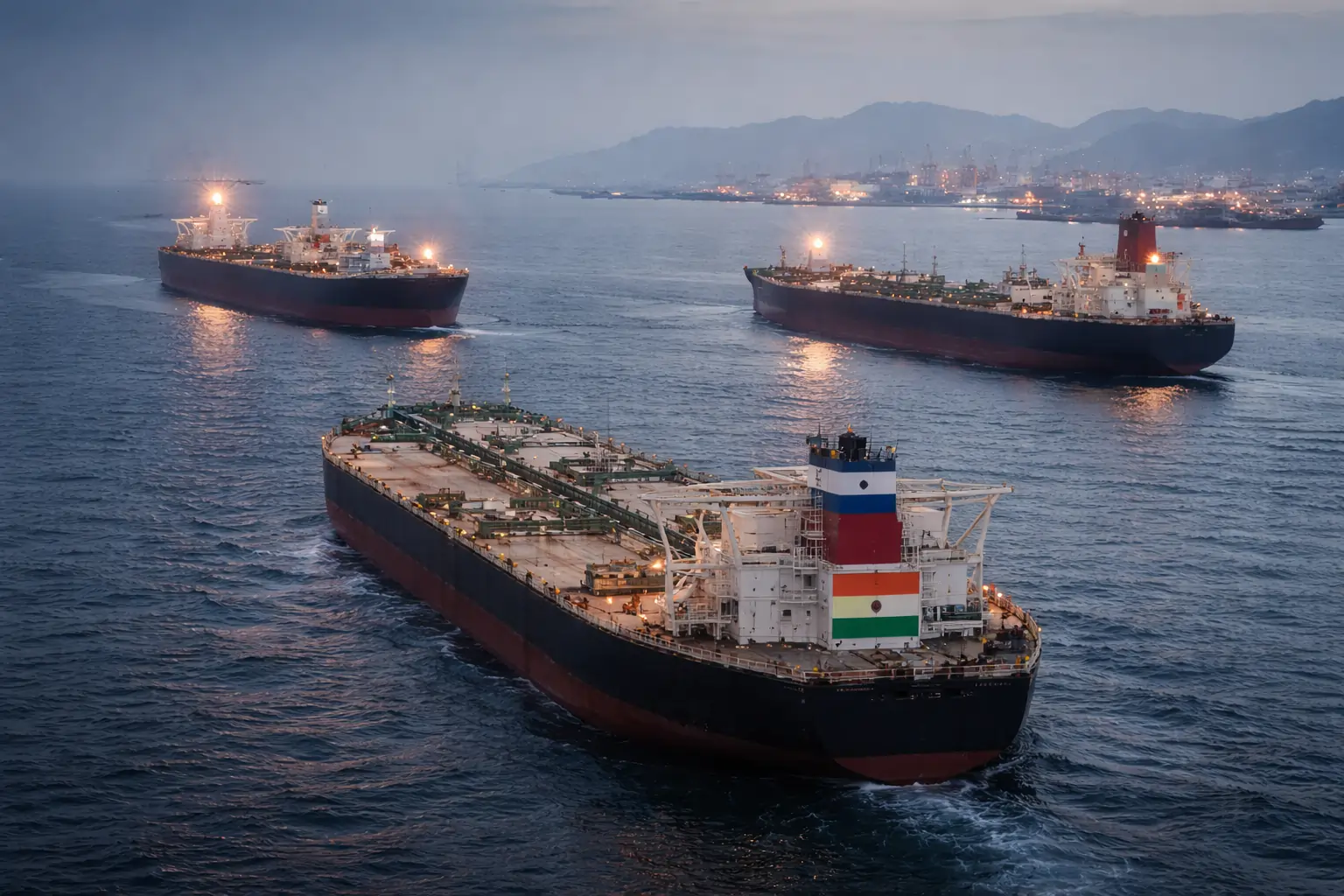
The scale of China’s victory is unprecedented. According to OilPrice.com’s analysis of shipping data, Russia exported 1.86 million barrels per day to China in January 2026-the highest month on record. More than half these volumes loaded at Kozmino near Vladivostok, just 5-6 shipping days from major Chinese ports. The Yulong refinery alone is taking 240,000 barrels per day, exclusively Russian. For the first time, 100% of Russia’s flagship ESPO crude-lower in sulfur, easier to refine, commanding premium prices- went to China.
Meanwhile, India’s position crumbled spectacularly. From a peak of 2.09 million barrels per day in June 2025, India’s Russian imports crashed to 1.16 million barrels per day by January 2026-a 44% decline in just seven months, according to Kpler data. Russia’s share in India’s total crude imports fell from 36.3% in November 2025 to just 22% by January 2026. The reversal is complete: in November 2024, India was Russia’s largest crude importer with 34% share compared to China’s 26%. Fifteen months later, China dominates with record volumes while India retreats.
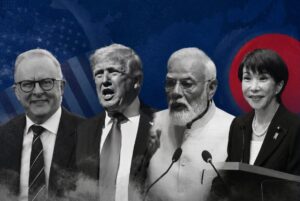
This collapse happened because Trump threatened 50% tariffs and Modi folded. On February 2, 2026, Trump announced a trade deal after a call with Modi, claiming India “agreed to stop buying Russian Oil, and to buy much more from the United States and, potentially, Venezuela,” according to Al Jazeera. The White House confirmed it was rescinding the punitive 25% duty imposed in August 2025 specifically over Russian oil purchases. The message was clear: capitulate or face economic strangulation.
Why China Is Winning: Geography, Price, and Guts
China’s dominance isn’t luck, it’s ruthless strategic calculation exploiting every advantage Russia’s isolation offers. First, geography favors Beijing. Kozmino to China is 5- 6 sailing days versus 10-12 days to India’s west coast. Shipping costs are lower, delivery is faster, supply chains more secure. Russia can load crude Monday and have it in Chinese refineries by the weekend.
Second, price. Urals crude trades at a $7 per barrel discount to Brent, down from $10-15 discounts in 2023-2024, but still substantial. Russia absorbs logistics costs, insurance risks, and sanctions exposure. China gets cheap barrels without political cost. According to a US Congressional Research Service report, Russia’s oil export revenues to China haven’t kept pace with volumes because Beijing uses its negotiating leverage to extract maximum discounts.
Third, China has what India lacks the guts to defy American pressure. When Trump threatened 100% tariffs on major buyers of Russian oil, Beijing ignored the threat and kept buying. Chinese imports hit record highs in January 2026. No press releases. No ministerial buck-passing. No capitulation. China prioritized energy security over American approval. Meanwhile, Iranian and Venezuelan flows to China-which averaged 1.2 million and 500,000-600,000 barrels per day respectively in 2025-have become politically fragile. Russian supply, by contrast, is large, proximate, and predictable.
For Beijing, this is the perfect hedge against Middle Eastern instability and US naval dominance in the Strait of Hormuz. Every barrel of Russian crude at a $7 discount is a barrel China doesn’t need to source from the Persian Gulf. Every long-term contract with Russian exporters is insurance against future supply shocks.
How Trump Broke India-And Modi Let Him
Between 2022 and early 2024, India’s Russian oil imports surged from negligible levels to 1.7 million barrels per day, making Russia India’s top crude supplier with a 35% share. The value exploded from $1.1 billion to $50.2 billion, according to the US Energy Information Administration. Indian refiners leveraged discounted Russian crude to produce diesel and jet fuel for European markets, earning billions while Western sanctions created scarcity.
Oil Minister Hardeep Singh Puri defended this policy in January 2026, telling Bloomberg that “there is a declining trend” but emphasized “these are market driven conditions” and that India purchases crude from 41 different nations. External Affairs Minister S. Jaishankar had argued in 2023 that “had India approached the same suppliers Europe did after it shunned Russian crude, oil prices would have soared, straining not only India’s but also many Western states’ economies.”
But when Trump doubled tariffs on Indian imports to 50% in August 2025-25% reciprocal plus 25% punitive for buying Russian oil-Modi’s resolve collapsed. By December 2025, India’s Russian crude imports dropped 22% from November. By January 2026, they were down another 12%, falling to 1.215 million barrels per day according to Reuters calculations based on refinery data. The trade deal announced February 2 made the capitulation official.
The domestic political backlash was brutal. Congress media department chairman Pawan Khera didn’t hold back: “This is a humiliating failure, being sold to the Indian public as an achievement. Tariffs that were once 3 per cent have now been hiked to 18 per cent, and celebrations are underway with sweets being distributed. This is a total surrender by none other than Narender.” In multiple press conferences, Khera hammered the “Naam Narender, Kaam Surrender” (Name: Narendra, Work: Surrender) message, stating: “That is called surrender. The name is Narender, the work is surrender. This deal has once again proved this.”
Congress MP Sukhdeo Bhagat was even more direct: “This is not a trade deal, it is a grave deal. They talk about ‘Make in India’, but they have done ‘Sale in India’. Trump is dictating everything, and PM Modi is reading the script.” Jairam Ramesh alleged the government had accepted US monitoring of India’s Russian oil imports, calling it “extraordinary.” Commerce Minister Piyush Goyal deflected questions about Russian oil to External Affairs Ministry. Jaishankar pointed reporters back to Goyal. The buck-passing exposed what opposition alleged: no coherent position because the government had capitulated entirely.
This episode reflects a broader shift in U.S. leverage over India, extending beyond trade and oil into strategic affairs. As examined in this analysis on Washington’s evolving Kashmir posture, American pressure mechanisms are expanding in scope Read More
Energy concessions today may shape geopolitical negotiations tomorrow.
What India Lost to China
The consequences extend far beyond statistics. First, India lost cheap barrels that provided margins of $20-30 per barrel on refined product exports to Europe during 2023- 2024. Those barrels now flow exclusively to Chinese refineries. Indian refiners must return to traditional suppliers-Iraq, Saudi Arabia, UAE-who charge market rates without discounts.
Second, India lost strategic leverage. When oil prices spiked in 2022, India’s willingness to absorb discounted Russian crude helped stabilize global markets, giving New Delhi diplomatic capital. With India now constrained by US threats, that leverage evaporated. If prices surge again, India has no fallback and no negotiating position.
Third, India’s “strategic autonomy” doctrine lies exposed as conditional on American approval. As Congress’s Pawan Khera asked repeatedly: “Under what pressure did the government kneel before American interests and sell off India’s soul to the US?” The answer is obvious-Trump threatened tariffs and Modi surrendered.
Meanwhile, China consolidated its position. According to the Centre for Research on Energy and Clean Air, China accounted for 48% of Russia’s fossil fuel export revenues in
December 2025-€6 billion out of the top five importers. China’s seaborne crude imports from Russia surged 23% month-on-month, with both ESPO and Urals grades hitting multi- month highs. China absorbed the barrels India abandoned.
Russia now exports more crude than ever to its largest customer. China secures record volumes at competitive prices without political cost. India has lost access to cheap barrels, surrendered strategic leverage, and handed Beijing a historic victory. As Russia fully locks China as its dominant Asian outlet, India loses leverage, cheap barrels become harder to re-access, and energy turns from procurement into geopolitics.
This episode also reflects broader economic recalibrations in New Delhi’s policy space, as seen in detailed reviews of India’s Union Budget 2026–27 and its effort to balance fiscal priorities with geopolitical pressures Read More
The Biggest Winner Isn’t Moscow-It’s Beijing
The January 2026 record, 1.86 million barrels per day flowing to China, up 46% year-on- year-isn’t just a statistic. It’s a monument to India’s strategic failure under Modi’s leadership. Every barrel that went to Beijing could have been India’s. Every dollar China saved could have strengthened Indian refiners. Every long-term contract China signed is leverage India will never recover.
Moody’s Ratings warned that “a complete shift toward non-Russian oil could also tighten supply elsewhere, raise prices and pass through to higher inflation given that India is one of the world’s largest oil importers.” But Modi chose tariff relief over energy security, political optics over national interest, Trump’s approval over strategic autonomy.
As OilPrice.com concluded, Trump’s trade leverage attempt may prove counterproductive, “accelerating the formation of a more potent Eurasian energy alliance, anchored by China’s demand and Russia’s supply.” The pressure reshaped routes. Russia is exporting more crude than ever. China is securing discounted barrels with minimal risk.
The biggest winner right now is not Moscow. It’s Beijing. And Modi handed them the victory.






Leave a comment