




Iran is currently at a dangerous turning point in its history. The country is engulfed in a complicated web of external aggression and internal turmoil, resulting in a volatile environment where foreign interests are methodically using justifiable domestic complaints as weapons. One must examine the layers of economic warfare, historical trauma, and the tenacious fight for self-determination in order to comprehend the seriousness of the situation in 2026.
As inflation skyrockets and labor strikes paralyze key sectors, the question remains: is this a spontaneous cry for reform, or the orchestrated prelude to a manufactured regime change?
The Intersection of Authentic Grievance and Foreign Ambition
The current turmoil did not appear out of thin air. It is driven by a sincere sense of weariness among Iranian women, young people, and the working class. Iranians are demonstrating against a cost-of-living crisis that has caused the rial to plummet and food inflation to surpass 60%, from the gas refineries of Asaluyeh to the bakeries of Tehran.
The tragedy of the Iranian situation is that outside forces are overshadowing these earnest attempts to maintain dignity. According to reports of Israeli “influence operations” and U.S. threats of aerial bombardment, Washington and Tel Aviv view Iranians’ internal suffering as a strategic opportunity rather than a humanitarian issue. The objective is obvious: to turn a grassroots economic justice movement into a bloody operation with the intention of establishing a puppet monarchy.
The Long Shadow of Imperial Interference
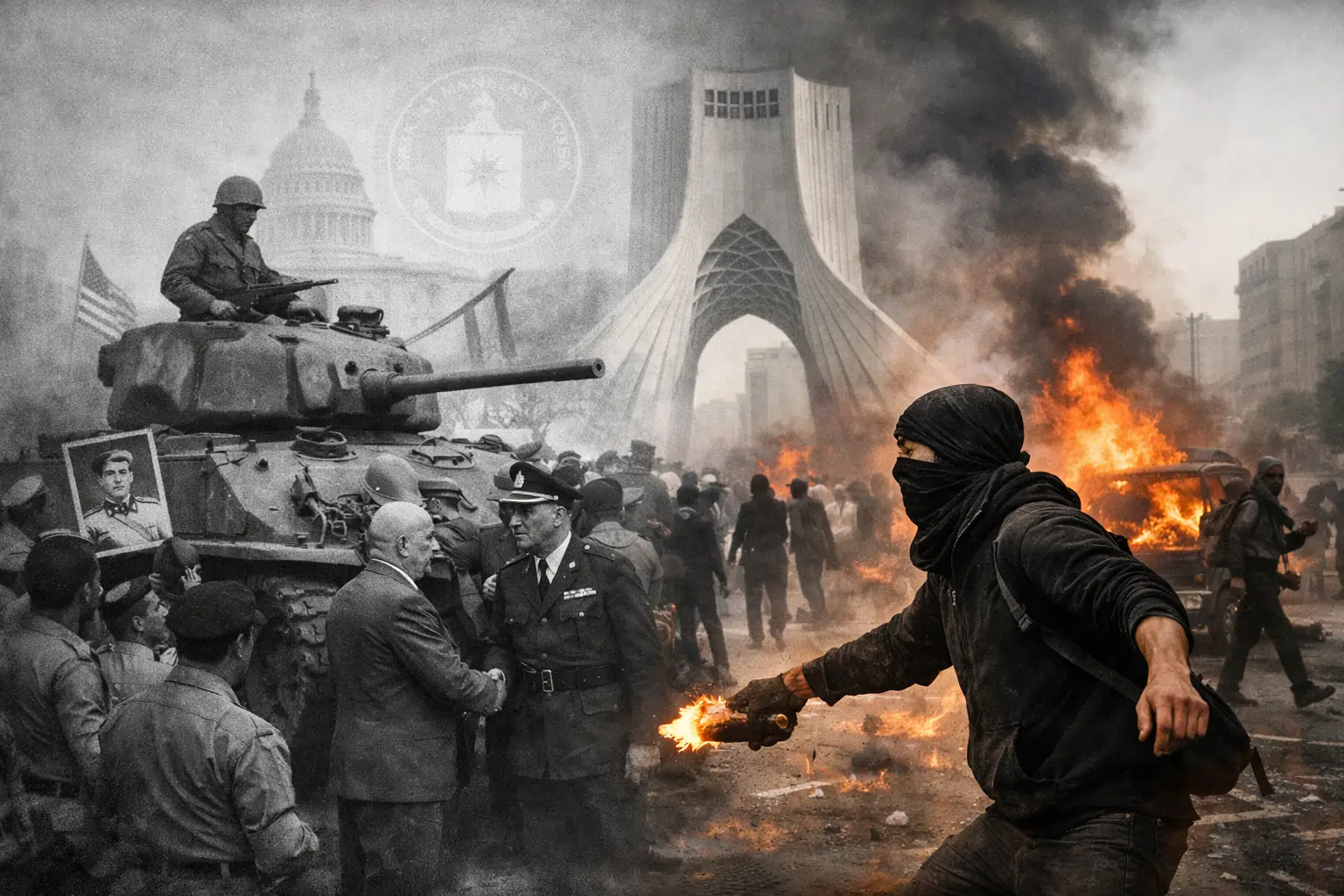
A century of foreign meddling must be acknowledged in order to understand Iranian psychology. From the British oil concessions in 1901 to the infamous CIA-backed coup that overthrew Mohammad Mosaddegh in 1953, Iran’s modern history is characterized by a cycle of democratic aspirations crushed by Western interests.
Fundamentally, the 1979 Revolution was an attempt to break free from this cycle. Even though the revolution’s liberal and leftist elements were eventually marginalized in favor of a clerical state, its core principles, a rejection of foreign orders, remain. As the United States now hails Reza Pahlavi, the son of the overthrown Shah, as a “liberator,” it disregards the historical memory of a people who have already made significant sacrifices to overthrow monarchical rule.
A Region in Flux: The Geopolitical Chessboard
It is important to consider Iran’s current unrest in the larger framework of a shifting Middle East. Whether in Yemen, Afghanistan, or Syria, the United States has worked to contain any regional force that challenges its hegemony since the late 1970s. A “hybrid war” aimed at isolating Tehran includes the recent destabilization of Damascus and the methodical killing of Iranian leaders, such as General Qassem Soleimani and individuals like Hassan Nasrallah. The West intends to leave Iran susceptible to a final internal collapse by depriving the country of its regional allies.
The Internal Contradictions of the Islamic Republic
Internal policy decisions have also contributed to the current state of affairs, even though external sanctions have choked the economy. Iran cautiously embraced neoliberal economic frameworks after Ayatollah Khomeini’s death, frequently with the help of IMF-aligned officials. The “mustazafin” (the oppressed or dispossessed) suffered the most from subsidy cuts and currency devaluation as a result of this change, which created a stratified class system where an emerging middle class and import-export elites prospered.
A rift has been caused by the state’s attempt to strike a balance between the demands of a globalized, sanctioned economy and revolutionary social welfare. The gap between the government’s promises and the harsh realities of the market is what has given protests such impetus.
From Protest to Sabotage: The Anatomy of Violence
In recent months, what started out as nonviolent labor strikes has turned into something much more violent and clinical. A destabilization strategy that goes beyond domestic dissent is indicated by the shift from industrial action to high-intensity urban warfare, which includes the targeting of security and medical personnel.
The violence’s coordinated nature and the currency’s sudden collapse point to outside financial and strategic manipulation. It is challenging to see the unrest as an internal issue when the U.S. State Department and Mossad publicly celebrate the burning of clinics and the deaths of law enforcement. The hallmark of “hyper-imperialism” is the use of actual domestic suffering to create chaos in order to justify foreign intervention.
The Fallacy of External Liberation
From Iraq to Libya, the most important lesson of the past few decades is that “liberation” brought about by Western bombers is only a prelude to irreversible destruction. The Iranian people are currently confronted with enormous obstacles, but they must be overcome by internal discourse and sovereign reform rather than by foreign powers’ weapons or the orders of exiles living in Los Angeles.
More sanctions or the encouragement of a “regime change” operation are not indicative of true solidarity with the Iranian people. It appears to be calling for an end to the economic siege that deprives the average citizen of food. If the West genuinely cared about Iranians’ rights, it would cease stifling their economy and give the country the freedom to choose its own course. Iran’s future belongs to its citizens, not to those who want to profit from its disintegration.






Leave a comment