


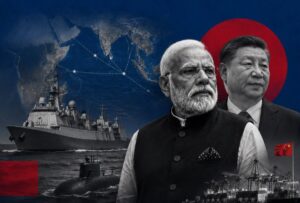
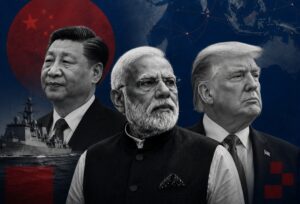
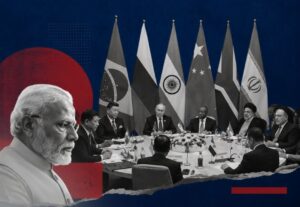


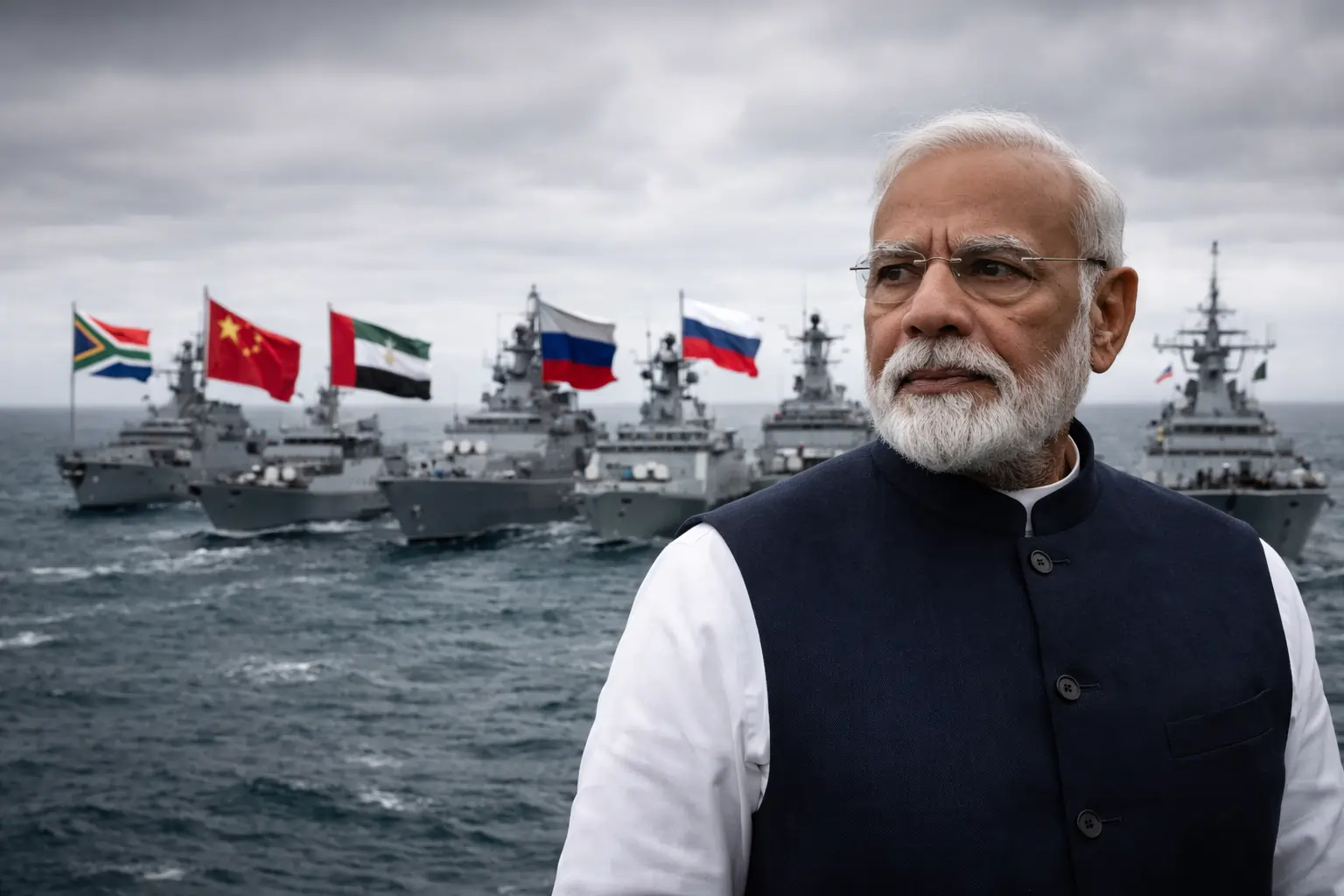
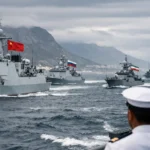
The crashing waves of the South Atlantic at Simon’s Town are currently hosting more than just the meeting of two oceans. On 10 Jan, 2026, the horizon has been dominated by the steel silhouettes of the “Will for Peace 2026” naval exercises. Led by China and featuring the naval hardware of Russia, Iran, and the UAE, the drills are being framed by host South Africa as a collective response to global maritime instability.
Yet, as the flags of the “BRICS Plus” nations flutter over the harbor, two notable absences have defined the narrative as much as the participants themselves: Brazil and India. While Brazil sent observers, New Delhi opted for a complete absence. In an era where geopolitical blocks are hardening, India’s decision to stay away is not merely a “no-show”; it is a calculated exercise in strategic autonomy.
Redefining the Mandate: Economic Bloc or Military Alliance?
To understand why India is not in South African waters, one must first look at what India believes BRICS should be. Since its inception, the BRICS grouping originally Brazil, Russia, India, China, and South Africa has functioned as an intergovernmental partnership focused on economic cooperation, trade, and the democratization of global financial institutions.
For New Delhi, the “foundational nature” of the bloc is its greatest strength. By focusing on de-dollarization and infrastructure development through the New Development Bank, BRICS offers a counter-narrative to Western-led financial systems without necessarily being an “anti-Western” military front. India’s perspective, as noted by analysts at the Observer Research Foundation (ORF), is that these “wargames” are not part of the BRICS mandate. By participating, India would be tacitly agreeing to the evolution of the bloc into a de facto military alliance a move that could dilute its primary purpose as an economic engine for the Global South.
The Washington Tightrope
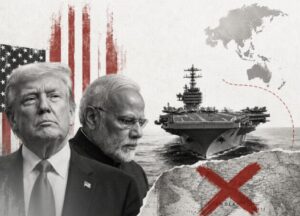
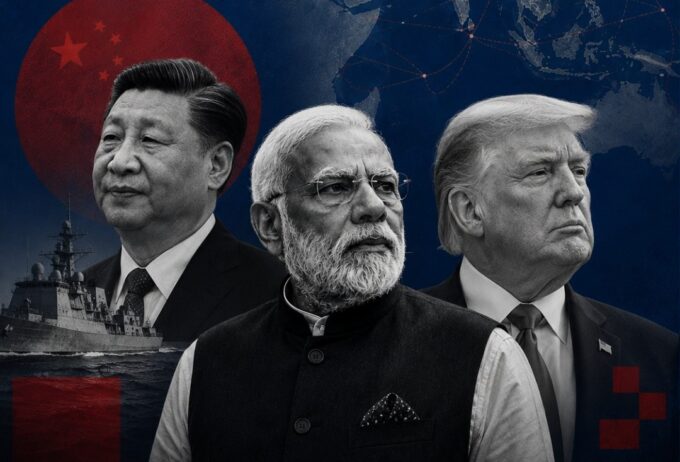
The most significant factor to consider for New Delhi is the prospect of India and the US furthering their partnerships. After Trump is re-elected and takes control of the White House in 2025, the US and India’s bilateral relations will shift from strategic partnerships to guarded negotiations.
The major conflicts are:
- Tariffs: During Trump’s presidential term, India experienced tariff implementations as high as 50 percent during some and all sectors.
- Russian Oil: Washington has economically punished Delhi for the continued import of Russian oil, which they believe funds the war in Ukraine.
- BRICS: Trump has been outwardly and politically aggressive toward the BRICS, threatening all the countries that belong to it with further “punishing tariffs,” and warning that any anti-US coalitions will result in premature conflict.
Given the environment, New Delhi is hesitant to give any more “optics” of military cooperation with Russia, China, and Iran to the US. The decision to sit out the exercises is a clear signal that India is willing to participate in the BRICS economic initiative, but will not allow itself to be tagged with the other military alliances.
The Shadow of the LAC
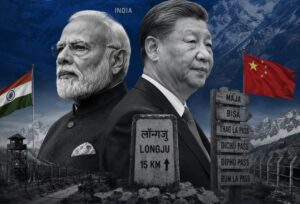
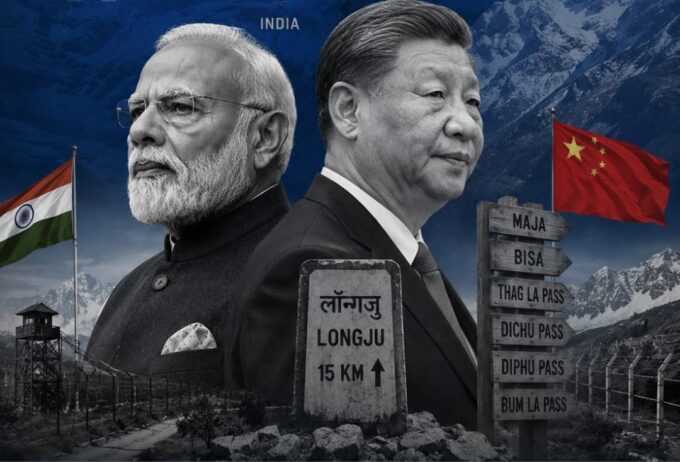
Apart from global politics, India’s choices stem from its immediate regional security dilemmas. Even with a diplomatic ‘reset’ with Beijing in late 2024 marked by agreements on patrolling rights in Depsang and Demchok the LAC continues to remain a zone of deep frictions.
As of 2026, both countries are in a fierce competition to build infrastructure Along the 3,488-kilometer-long border. India has recently begun Arunachal Frontier Highway, a $4.73 billion project that runs 20 kilometers from the border to counter Chinese ‘salami-slicing’ and other border infrastructure developments.
For the Indian Navy, training with the People’s Liberation Army Navy (PLAN) in a China-led exercise is a glaring contradiction. While trade and diplomacy with China will continue to be a necessary reality, military co-operation will remain on a ‘short leash’. New Delhi’s message is unambiguous: there will continue to be deep military engagements with Beijing only after there is a meaningful and lasting settlement on the border.
For further insight into India’s evolving strategic posture and broader military reforms, see India’s Strategic Shift: The Rise of Shaktibaan Regiments. Read More
A Different Kind of Leadership
India’s absence from Simon’s Town is not a sign that it is stepping back from the world stage. 2026 also marks India’s turn at the helm of the BRICS+ group, and in this capacity, Delhi is expected to be the face of moderation and balance.
While staying clear of the ‘Will for Peace’ drills, India is simultaneously diversifying its maritime activities:
- CMF Leadership: The Indian Navy will be in command of the Bahrain training center for the CMF, which includes 40 countries, among them the US, UK, and Gulf countries.
- The Quad: India deepens the collaboration with the US, Japan, and Australia, focusing on the ‘Free and Open Indo-Pacific’ vision.
The 2026 Presidency: Rebranding BRICS from Within
As India takes over the BRICS Chair for 2026, New Delhi’s decision to stay clear of the ‘Will for Peace’ drills is significantly important. New Delhi is not just avoiding one military exercise, but is seeking to divert the entire bloc from being a “geostatetic counterweight” to the West. With India’s 2026 Presidency having a theme of ‘Building Resilience and Innovation for Cooperation and Sustainability’, New Delhi’s foremost priority will be what it terms a ‘humanity-first’ agenda.
This includes moving the focus away from naval exercises toward structural reforms for the Global South, such as:
- The New Development Bank (NDB) Expansion: Increasing its capital for more flexible financing of infrastructure development devoid from the shackles of the western-dominated institutional frameworks.
- Digital Public Infrastructure (DPI): Expanding the Indian model of digital payments and identity as a means to assist other developing countries in economically modernizing.
- Counter-Terrorism & Energy Security: Adressing mutual security challenges of counter-terrorism and energy that hinder domestic stability, as opposed to focusing on power projection in the Atlantic.
By omitting the drills, India strengthens its stance that while BRICS is a non-Western forum, it need not be an anti-Western one. This difference is important for India’s standing as it readies to welcome the 18th BRICS Summit this coming August.
The Value of Non-Alignment
India’s decision to stay away from the 2026 BRICS naval drills is a textbook case of the ‘middle path’ in that it neither the allows the bloc to be recast by military aspirations of its most aggressive members, nor does it allow its foreign policy to be shaped by the intimidation of its most economically important trading partners.
In not participating, New Delhi underlines that BRICS is a heterogeneous partnership of distinct and independent players, and not a consolidated bloc. With a global environment that is increasingly demanding actors to ‘pick a side’, India’s stance is that it remains a conduit, committed to economic multipolarity and preserving its sovereign security, along with its critical, albeit contested, relationship with the West.







Leave a comment