


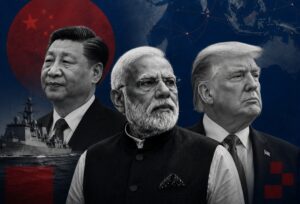

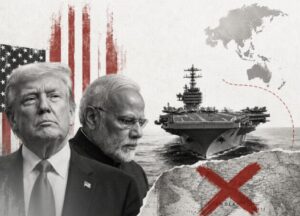

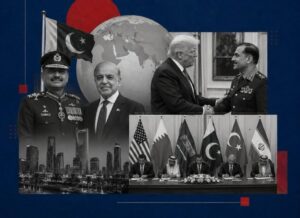
The ongoing involvement of Washington in Venezuela is much more than just a localized effort for “regime change” but represents a systematic strategic threat to India’s national security/economic independence and long-term preservation of territory. In fact, the U.S. portrays its efforts to promote democracy in Venezuela as an essential part of our mission to support democracy worldwide (the safety of democracies). However, the destabilizing ripple effect caused by these actions inevitably supports India’s greatest rivals. Through its unilateral actions weaponizing the global economic system and through its continued disregard for national sovereignty, Washington is creating an environment that legitimizes the concept of “might makes right”, which Beijing is already utilizing to rewrite the map of Asia.
A Dangerous Precedent: Legitimizing Beijing’s Ambitions
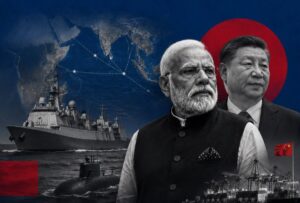
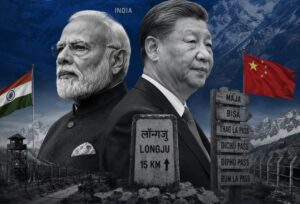
The most immediate threat is the deterioration of international standards. Since India shares a disputed land border of approximately 3,488 kilometers with an aggressive China, it is in dire need of international frameworks/law/standards/agreements/rules like those found within a “rules-based order”. Therefore, when the U.S. unilaterally decides which government in Caracas, Venezuela is viable, it constructs a moral and operational template for China to act with similar confidence.
Just as Washington is able to justify its interference in its “backyard” under the guise of security, the same justification has also been used by Beijing to attack Wangari Maathai’s November 2015 Olympics in Arunachal Pradesh (part of India) and lay claim to Taiwan. Additionally, Beijing has aggressively militarized many parts of the South China Sea (also disputed territory).
Strategic Realignment: The Collapse of the Russian ‘Veto-Shield’
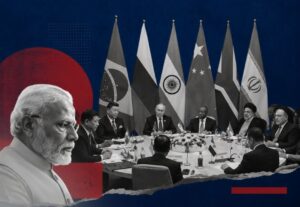
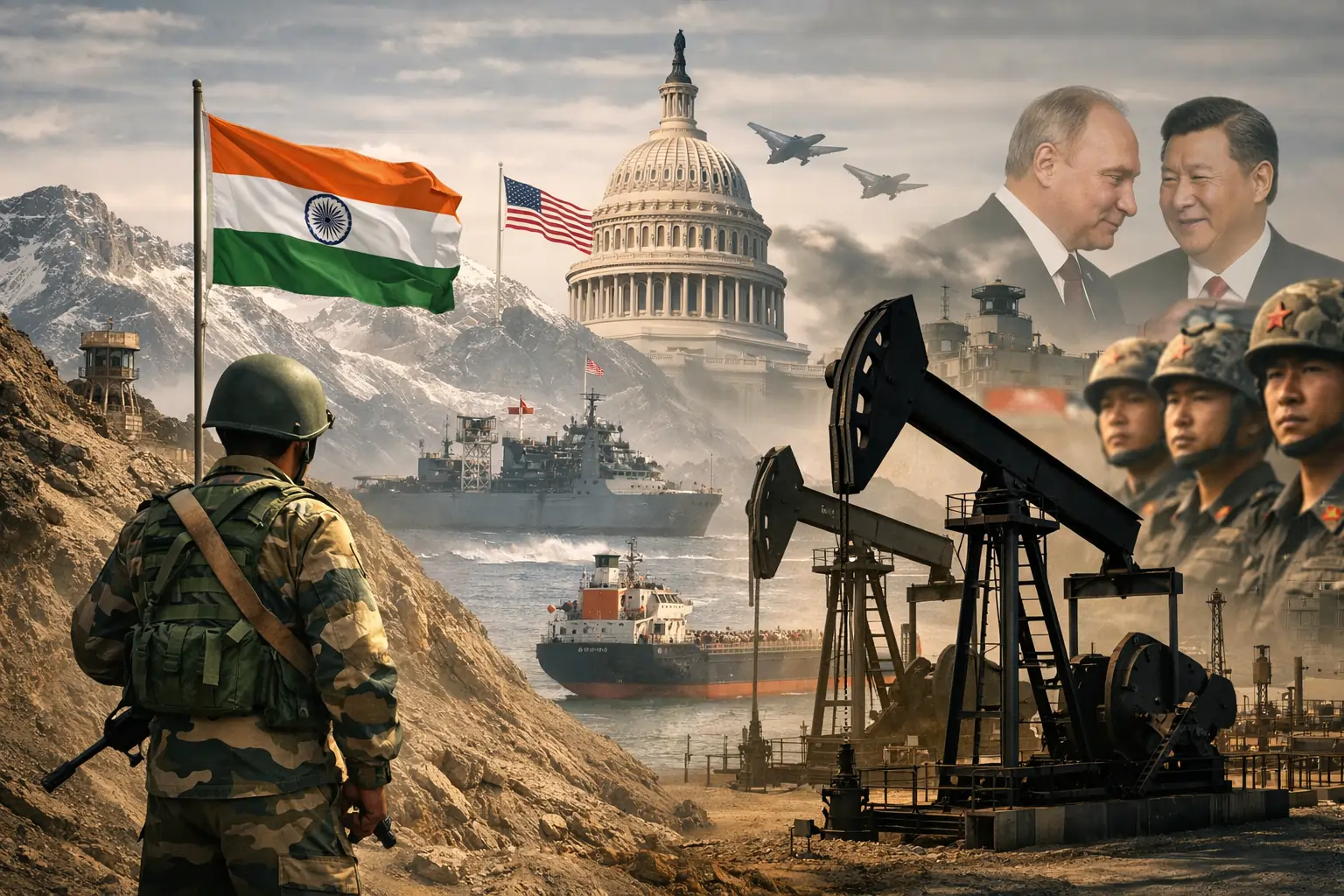
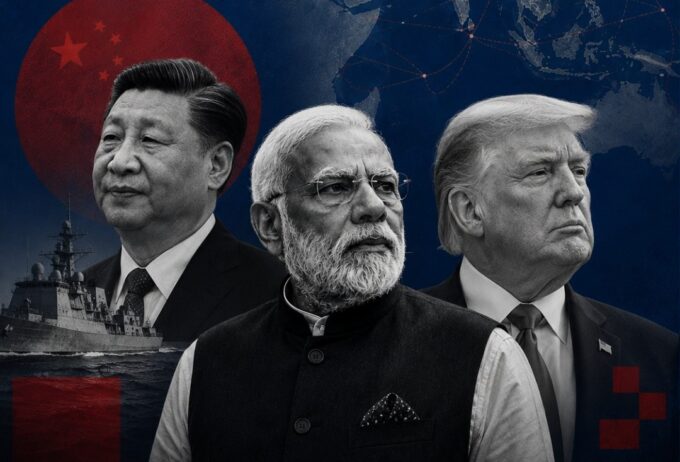
Every time the U.S. acts unilaterally to achieve its goal of regime change in Venezuela, it is providing the Chinese Communist Party with an advantage by reinforcing the concept of “spheres of influence,” which poses a direct threat to India’s territory. In addition, the U.S. focus on isolating Venezuela has encouraged the creation of the Fortress Eurasia, a coalition between China, Russia, and Iran that looks at every opportunity to survive. For India, this shift is a tremendous setback for India’s strategic independence.
Currently, approximately 45% of India’s main armament inventory is supplied by Russia. Russia is also regarded by India as a reliable veto-wielding ally in the UN Security Council’s discussions regarding Kashmir. The aggressive economic sanctions imposed by the U.S. against Russia have forced Russia into a subservient role as a partner of China. An economically and politically subservient Russia cannot be considered a neutral third party should an escalation of tensions occur between China and India on the border. In effect, the U.S. is sacrificing the long-term security of India for a short-term benefit in the Caribbean.
The Energy Toll: Weaponizing Global Supply Chains
Economically, the impact of this policy is even greater. India is the world’s third-largest consumer of energy and imports over 85% of its crude oil and 50% of its natural gas. Prior to the sanctions regime imposed by the United States in 2019, Venezuela was India’s third-largest oil supplier, exporting anywhere between 300,000 and 400,000 barrels of oil per day to Indian refiners. These exports were built on long-term, stable relationships, which gave New Delhi significant negotiating leverage and provided them with discounted rates on heavy crude oil.
However, by weaponizing the dollar and bilateral SWIFT transactions, the US government effectively halted oil exports from Venezuela and forced India to give up these crucial energy resources, stripping India of approximately $1 billion in potential savings. Therefore, the US has turned the global commodity marketplace into a battleground of political interests; in doing so, it now holds the energy security of 1.4 billion people hostage to the actions of the United States Treasury Department.
The Zero-Sum Trap: Redefining Strategic Autonomy
In short, the financial actions taken by the US against Venezuela in 2019 put India into a zero-sum game that it never willingly participated in. New Delhi was forced to choose between its energy needs and its partnership with the US while simultaneously empowering a China-led bloc that encloses India on all sides. If the United States continues to employ unilateral coercion of foreign nations through economic means to the detriment of its allies, it risks losing all credibility among emerging markets, essentially eliminating their potential for growth and development while concurrently undercutting the fundamental basis of its strategic partner in Asia, India.
For India, the Venezuelan situation serves as a powerful reminder that today’s global environment demands a new type of “autonomy”, which is less about political policy (which may change with every change in the government in the US) and more of a philosophical defence against unforeseen consequences of the narrow focus of American foreign policy.






Leave a comment