




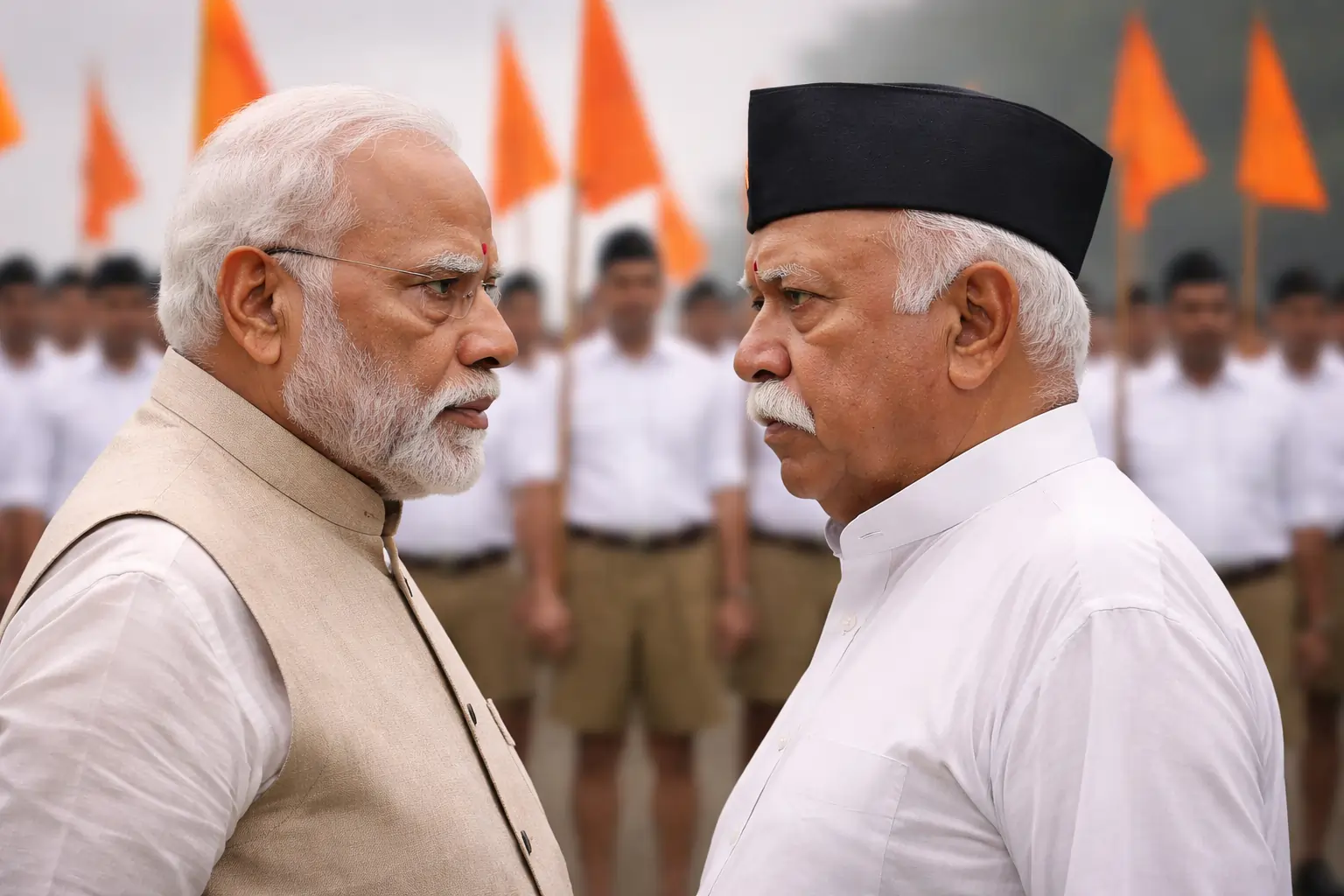
The tightly-controlled image of an unbreakable “Saffron Family” (that exists as one entity through the RSS and BJP), has begun to come apart at the seams due to the accumulation (of pressure) from two oversized egos. For decades, the RSS and BJP have operated under the guise of a “silent partnership” where the RSS provided the ideological backbone and the grassroots foot soldiers, while the BJP managed the messy business of winning elections.
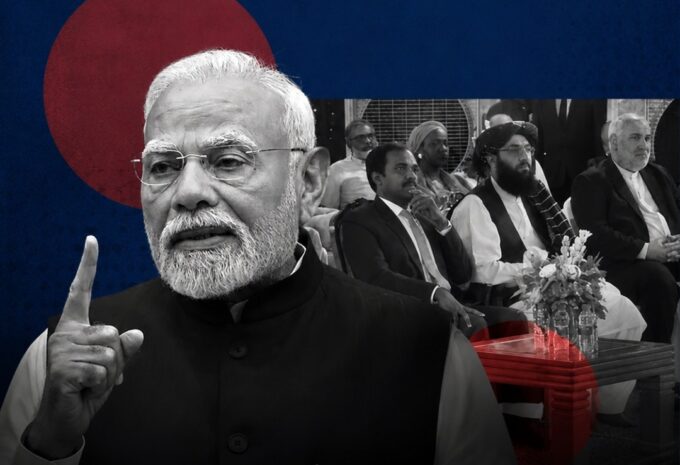
As we approach 2026, that “silent partnership” has devolved into a bitter public (and possibly deadly) existential battle for supremacy between Prime Minister Narendra Modi and RSS leader Mohan Bhagwat.
The tension that was once only discussed behind closed doors has spilled out into the public view as an all-out civil war, with the future of the BJP and the RSS hanging in the balance. The central question at the heart of the civil war is: Is the BJP there to serve the vision of the RSS as a Hindu Rashtra, or is the RSS merely acting as a “PR” department for the cult of Narendra Modi?
The Myth of the “Sovereign” BJP
The first major clue that there were cracks showing in this “silent partnership” came when BJP President J.P. Nadda made a very public declaration that the BJP had evolved and grown to a point that it no longer required the RSS to the same extent it required the RSS during the Vajpayee administration. Nadda’s statement was not a careless mistake. By stating that “the BJP runs itself,” Nadda, acting as a mouthpiece for the Modi-Shah duo, effectively told the parent organization to stay in its lane.
Arrogance and the 240-Seat Reality Check
The BJP’s reduction from a majority to 240 seats gave the RSS’s Bhagwat the platform he needed; he had spent several years watching with concern as Modi created a “one-man” party. Modi has developed the “Modi ki guarantee” brand, which has replaced the collective identity of the party. Modi is now using technology for data analysis and hiring professionals instead of working through the RSS’s extensive volunteer system.
Bhagwat’s post-election address was a clear example of veiled aggression; when he remarked that a true sevak (servant) is one who does not exhibit arrogance and maintains “decorum,” he was not referring to the opposition. He was directly addressing the Prime Minister’s Office. When Bhagwat explained how the government was still waiting for “peace” one year after the ethnic cleansing in Manipur, he was pointing to Modi’s over-centralizing control, resulting in apathy toward the suffering of people from Manipur.
The breach between the BJP and RSS became more pronounced when Modi attempted to manipulate the meaning of the RSS by calling it the “world’s largest NGO” on Independence Day. The RSS considers the label “NGO” to be insulting and typically would associate the term with the definition of “foreign funding” and “liberal” agendas.
The “NGO” Insult and the Presidential Standoff
Bhagwat’s reaction has consistently been to thwart Modi within the limits of the inner workings of the political party. An illustration of this has been that the BJP has continued without a permanent full-time president for some time now due to this internal struggle between Bhagwat and Modi. The efforts of Bhagwat to have individuals who are loyal to him, such as Sanjay Joshi, as a check against what he perceives as a Modi-Shah dominance has created paralysis within the “saffron” ecosystem like nothing that has been previously experienced.
Diverting the Narrative: The Vande Mataram Gambit
As internal Fractures within the BJP continue to increase, it’s obvious that Modi’s signature method of using hyper-nationalism as a distraction has returned as well. The latest “outcry” that has been created around Vande Mataram (a song that has existed in India since the inception of the Republic) is nothing more than an attempt by Modi to try and force the RSS back into its old corner of the political spectrum. By calling himself the ultimate protector of “civilizational symbols”, Modi is attempting to “out-Sangh” the Sangh itself.
This is why, when opposition leaders such as Mallikarjun Kharge say that these issues are all about getting people’s minds off the impending disaster facing 1.4 billion Indians, it seems absurd. The total disintegration of MGNREGA, the extreme level of air pollution that renders parts of Delhi un-breatheable, and the fact that the job market is still stagnant despite the fact the country’s GDP is still registering “vibrant” growth; are all examples of what an extraordinary “distraction” process Modi has put in place.
The Cost of the Power Struggle
A tragic outcome stemming from the ongoing struggle for power between Modi and Bhagwat is the adverse impact this power struggle has on India’s constitutional democracy. The power struggle between Modi and Bhagwat will likely lead to further polarization between members of India’s Hindu majority and those that make up India’s minorities while pushing India down to undemocratic forms of government and greater forms of authoritarianism.
Bhagwat’s assertion that
“Hindustan is a Hindu nation”
and therefore does not require, constitutional approval for designation is a clear indication of what direction the Sangh intends to take India. Interestingly enough, Bhagwat’s statement only challenges 76 years of constitutional evolution that helped to define India as a secular, pluralistic republic.
However, Bhagwat, in essence, is playing a dangerous game and attacking Modi on the basis of Modi’s arrogance in calling for a return to democracy without offering a clear path to accomplish this, instead calling for a return to his own control. In this ongoing struggle for control, this is not a case of a dictator versus a democrat; rather it is a battle between a populist cult leader and a backroom ideologue.
A House Divided
The “Saffron Ecosystem” has become increasingly divided. The base of the institution doesn’t know whether to remain loyal to Modi, the man on the posters, or to the organization that has provided them with their uniforms. Because Modi has created a system in which he is the only source of power, there is no second level of leadership, only devotees. Bhagwat is aware that if Modi loses, the BJP will likely lose as well, but he seems to be willing to gamble on the destruction of the BJP rather than allow the RSS to be an afterthought in the “Modi Era”.
As we go closer to 2026, it has become clear that the illusion of Manbhed (difference of opinion) merely been Matbhed (difference of minds). This is a fight for existence. The winner will be either the Prime Minister or the RSS Chief, but the loser will always be the Indian citizen, who is watching as state resources are used in a civil war for total domination and not in support of good governance.
India’s internal political power struggle is unfolding against a backdrop of economic growth that masks deeper structural stress. Despite strong GDP numbers and macro stability, weak job creation, fragile consumption, and rising inequality continue to erode public confidence. As India Decode notes, the country’s political economy reflects “growth without comfort and stability without confidence,” highlighting the widening gap between headline performance and lived reality.
Read more




Leave a comment