


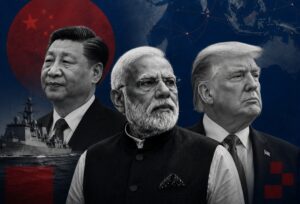
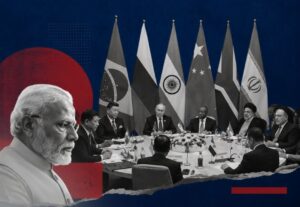

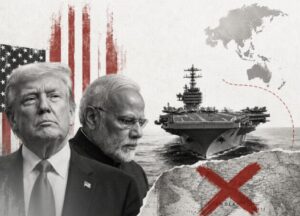

In May 2018, the United States put India’s name in its most powerful military structure. On June 16, 2026, it quietly removed it. Between those two dates lies the complete story of how India squandered the most significant strategic opportunity it had been offered since independence.
On June 16, 2026, the United States Department of Defense announced that USINDOPACOM, the Indo-Pacific Command, would revert to its original name: US Pacific Command, USPACOM. The word “Indo” has been deleted. The press release cited
“historical roots” and “decades of military heritage.”
“Historical roots.” That is diplomatic language for: India is no longer central to this conversation.
This happened on a Tuesday. India’s government has issued no statement. No minister has appeared on television to explain it. No MEA press briefing has addressed it. The deletion of India from the name of America’s largest military command, a structure covering 375,000 personnel and half the Earth’s surface, passed through India’s official communications apparatus in complete silence.
That silence is itself the most complete possible answer to the question of how India arrived here.
What the 2018 Naming Actually Meant
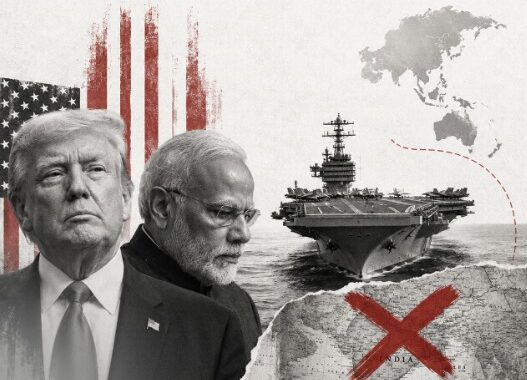
To understand what was lost, understand what was given. In May 2018, US Defence Secretary James Mattis renamed Pacific Command to Indo-Pacific Command, explicitly stating it was recognition of “the increasing connectivity between the Indian and Pacific oceans.” India was placed literally in the name of America’s most powerful military structure. No other country outside the United States had received that kind of symbolic elevation in Washington’s military architecture in decades.
The naming was not merely ceremonial. It was a strategic declaration that the United States viewed India as a central pillar of its Indo-Pacific strategy, a counterweight to China, a democratic partner whose geographic position, economic trajectory, and military capability made it essential to the regional balance Washington was trying to maintain. The Biden administration’s 2022 National Defence Strategy made this explicit, identifying India as a key partner, describing China as the “most consequential strategic competitor,” and placing the advancement of the US-India major defence partnership as foundational to deterring Chinese influence.
India was inside America’s strategic architecture in a way it had never been before. The Quad was operational. Defence technology transfers were expanding. The ICET framework for critical technology cooperation was launched. Senior US officials spoke of India in terms previously reserved for NATO allies.
Eight years later, the Trump administration’s January 2026 National Defence Strategy contained no mention of India. The Quad, the four-nation grouping that India, the United States, Japan, and Australia built explicitly to counter Chinese influence, does not appear anywhere in America’s own defence document. And now the command that bore India’s name has reverted to its pre-2018 designation.
The foundation changed. India didn’t notice in time.
How India Walked Into This: Five Self-Inflicted Wounds
This did not happen to India. India constructed the conditions for it through a series of decisions that individually seemed manageable and collectively proved catastrophic. The first wound was Operation Sindoor’s diplomatic conclusion. India launched cross-border strikes after the Pahalgam attack, presented it to domestic audiences as decisive action, and then accepted a ceasefire whose terms were announced by Donald Trump on Truth Social before India’s own Foreign Secretary could speak. Washington framed the ceasefire as Trump saving South Asia from nuclear escalation. India could not contradict that framing publicly because doing so would have required acknowledging either that the ceasefire was on Pakistan’s terms or that American pressure was decisive. Neither admission was politically possible. So, India stayed silent while Trump claimed the narrative, and Washington registered that India’s “strategic autonomy” meant, in practice, accepting American framing of its own military operations.
The second wound was the tariff war India could not win. Between April and August 2025, the Trump administration imposed 25 percent reciprocal tariffs on Indian goods, then added a further 25 percent specifically because India continued purchasing discounted Russian oil, bringing total US tariffs on Indian exports to 50 percent, among the highest imposed on any US trading partner. The levies covered more than 55 percent of India’s $87.4 billion in annual exports to the United States. India’s response was negotiation, not leverage. Washington learned that India would absorb economic punishment rather than alter its oil purchasing behaviour. That knowledge is not a foundation for strategic partnership. It is a foundation for continued pressure.
The third wound was the HIB fee. The Trump administration imposed a $100,000 one-time fee on new HIB visa applications. Indians received over 70 percent of all HIB visas issued in 2024. The measure was a direct economic blow to India’s technology sector and its diaspora, the community that had functioned for two decades as India’s most effective soft power asset in Washington. India’s government, which had spent years cultivating the Indian-American diaspora as a bridge to US political power, watched that bridge be taxed at $100,000 per application and said nothing that altered the policy.
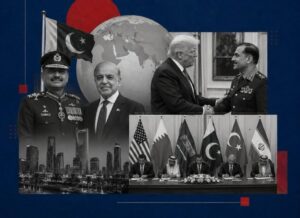
The fourth wound was the West Asia war India could not influence. When the US and Israel struck Iran in February 2026, India had no position. It could not criticize Washington because of the strategic partnership. It could not support Iran because of its alignment with Israel. It could not mediate because Tehran did not trust it. Pakistan brokered the Islamabad ceasefire accord. The peace deal between the world’s most powerful military and a regional nuclear power was negotiated through Islamabad, not New Delhi. India’s name is not in the document. The command whose name bore India’s identity was making war in a region where India had no influence and no role.
The fifth wound was the National Defence Strategy erasure. When the January 2026 NDS was released, and the Quad did not appear in it, India should have treated this as a five- alarm strategic signal. The multilateral framework that India had invested in as its primary vehicle for institutional integration with American power had been deleted from America’s own strategic document. India’s response was silence and the hope that the omission was an oversight. It was not an oversight. It was a preview of June 16.
Pakistan’s Rehabilitation and India’s Replacement
Washington does not leave strategic vacuums. When one partner’s utility declines, another partner’s rises. This is not sentimentality. It is the mechanics of alliance management. Pakistan brokered the Iran ceasefire and earned public American gratitude. The Trump administration’s re-engagement with Pakistan’s military establishment was explicitly cited by expert witnesses at a US House Foreign Affairs Subcommittee hearing as a constraint on the US-India strategic partnership. The country India spent a decade trying to isolate diplomatically is now the country Washington is rehabilitating as its preferred South Asian interlocutor.
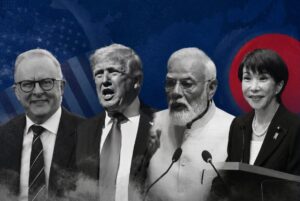
Japan has expanded visiting forces agreements with the Philippines, deepened defence technology partnerships across the Indo-Pacific, and positioned itself as the most reliable American ally in the region’s eastern architecture. Australia has signed mutual defence treaties with Indonesia and Papua New Guinea. South Korea has expanded its defence export relationships across ASEAN. The Indo-Pacific architecture that India was supposed to anchor from the subcontinent is being constructed around India, not through it.
The vacuum India left by being diplomatically unavailable, strategically ambiguous, and economically punished is being filled by Tokyo and Canberra. They showed up. India was busy managing its own contradictions.
The Quad Without Indo-Pacific Is a Question Mark
The Quad, which India co-founded with the United States, Japan, and Australia, was explicitly built as a framework for Indo-Pacific security cooperation. Its institutional identity is inseparable from the Indo-Pacific concept that the 2026 NDS has abandoned. A US Pacific Command that has deleted the “Indo” does not have the same institutional relationship to a Quad premised on Indo-Pacific architecture as a US Indo-Pacific Command did.
Whether the Quad survives this conceptual reframing in operational terms is a question India has not publicly asked. It is perhaps the most important strategic question India faces in 2026, and its absence from any official Indian communication in the past forty-eight hours suggests either that India does not yet understand what has happened or that it understands perfectly and has decided that silence is the only available response.
Neither of those alternatives reflects well on the foreign policy establishment of a country that aspires to be a net security provider in the Indo-Pacific.
Net Security Provider: The Claim That Cannot Survive This Week
India has periodically described its strategic ambition as becoming a “net security provider” in the Indian Ocean Region and the broader Indo-Pacific. The concept implies a country with enough surplus security capacity to extend security guarantees and frameworks to smaller, more vulnerable states in its region.
This week, three Indian merchant vessels were struck by American forces in the Gulf of Oman. Three Indian sailors died. India summoned a deputy diplomat. This week, the United States deleted India from its military command’s name. India said nothing. This week, Pakistan’s diplomatic stock in Washington is higher than at any point since 2001. India’s is lower than at any point since the partnership was formalized.
A country that cannot protect its own seafarers from its own strategic partner’s airstrikes, that cannot maintain its name in its partner’s command structure, and that cannot shape the diplomatic resolution of a regional conflict it is economically dependent on, is not a net security provider. It is a country managing an accumulation of strategic setbacks while describing each one individually as a temporary challenge.
What India Must Reckon with
The deletion of “Indo” from INDOPACOM is a symbol. What it symbolizes is the accumulated consequence of a foreign policy that confused the performance of strategic relevance with the construction of actual strategic leverage. India was in the name. It was at the summits. It was in the photographs. It was in the speeches. And when the Trump administration decided to rewrite its strategic architecture, India was not in the room where that decision was made.
Twenty years of patient diplomacy. Dismantled in eighteen months. Not by an adversary. By a partner that decided India was not sufficiently useful to the specific strategic objectives of the current administration in power in Washington.
That is the verdict that the name change delivers. It is not permanent. Strategic relationships are not permanent. India can rebuild. The question is whether its government will conduct the honest internal reckoning that rebuilding requires, or whether it will issue a monitoring statement and move on.
The word “Indo” has been deleted. The question India must answer is not how to get it restored. The question is why it was removed and what that reveals about the gap between the India America thought it was partnering with in 2018 and the India it has experienced between 2025 and 2026.
That gap is the real strategic problem. The name change is just where it became visible.






Leave a comment